Udinese vs Cremonese: A Tactical Battle in Serie A
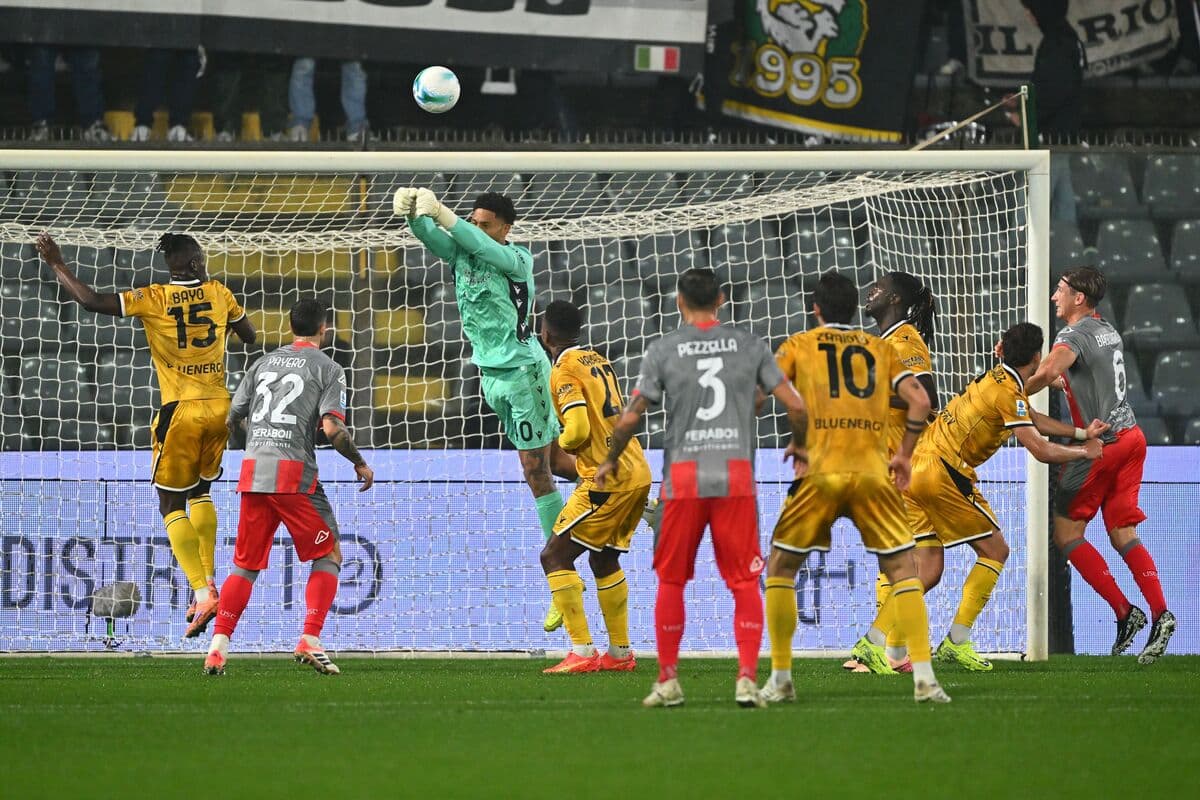
Under the cool evening lights of the Bluenergy Stadium – Stadio Friuli, a narrow 1–0 defeat to Cremonese brought into focus the contrasting trajectories of these two Serie A sides as the 2025 campaign edged towards its close. Following this result, Udinese remained 10th on 50 points, their overall goal difference locked at -2 from 45 goals scored and 47 conceded. Cremonese, marooned in 18th with 34 points and a daunting overall goal difference of -22 (31 for, 53 against), clung to the hope that disciplined structure and set patterns could yet offset a season of struggle.
Both coaches leaned into a familiar identity: matching 3-5-2 systems, but with very different intentions. Kosta Runjaic’s Udinese, who have used 3-5-2 in 19 league games, are built to transition quickly from a compact back three into a five-lane attacking wave. Marco Giampaolo’s Cremonese, who have lined up in 3-5-2 on 25 occasions, treat the shape more as an armoured shell: three centre-backs, industrious wing-backs, and a front pairing that lives off thin margins.
For Udinese, the tactical voids were as much about absence as presence. Suspensions and injuries stripped away creativity and vertical threat. K. Ehizibue missed out through yellow-card accumulation, while J. Ekkelenkamp, N. Zaniolo and A. Zanoli were all sidelined by injury. Zaniolo’s absence was particularly jarring: 5 goals and 6 assists across the season, plus his role as one of Serie A’s top assist providers and a frequent ball-carrier between the lines. Without his 53 key passes and dribbling gravity, Udinese’s 3-5-2 lost its natural conduit between midfield and attack.
Runjaic responded by compressing his creativity into the central band. J. Karlstrom anchored the midfield, with L. Miller and A. Atta tasked with shuttling and linking, while H. Kamara and J. Arizala stretched the width. Ahead of them, A. Buksa and K. Davis formed a physically imposing front two. Davis arrived as Udinese’s leading scorer, with 10 goals and 4 assists in 29 appearances, a forward who thrives on contact, aerial duels and quick combinations. On paper, his profile suited a side that, heading into this game, averaged 1.2 goals per match overall, with 0.9 at home and 1.5 on their travels.
Cremonese, however, were missing key defensive personalities of their own. F. Baschirotto, F. Ceccherini, W. Bondo and F. Moumbagna were all ruled out, stripping Giampaolo of depth and aggression, especially in the back line. Yet the starting trio of S. Luperto, M. Bianchetti and F. Terracciano, shielded by a hard-running midfield of T. Barbieri, M. Thorsby, A. Grassi, Y. Maleh and G. Pezzella, offered a platform of discipline. Pezzella, one of the league’s most card-prone players with 8 yellows and 1 red this season, brought edge and bite to Cremonese’s left side, where his 49 tackles and 11 blocks underlined a willingness to suffer.
The disciplinary profiles of both teams shaped the rhythm. Udinese’s season-long yellow-card distribution peaks late, with 27.94% of their cautions coming between 61–75 minutes and 22.06% between 76–90, pointing to a side that often chases games and stretches its defensive shape in the final third of matches. Cremonese show a similar late-game spike, with 26.09% of their yellows arriving from 76–90 minutes. That shared tendency for frayed tempers and tired legs meant the final quarter of an hour was always likely to be chaotic, even if this particular match finished with the scoreboard frozen at 0–1.
Key Matchup
The key “Hunter vs Shield” battle was always going to be K. Davis against a Cremonese defence that, heading into this fixture, conceded 1.4 goals per game overall and 1.5 on their travels. Davis, with 38 shots (25 on target) and 310 duels contested this season, is not a subtle striker; he is a reference point. Yet Cremonese’s away record – only 14 goals scored and 28 conceded across 19 road games – tells the story of a team more comfortable turning contests into attritional scraps than open shoot-outs. Their 11 clean sheets overall, including 5 away, underline that when their block is set and distances are tight, they can suffocate even more fluid attacks.
Alongside Davis, Buksa tried to occupy the half-spaces and drag centre-backs out, but without Zaniolo’s third-man runs or Ehizibue’s overlaps, Udinese’s attacking patterns often stalled in front of Cremonese’s block. The home side’s season-long numbers hint at that inconsistency: 18 goals scored at home in 19 matches, and 7 home games where they failed to score at all. The 1–0 scoreline here felt like a distillation of that fragility.
Engine Room Duel
In the “Engine Room” duel, J. Karlstrom’s task was to outthink and outwork A. Grassi and M. Thorsby. Grassi, positioned as Cremonese’s central pivot, focused on screening passes into Davis and Buksa, while Thorsby’s range allowed him to shuttle wide to double up on Kamara and Arizala. Without the suspended and injured creators, Udinese’s midfield three lacked a natural risk-taker, and Cremonese were able to keep most of the danger in front of them.
Higher up the pitch, F. Bonazzoli’s role as Cremonese’s leading scorer – 9 goals and 1 assist this season – framed him as the primary “Hunter”. Supported by J. Vardy, he worked the channels behind Udinese’s back three of T. Kristensen, C. Kabasele and O. Solet. With Udinese conceding 1.1 goals per game at home heading into this match, the margin for error was slim; one lapse in the defensive line, one mistimed step, and Bonazzoli had the instincts to punish it. That single incision proved enough.
From a statistical prognosis standpoint, the result aligned with the deeper season patterns. Udinese, despite sitting 10th, have failed to score in 10 matches overall, and their reliance on set structures in 3-5-2 can make them predictable when key individualists are absent. Cremonese, for all their offensive anemia – just 0.8 goals per game overall and 0.7 on their travels – have built a survival blueprint on compactness, late-game resilience, and a willingness to accept suffering without losing shape.
If this match had an xG narrative, it would likely read as a low-margin contest shaded by Cremonese’s single clinical moment and their capacity to defend the box. Udinese’s overall goal difference of -2 and Cremonese’s -22 underline the broader gulf between mid-table stability and relegation peril, but on the night in Udine, structure, discipline and a razor-thin attacking edge allowed the visitors to bend those season-long numbers to their will.