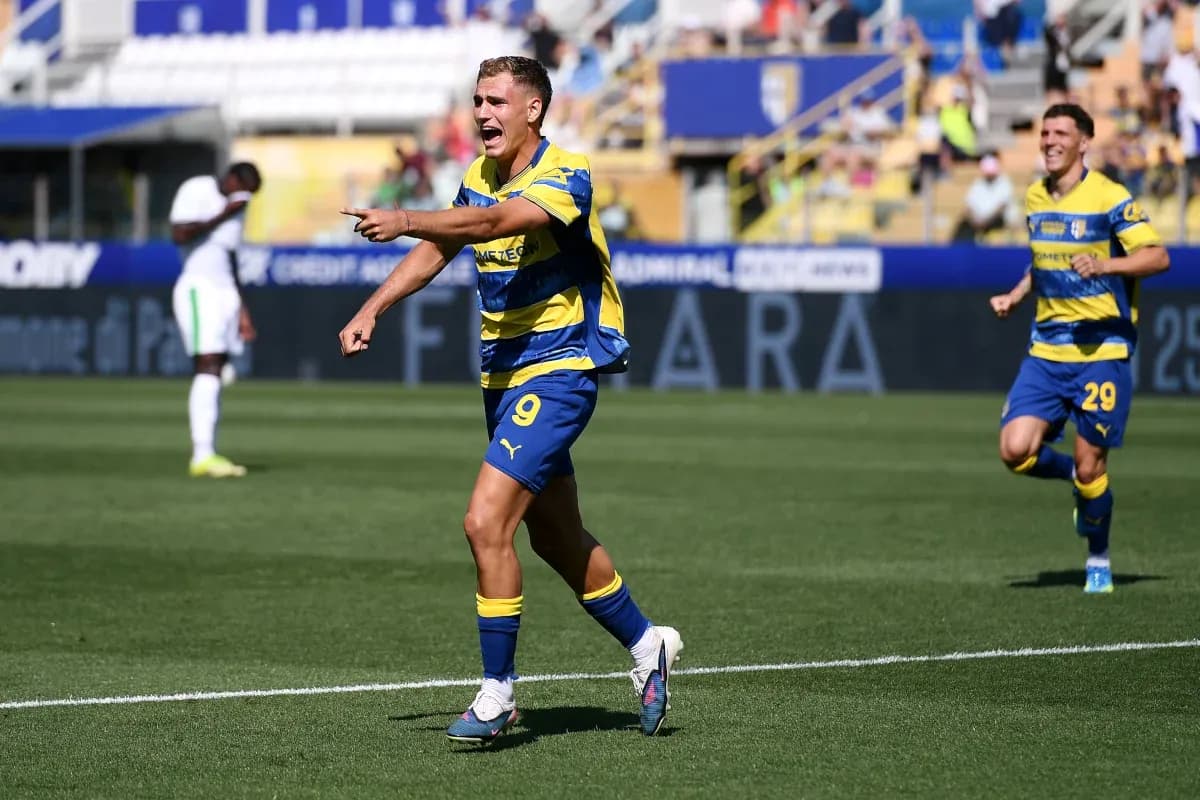
Parma vs Sassuolo: Tactical Analysis of Serie A Finale
Stadio Ennio Tardini felt like a curtain call and a stress test rolled into one. In the final act of the 2025 Serie A season, Parma and Sassuolo walked out already knowing their fates in the table, but not yet settled on how they wanted to be remembered. Following this result, Parma close the campaign 13th on 45 points, Sassuolo 11th on 49, the 1–0 home win a neat encapsulation of both sides’ seasonal DNA: Parma cautious, system-first, Sassuolo more expansive but defensively brittle.
I. The Big Picture – Shapes, Identities, Context
Carlos Cuesta doubled down on his structural creed, rolling out a 3-5-2 that has been his primary blueprint: three centre-backs shielding a side that overall has scored just 28 goals and conceded 46, with a total average of 0.7 goals for and 1.2 against per game. At home, Parma’s attacking output has been even more modest at 0.8 goals per match, but the system is designed to compress space, not chase chaos.
E. Corvi anchored the back three of A. Circati, M. Troilo and L. Valenti, with a broad, industrious midfield band of S. Britschgi, C. Ordonez, H. Nicolussi Caviglia, M. Keita and E. Valeri. Up front, the responsibility fell again on the broad shoulders of Mateo Pellegrino, partnered by D. Mikolajewski. Pellegrino arrived as Parma’s joint-top scorer in the league with 9 goals, but also as a high-contact forward: 546 duels total, 233 won, and 87 fouls committed. He is both finisher and first defender.
Fabio Grosso’s Sassuolo stayed loyal to the 4-3-3 that has defined them, a shape they have used in 36 league matches. S. Turati started behind a back four of W. Coulibaly, T. Macchioni, J. Idzes and U. Garcia. In midfield, K. Thorstvedt, L. Lipani and I. Kone formed a line that has mixed progression with a certain recklessness; Thorstvedt alone has 9 yellow cards and 44 tackles, plus 13 successful blocks and 32 interceptions.
Up front, the visitors brought serious firepower. A. Pinamonti, Sassuolo’s leading scorer with 9 league goals, spearheaded the line, flanked by D. Berardi and A. Laurienté. Berardi’s 8 goals and 4 assists, along with Laurienté’s 7 goals and 9 assists, explain why Sassuolo have finished with 46 goals in total and an average of 1.2 goals per game. On their travels they still manage 1.1 goals per match, but concede 1.3, a vulnerability that would again define them.
II. Tactical Voids – Absences and Discipline
This was not a full-strength encounter. Parma’s creative department was gutted: A. Bernabe (muscle injury), B. Cremaschi (knee), N. Elphege (thigh), M. Frigan (knee), J. Ondrejka (leg), G. Oristanio (knee) and G. Strefezza (ankle) all missed out. For a side that has failed to score in 16 league matches overall, losing so many ball-progressors and final-third technicians forced Cuesta to lean even harder on structure, set-piece threat and Pellegrino’s ability to occupy defenders.
Sassuolo had their own absentees: D. Bakola and S. Walukiewicz (leg), D. Boloca and F. Cande (knee and muscle issues), E. Pieragnolo (knee), plus F. Romagna and A. Vranckx listed as inactive. The back line and rotation options were thinner, pushing Grosso to trust Macchioni and Idzes centrally with little margin for error.
Disciplinary trends hovered over the contest. Parma’s season-long yellow-card distribution shows two spikes: 21.21% of their yellows between 46–60 minutes and another 21.21% between 76–90. Sassuolo are even more combustible late, with 28.92% of their yellows in the 76–90 window. With Troilo leading Serie A’s red-card rankings (1 straight red, 1 yellow-red) and Nemanja Matić also carrying a red in his profile from the season, there was always the sense that one mistimed tackle could tilt the narrative.
III. Key Matchups – Hunter vs Shield, Engine Room
The headline duel was “Hunter vs Shield”: Pinamonti and Berardi against Parma’s three-man rearguard. Sassuolo’s total 46 goals and away average of 1.1 per game met a Parma defence that, while conceding 46 overall, has been far more coherent in a back three. Troilo’s season numbers underline his importance: 27 tackles, 18 interceptions and 18 successful blocks. He is the stopper that allows Circati and Valenti to step wider and compress the half-spaces where Berardi and Laurienté love to drift.
On the other side, Pellegrino against Idzes and Macchioni was a war of attrition. Pellegrino’s 53 shots (22 on target) and 25 successful dribbles show a forward who will keep asking questions, and his 5 yellow cards suggest he is unafraid of the dark arts. Sassuolo’s away record of 24 goals conceded, with an average of 1.3 per game on their travels, hinted that if Parma could get the ball into Pellegrino early and often, a single goal might be enough.
In the “Engine Room” battle, H. Nicolussi Caviglia and M. Keita had to navigate the press and physicality of Thorstvedt and, from the bench, the looming presence of Matić. Thorstvedt’s 1055 passes at 82% accuracy and 32 key passes mark him out as a dual-threat: progressor and disruptor. But his 9 yellows meant that every transition Parma could force through the middle increased the chance of Sassuolo’s shape being broken by a necessary foul.
Laurienté’s role as the league’s second-ranked assist provider added another layer. With 54 key passes and 80 dribble attempts (29 successful), he is Sassuolo’s chaos generator. Cuesta’s use of wing-backs Britschgi and Valeri was clearly calibrated to double up on him, accepting that Parma’s own attacking width might be sacrificed to keep Laurienté facing his own goal rather than Corvi’s.
IV. Statistical Prognosis and What the 1–0 Tells Us
Across the season, the raw numbers framed this as a contest between a low-xG, low-margin Parma and a higher-variance Sassuolo. Parma’s total average of 0.7 goals for and 1.2 against suggests that most of their matches are decided by a single moment. Sassuolo’s 1.2 scored and 1.3 conceded overall paint a picture of a side that lives in the 2–1, 3–2 band of scorelines.
Following this result, the 1–0 feels like the logical endpoint of those trends when Cuesta’s structure wins out. Parma leaned on their 3-5-2, their 13 clean sheets overall and their comfort in tight games. Sassuolo’s attacking trio carried threat, but away from home, their defensive average of 1.3 goals conceded again proved their undoing.
If we project this through an xG lens, Parma’s approach is about compressing variance: limit shots, win set-pieces, trust a focal point like Pellegrino to convert one of few chances. Sassuolo’s is about volume and talent, trusting Pinamonti, Berardi and Laurienté to outscore their own back line’s frailties. At the Tardini, the more controlled, risk-averse model prevailed.
The tactical story of this match – a compact Parma back three anchored by Troilo, a hard-running midfield screening Sassuolo’s creators, and a single decisive attacking action – is entirely in keeping with the season-long data. Parma finish as a side whose ceiling is defined by structure; Sassuolo leave as a team whose next step will depend on whether they can add defensive solidity to an already potent attacking core.