Lecce's Defensive Masterclass Secures 1–0 Victory Over Genoa
Via del Mare staged a survival scrap that felt more like a nerve test than a spectacle. Lecce, 17th in Serie A, came into the final day knowing their entire season had been built on thin margins: only 28 goals scored overall, just 13 of them at home, and a goal difference of -22 built from 50 conceded. Genoa, 16th with 41 points and a goal difference of -10, arrived with slightly more breathing room but a similarly fragile profile: 41 goals for, 51 against across 38 matches.
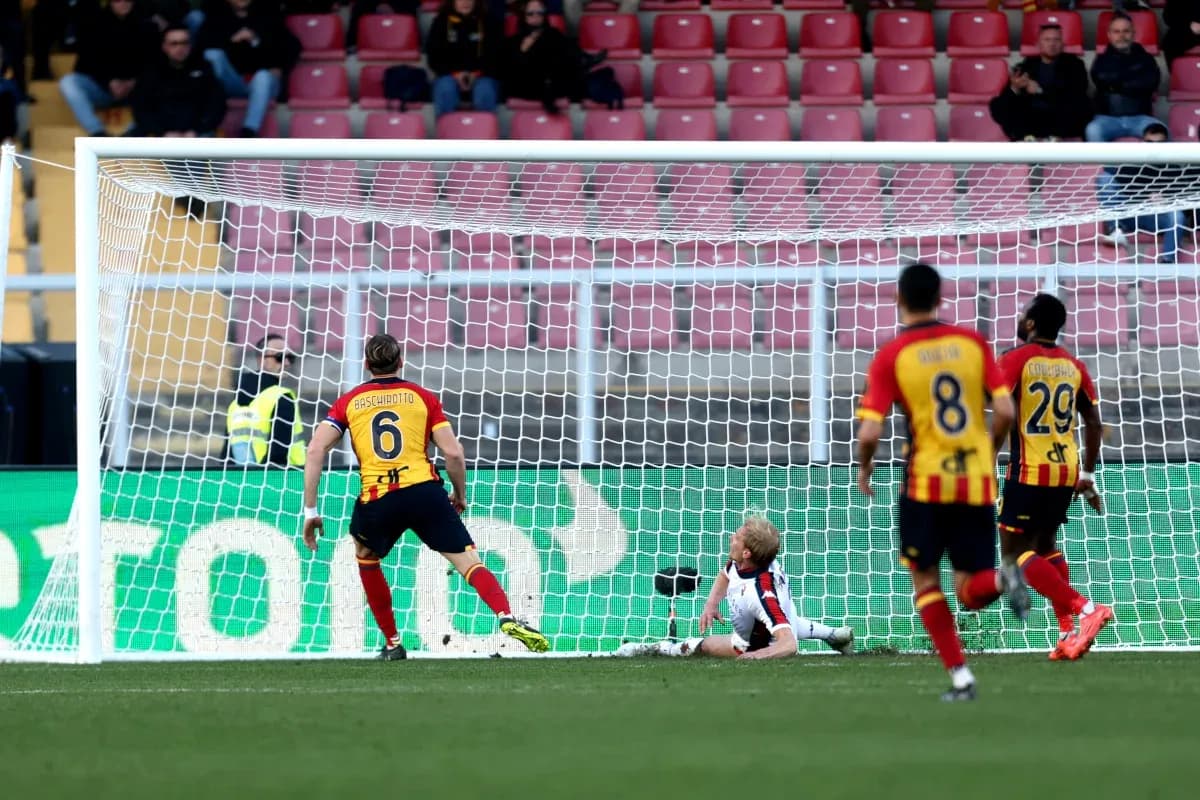
By full time, Lecce had carved out a 1–0 win, a scoreline that perfectly mirrored their season’s identity: low-scoring, attritional, and utterly dependent on defensive concentration. The half-time scoreline of 1–0 held to the end, a testament to a side that, heading into this game, had collected 10 clean sheets overall and were far more comfortable protecting a narrow advantage than chasing a shootout.
Eusebio Di Francesco doubled down on that defensive-first DNA with his trusted 4-2-3-1, a shape Lecce had used in 22 league matches. Daniele De Rossi, in contrast, rolled out a 3-5-1-1 that reflected Genoa’s tactical flexibility this season, with the club having used seven different base systems, most often some variation of a back three.
Tactical Voids and Discipline
Both squads arrived compromised. Lecce were without M. Berisha (thigh injury) and R. Sottil (back injury), limiting Di Francesco’s attacking rotation and nudging him towards continuity rather than risk. For a side that had failed to score in 19 league matches overall, stability in structure was non-negotiable.
Genoa’s absentees, though, were more structurally damaging. T. Baldanzi (illness) and Junior Messias (muscle injury) stripped creativity between the lines, while C. Ekuban and J. Ekhator (injuries), M. Cornet (muscle injury), J. Onana (injury), and L. Ostigard (knock) removed depth and physicality. Vitinha’s suspension for yellow cards further blunted their attacking spear. R. Malinovskyi, one of Serie A’s leading card collectors and a key creative outlet with 6 goals and 3 assists in the league, was listed as inactive for this fixture, depriving Genoa of their most proven long-range threat and set-piece specialist.
Discipline was always going to be a sub-plot. Lecce, heading into this game, had shown a pronounced late-game edge in bookings: 30.43% of their yellow cards arrived between 76–90 minutes, a period where emotional control was likely to be tested. Genoa, meanwhile, carried a more evenly spread but still combustible profile, with yellow-card peaks between 61–75 minutes (25.40%) and a history of early and mid-half reds. L. Banda’s season profile – 6 yellows and 1 red – and Kialonda Gaspar’s 1 red and 6 yellows underlined the edge in Lecce’s defending, even if both started this one on the bench.
Key Matchups
In the absence of league-wide top-scorer data, the “hunter” role for Lecce in this match rested on W. Cheddira at the tip of the 4-2-3-1 and the chaos creation of L. Banda from the left. Banda’s 5 goals and 4 assists this season, combined with 87 dribble attempts and 34 successes, framed him as Lecce’s most direct route to destabilising Genoa’s back three. Against a Genoa defence that, on their travels, had conceded 25 goals – an away average of 1.3 goals against per game – the plan was clear: isolate wide centre-backs and wing-backs, then attack space.
Genoa’s own “hunter” was L. Colombo, leading the line in the 3-5-1-1. With the visitors averaging 1.0 goals for per game away (19 in 19), Colombo’s role was less about volume and more about efficiency. His support, M. E. Ellertsson, operated in the pocket between Lecce’s double pivot and back four, tasked with finding the half-spaces around J. Siebert and Tiago Gabriel.
On the other side of the duel, Lecce’s “shield” was systemic rather than individual. Heading into this game, they conceded 1.3 goals per match overall, but their home profile – 24 conceded in 19, an average of 1.3 at Via del Mare – hid a key detail: 5 home clean sheets. When Lecce got their defensive block right, they could suffocate games. The 1–0 scoreline here was an extension of that pattern.
Engine Room
The battle that defined the rhythm unfolded in midfield. Y. Ramadani, one of Serie A’s most industrious enforcers this season, anchored Lecce’s double pivot. Across the campaign he had made 91 tackles, 11 successful shot blocks, and 46 interceptions, while committing 43 fouls and drawing 59. His 10 yellow cards spoke to the fine line he walks, but also to his importance as a breaker of opposition rhythm.
Beside him, O. Ngom provided legs and coverage, allowing the advanced trio of S. Pierotti, L. Coulibaly, and Banda to hold aggressive starting positions. Ramadani’s duel with Genoa’s central trio – M. Frendrup, Amorim, and P. Masini – was the game’s metronome. Frendrup’s energy and Amorim’s distribution tried to tilt possession, but without Baldanzi and Malinovskyi, Genoa lacked a true high-end playmaker to consistently unlock Lecce’s compact 4-4-1-1 defensive shell out of possession.
For Genoa, A. Martin and S. Sabelli were crucial as wing-backs, asked to provide width against Lecce’s full-backs, D. Veiga and A. Gallo. Veiga’s season numbers – 98 tackles, 14 blocked shots, 31 interceptions – underlined his status as Lecce’s most proactive defender. He repeatedly stepped out to meet crosses and wide combinations, and his ability to block shots at source limited Genoa’s clean looks at goal.
Statistical Prognosis and Tactical Verdict
Following this result, the season-long numbers still tell a story of two teams closer to the bottom than the middle, but Lecce’s approach in this match aligned almost perfectly with their statistical identity.
Heading into this game, Lecce’s attack was among the league’s least prolific: 0.7 goals per match overall, 0.7 at home, and 10 matches at Via del Mare where they failed to score. The fact they found a goal and then protected it for over 45 minutes fits the pattern of a side whose biggest home win margin this season was 2-1 and whose ceiling in a single home match was 2 goals. This was never going to be a shootout; it was about striking once and trusting the block.
Genoa’s away metrics – 4 wins, 7 draws, 8 losses, with 19 scored and 25 conceded – framed them as stubborn but limited travellers. Their 9 clean sheets overall (5 away) suggested they could lock games down, but the absence of key attackers and creators left them short of the xG and shot volume needed to overturn a deficit against a set defence.
In xG terms, the profiles point to a low-event contest: Lecce’s modest chance creation, Genoa’s away conservatism, and both sides’ reliance on structure over improvisation. The narrow 1–0 outcome is precisely what a model would have leaned toward: marginal home edge, slight defensive advantage for Lecce at Via del Mare, and limited attacking upside for a depleted Genoa.
Tactically, Di Francesco’s decision to lean into the familiar 4-2-3-1, trust his defensive pillars – Falcone’s goalkeeping, Veiga and Gallo’s full-back discipline, Ramadani’s screening – and release Banda as the primary outlet was vindicated. De Rossi’s 3-5-1-1 offered control in phases but lacked incision without Malinovskyi and Baldanzi.
In the end, Lecce survived by being exactly who they have been all season: cautious, combative, and utterly committed to making 1–0 enough. Genoa, for all their structural tweaks, could not escape the weight of their own numbers.