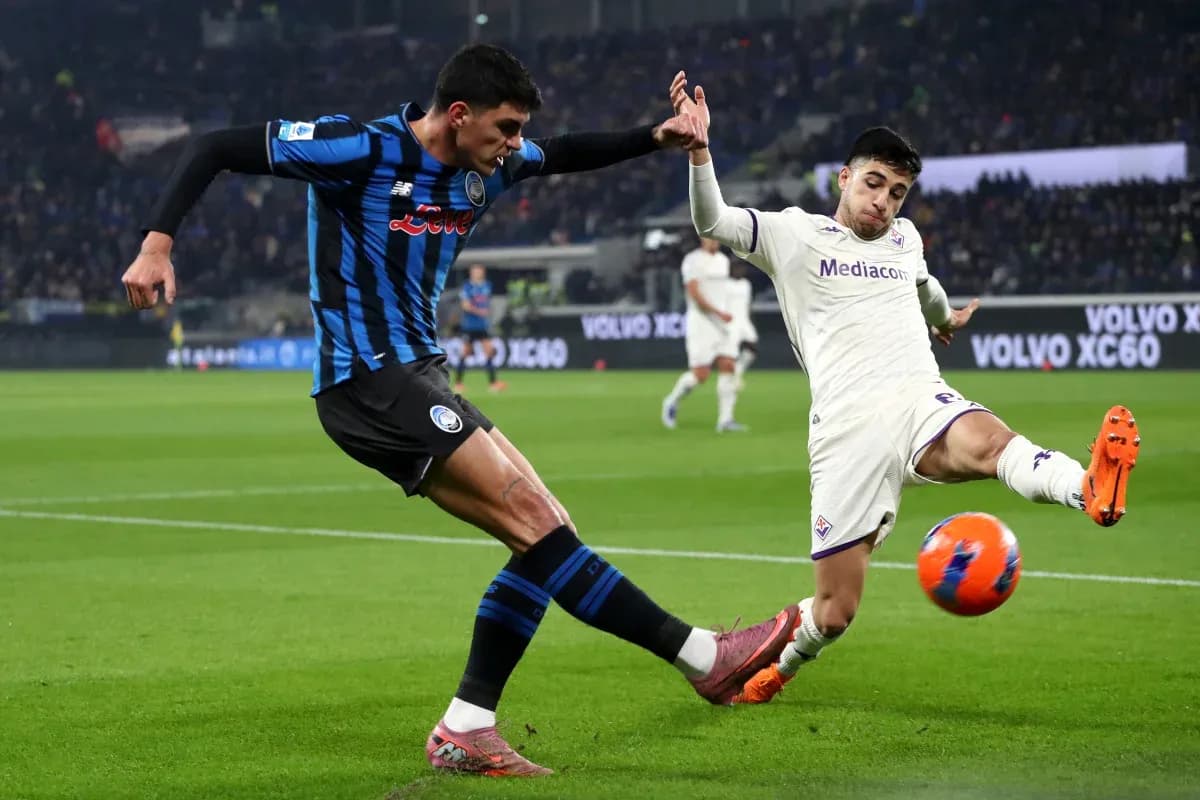
Fiorentina vs Atalanta: Serie A Season Finale Draw Analysis
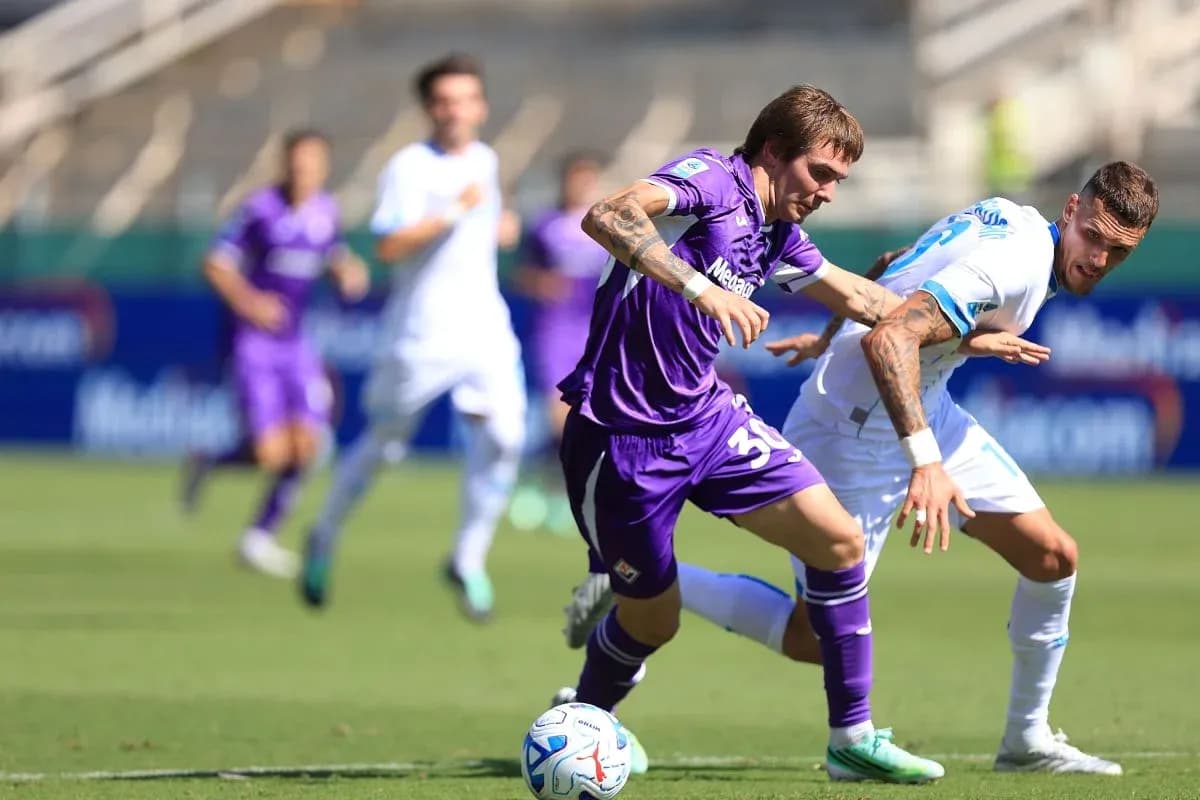
Under the Tuscan lights of Stadio Artemio Franchi, Fiorentina and Atalanta closed their Serie A campaigns with a 1–1 draw that felt like a neat distillation of their seasons: Fiorentina stubborn and streaky, Atalanta structured and superior in phases, but ultimately unable to turn control into a decisive edge.
I. The Big Picture – A Season Encapsulated in 90 Minutes
Following this result, the table tells a clear story. Fiorentina finish 15th on 42 points, their goal difference locked at -9 after scoring 41 and conceding 50 overall. At home they end with 4 wins, 9 draws and 6 defeats, scoring 21 and conceding 21 – a perfectly balanced home return that mirrors the evening’s stalemate.
Atalanta, by contrast, close in 7th with 59 points and a goal difference of 15, built on 51 goals for and 36 against overall. On their travels they leave the season with 6 away wins, 8 draws and 5 defeats, scoring 26 and conceding 21. A point in Florence fits that profile: organised, competitive, but short of the ruthlessness that might have vaulted them higher than a Conference League qualification spot.
Tactically, the lineups framed the contest. Paolo Vanoli leaned into Fiorentina’s most-used structure, a 4‑3‑3 that has started 15 league matches, with O. Christensen in goal behind a back four of Dodo, P. Comuzzo, D. Rugani and R. Gosens. The midfield trio of G. Fabbian, R. Mandragora and M. Brescianini was tasked with bridging a front three of J. Harrison, R. Piccoli and A. Gudmundsson.
Raffaele Palladino answered with Atalanta’s signature 3‑4‑2‑1, the shape they have deployed 34 times this season. M. Sportiello anchored a back three of G. Scalvini, I. Hien and H. Ahanor. R. Bellanova and Y. Musah worked the flanks around a central duo of M. De Roon and M. Pasalic, with L. Samardzic and K. Sulemana supporting lone forward G. Raspadori.
II. Tactical Voids – Absences and Discipline
Both sides arrived with notable absentees that subtly rewired their plans. Fiorentina were without M. Kean (calf injury) and F. Parisi (knee injury), removing a vertical outlet in attack and a natural left-back option. More significantly, L. Ranieri’s suspension for a red card forced Vanoli to reshuffle his defensive hierarchy. Ranieri, who has accumulated 8 yellow cards and 1 red this season, is normally a physical, front-foot defender; without him, the responsibility for leadership and aerial dominance shifted more squarely onto Rugani and the youngster Comuzzo.
On Atalanta’s side, the absence of L. Bernasconi (knee injury) and O. Kossounou (thigh injury) trimmed Palladino’s defensive rotation. While neither is among the headline names, the lack of extra depth in the back line was a quiet constraint, especially with Atalanta’s preference for an aggressive, high-energy 3‑4‑2‑1 that usually leans on fresh legs late on.
Season-long disciplinary trends framed the risk profile. Fiorentina’s yellow-card distribution shows a clear late-game spike: 25.30% of their yellows arrive between 76–90 minutes, with another 15.66% between 91–105. Red cards tell a similar story, with 66.67% shown between 76–90. This is a team that often frays under closing pressure.
Atalanta, for their part, also lean into late intensity. 23.33% of their yellow cards arrive from 76–90 minutes, and their reds are split evenly between 0–15 and 76–90. The closing quarter of an hour was always likely to become a disciplinary minefield, and the match’s tense final stretch reflected that shared tendency toward high-risk football when legs tire and spaces open.
III. Key Matchups – Hunter vs Shield, Engine Room vs Enforcer
The “Hunter vs Shield” narrative belonged to Atalanta’s attacking stable against Fiorentina’s fragile season-long numbers. On their travels Atalanta average 1.4 goals for and concede 1.1, while at home Fiorentina both score and concede 1.1 on average. Overall, Fiorentina’s 50 goals against to Atalanta’s 51 for created a natural fault line.
Even from the bench, the shadow of N. Krstović and G. Scamacca loomed large. Krstović, with 10 goals and 5 assists in 33 appearances, has taken 75 shots with 34 on target and delivered 21 key passes. Scamacca, also on 10 league goals, has scored 2 penalties from 2 and offers a more direct, penalty-box presence. Their profiles hint at contrasting threats: Krstović as a mobile connector, Scamacca as a finisher who attacks crosses and second balls. The mere possibility of either entering to exploit a tiring Fiorentina back line forced Vanoli’s defenders to hold deeper lines in the second half, reducing Fiorentina’s ability to counter in numbers.
For Fiorentina, A. Gudmundsson was the natural “hunter”, a creative forward with 5 goals and 4 assists this season. His 32 key passes and 39 dribble attempts (20 successful) underscore his role as both scorer and creator. Against Atalanta’s three centre-backs, his drifting into half-spaces between Hien and Scalvini was central to Fiorentina’s first-half threat, especially in the period leading up to their goal before the interval.
The “Engine Room” duel was fought between Fiorentina’s Mandragora–Brescianini axis and Atalanta’s De Roon–Pasalic. De Roon, the classic enforcer, anchored transitions and screened the back three, while Pasalic’s late surges and third-man runs tried to overload Mandragora, who was already juggling build-up duties. Y. Musah’s energy on the left and Bellanova’s width on the right often turned Atalanta’s 3‑4‑2‑1 into a 3‑2‑5 in possession, pinning Fiorentina’s full-backs and isolating their midfield three.
IV. Statistical Prognosis – xG in Disguise and Defensive Solidity
Even without explicit xG numbers, the season data offers a proxy for expected patterns. Heading into this game, Fiorentina’s overall scoring average of 1.1 goals for and 1.3 against suggested a side more likely to be out-created than dominant. Their 10 clean sheets in total (6 at home) highlight that when their structure holds, they can drag games into narrow margins – exactly what a 1–1 draw at home represents.
Atalanta’s overall averages of 1.3 goals for and 0.9 against, plus 13 clean sheets, point to a team whose underlying chance creation and defensive control are typically superior. On their travels, conceding only 1.1 goals on average with 6 away clean sheets underlines a disciplined block that usually keeps matches within their grasp.
Overlaying those profiles on the tactical shapes, the draw feels like a meeting point between Atalanta’s structural superiority and Fiorentina’s capacity to spoil. Fiorentina’s late-game disciplinary spikes and Atalanta’s own propensity for late cards meant the final quarter was always likely to be fractured rather than fluid, eroding the visitors’ ability to convert territorial dominance into a winner.
In narrative terms, the 1–1 at the Franchi becomes a fitting epilogue: Fiorentina, a side of narrow margins and fragile momentum, clinging to parity; Atalanta, a team of strong metrics and controlled aggression, again just short of the extra edge that turns good structure into great reward.