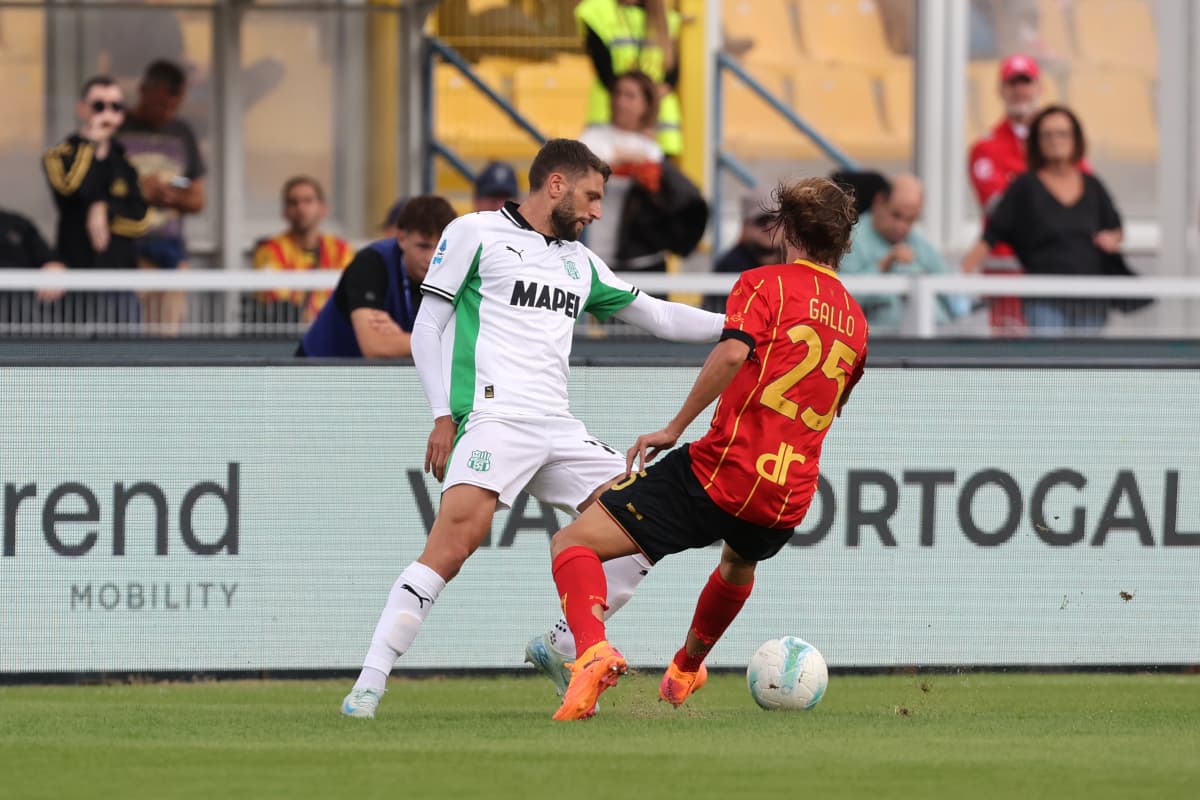
Sassuolo vs Lecce: A Tactical Showdown in Serie A
On a warm evening at MAPEI Stadium – Città del Tricolore, a season’s worth of tension compressed into 90 minutes. Sassuolo, 11th in Serie A on 49 points with a goal difference of -3, met a Lecce side clinging to safety in 17th on 35 points and a far bleaker -23. Following this result, the table tells one story; the 3-2 away win tells another: about structure, risk, and which team understood its own flaws better.
I. The Big Picture – Two Identities Collide
Sassuolo came into the game as they have lived most of the season: front‑foot and fragile. Overall they had scored 46 and conceded 49 across 37 league matches, with 25 goals for and 26 against at home. Fabio Grosso doubled down on that attacking DNA with his default 4‑3‑3: S. Turati behind a back four of W. Coulibaly, Pedro Felipe, T. Muharemovic and U. Garcia; a technical, ball‑secure midfield of N. Matic, K. Thorstvedt and I. Kone; and a front line of D. Berardi, M. Nzola and A. Lauriente.
Lecce, by contrast, arrived as survivors rather than stylists. Across the campaign they had managed only 27 goals in total while shipping 50, with a meagre 15 goals scored and 26 conceded on their travels. Yet Eusebio Di Francesco’s 4‑2‑3‑1 in Reggio Emilia was anything but timid: W. Falcone in goal, a back four of D. Veiga, J. Siebert, Tiago Gabriel and A. Gallo; Y. Ramadani and O. Ngom as the double pivot; S. Pierotti, L. Coulibaly and L. Banda behind lone forward W. Cheddira.
The scoreboard – 2-3 to Lecce after a 1-2 half‑time – mirrored their season-long profiles. Sassuolo, averaging 1.3 goals for and 1.4 against at home, once again found the net but could not close the back door. Lecce, used to grinding away performances with only 0.8 away goals for and 1.4 against, instead found rare cutting edge without ever looking truly secure.
II. Tactical Voids – Absences and Discipline
Both coaches had to navigate notable absences. Sassuolo were without D. Boloca (muscle injury), F. Cande and E. Pieragnolo (both knee injuries), plus F. Romagna and A. Vranckx listed as inactive, and S. Walukiewicz out with a leg injury. That cluster of defensive and midfield absentees pushed Grosso toward a relatively untested back line and placed even more responsibility on Matic as the single true holding reference.
Lecce’s list was shorter but still significant. M. Berisha (thigh injury) and R. Sottil (back injury) removed two options who could have offered either control or vertical threat from the bench. It meant Di Francesco leaned heavily on his starting band of three behind Cheddira, with fewer like‑for‑like alternatives if the game turned chaotic.
Discipline has been a season‑long subplot for both sides and it coloured the tactical tone. Sassuolo’s campaign yellow‑card profile shows a late‑game spike: 29.63% of their bookings arriving between 76-90 minutes, with another 14.81% between 91-105. Lecce mirror that pattern, with 29.85% of their yellows also in the 76-90 window and 13.43% from 91-105. This shared tendency toward late cautions framed a finale that was always likely to fray at the edges once fatigue and desperation set in.
Individually, the disciplinary core is clear. For Sassuolo, Thorstvedt’s 8 yellows and Matic’s 7 (plus a red) underline how aggressively they defend transitions. For Lecce, Ramadani and D. Veiga both sit on 9 yellows, with L. Banda and Kialonda Gaspar each carrying a red. Even without specific match bookings data, the season profile suggests that once the tempo rose in the second half, both midfields were operating on a disciplinary tightrope.
III. Key Matchups – Hunter vs Shield, Engine Room vs Enforcer
The “Hunter vs Shield” duel was written across Sassuolo’s attacking talent and Lecce’s brittle defensive record. Andrea Pinamonti, Sassuolo’s top scorer with 9 league goals and 3 assists, began on the bench but loomed over the contest as the archetypal penalty‑box hunter. His 57 shots (30 on target) and 17 key passes speak to a forward who lives on service, and the presence of Berardi and Lauriente from the start was designed to supply exactly that.
Berardi, with 8 goals and 4 assists in the league, remains Sassuolo’s most complete attacking reference. His 622 passes and 32 key passes frame him as a hybrid winger‑playmaker, and his 2 penalties scored from 3 attempts – one missed – highlight both his responsibility and fallibility in decisive moments. Lauriente, Serie A’s second‑ranked provider with 9 assists and 7 goals, is the chaos factor: 79 dribbles attempted, 29 successful, and 54 key passes. Together, this trio embodies why Sassuolo average 1.2 goals overall despite long barren stretches (11 league matches failed to score).
Against them stood Lecce’s “shield”: a unit that concedes 1.4 goals per game overall, 1.4 away, but is capable of heroic resistance on good days. D. Veiga’s 95 tackles and 14 blocked shots, plus Ramadani’s 90 tackles, 11 blocks and 46 interceptions, form the spine of Di Francesco’s defensive plan. The idea is simple: push Veiga high to confront Lauriente’s runs and trust Ramadani to plug the half‑spaces where Berardi likes to drift inside.
In the engine room, the duel between Matic and Ramadani was the game’s metronome. Matic’s 1,699 completed passes at 86% accuracy and 20 key passes show a deep‑lying playmaker who dictates tempo under pressure, while Ramadani’s 1,412 passes at 80% and 17 key passes mark him as Lecce’s organiser out of possession and their first launcher in transition. Around them, Thorstvedt’s two‑way profile – 4 goals, 4 assists, 32 interceptions and 13 blocked shots – gave Sassuolo a late‑arriving runner from midfield that Lecce’s double pivot had to track constantly.
Higher up, L. Banda was Lecce’s wild card. With 4 goals, 4 assists, 83 dribbles attempted and 32 successful, he is the one Lecce attacker who can destabilise a back four on his own. Against a Sassuolo defence that has conceded 49 times overall and only kept 8 clean sheets, Banda’s directness against W. Coulibaly and U. Garcia was always going to generate moments of panic.
IV. Statistical Prognosis – xG Shapes and Defensive Nerves
Even without explicit xG numbers, the season data outlines the underlying shot quality trends. Sassuolo’s 46 goals from a side rich in creative talent like Berardi and Lauriente suggests they routinely generate decent chances, especially at home where they average 1.3 goals for. However, 11 matches without scoring and 5 away clean sheets conceded to opponents underline their streaky nature: when the first combination fails, they can grow impatient and structurally loose.
Lecce, with only 27 goals in total and 0.8 on their travels, are used to living off low‑volume, medium‑quality opportunities – often in transition. Their 9 clean sheets overall, including 5 away, indicate that when their block is compact and Ramadani’s screening is sharp, they can force opponents into lower‑quality shots from range or wide angles.
Following this result, the 3-2 scoreline feels like the meeting point of those curves. Sassuolo generated enough attacking threat to score twice, as their season averages would predict, but their defensive baseline – 1.3 goals against overall, 1.4 at home – again failed under the weight of Lecce’s rare but incisive counters. Lecce, punching above their usual attacking output, exploited exactly the kind of open‑field scenarios that Banda, L. Coulibaly and Cheddira thrive in.
In tactical terms, the match becomes a case study in risk management. Sassuolo leaned into their strengths but paid the familiar price in transition. Lecce, aware of their own limitations in sustained possession, accepted long periods without the ball and waited for the right moments to strike. The numbers had warned that Sassuolo’s attacking ceiling and defensive floor sit dangerously close together; over 90 minutes in Reggio Emilia, Lecce simply pushed them through the trapdoor.