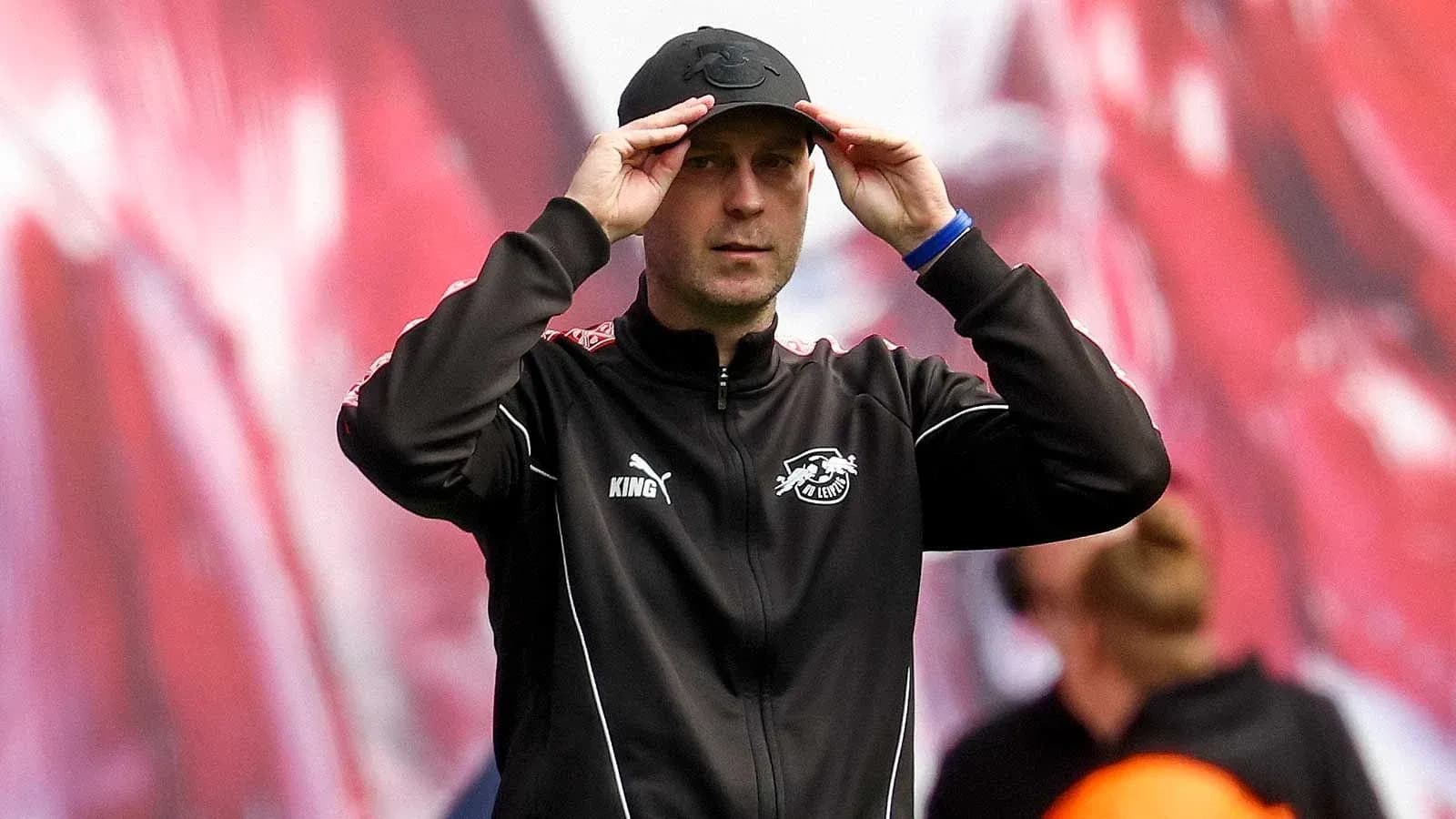
RB Leipzig's Marco Werner Faces Uncertainty Despite Strong Season
The numbers say one thing. The mood in Leipzig says something very different.
RB Leipzig have just come off a season that, on paper, should strengthen Marco Werner’s position, not weaken it. After the chaos of 2024/25 – the club’s worst Bundesliga campaign and a year without European football – Werner dragged a radically rebuilt side back to the brink of a club record. Leipzig finished just two points short of their 2016/17 best-ever tally.
A 1.95-point average over 38 league games. That is elite territory in almost any boardroom.
He did it while the squad was being ripped up around him. Leipzig lost their three top scorers from the previous season – Benjamin Sesko, Xavi Simons and Lois Openda – in one brutal summer. Yussuf Poulsen and Kevin Kampl, two of the club’s long-serving pillars, also moved on. Experience, goals, leadership: gone.
Werner did not fold. He rebuilt.
Christoph Baumgartner grew into a bigger role. Nicolas Seiwald stepped out of the shadows. Yan Diomande, the marquee arrival, became a defining figure in Leipzig’s new-look side. Inside the dressing room, the coach is said to have the players with him. Performances improved, results followed, and the scars of the previous campaign began to fade.
And yet, Werner looks over his shoulder.
In Leipzig’s corridors of power, the debate is far less forgiving. A Sky report captured the scepticism swirling around the “Global Team” project: too much reliance on Diomande, not enough on a clear, convincing game plan; too much luck in tight moments, not enough control over 90 minutes. The sense, among critics, is that the structure is fragile, the football not yet robust enough for the club’s stated ambitions.
The tension had been building long before the final league table offered its flattering verdict. By February, discontent was already seeping through the cracks.
It burst into the open after a 0–2 DFB-Pokal quarter-final defeat to Bayern Munich. The performance against a dominant Bayern side was, by most measures, “decent” and “respectable” – words Red Bull CEO Oliver Mintzlaff himself used. But he did not linger on the cup exit.
He went straight for the Bundesliga form.
Four points from games against Mainz, St. Pauli and Cologne. For Mintzlaff, that return was nowhere near the standard he demands.
“In the league, that wasn’t anywhere near what we want. I hold the team accountable for that,” he said, and the temperature around Werner rose sharply.
Publicly, the club hierarchy had long framed this season as one of transition. A massive squad overhaul. A new core. A modest target: just get back into any European competition and reset from there. It was a pragmatic line, one that bought Werner some time.
Mintzlaff cut through it.
“I want to be in the Champions League!” he declared, calling that goal “achievable” with this group. In his view, the problem was not youth or naivety. It was the team’s inability to deliver their level for the full 90 minutes in every Bundesliga match.
That was the moment the narrative shifted. The rebuild stopped being a shield. It became a test.
Soon after, Bild reported that Werner was coming under increasing pressure at RB. The atmosphere, they wrote, was turning “increasingly frosty”. Results picked up enough to hit the European target, but the sense of scrutiny never really eased.
So Leipzig end the season back where the club believes it belongs: in Europe, with a strong points haul and a coach whose record stands up to almost any internal comparison. Werner has met – and arguably exceeded – the objectives publicly set for him with a squad that was almost unrecognisable from the year before.
Still, he fears for his job.
The next move lies with the sporting leadership around Rouven Schröder and his colleagues, who must sell Werner’s work upwards to the powerful Red Bull board headed by Mintzlaff. Convince them that this is a project still climbing, not stalling, and Werner stays. Fail, and Leipzig may once again tear up a plan just as it starts to bear fruit.
For a coach who has delivered numbers, growth and European football, the question is as stark as it is simple: in this version of RB Leipzig, is that ever enough?