Pisa vs Napoli: Serie A Clash Highlights
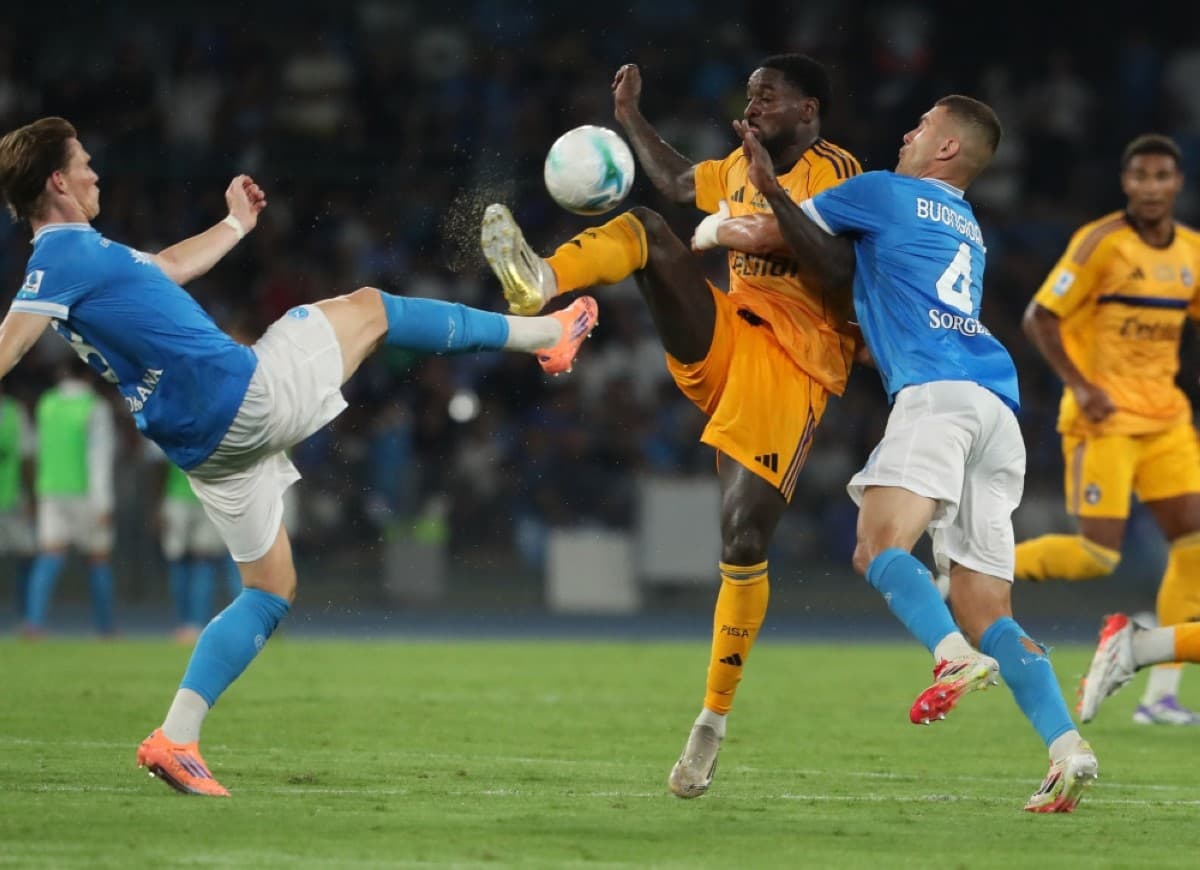
The afternoon at Arena Garibaldi – Stadio Romeo Anconetani closed not with a twist, but with a confirmation. In a Serie A season that has pushed Pisa to their limits, Napoli’s 3-0 win in Round 37 felt like the logical end point of two very different journeys: one side already condemned to 20th place with 18 points and a goal difference of -44, the other consolidating 2nd with 73 points and a +21 goal difference, their Champions League ticket effectively stamped.
I. The Big Picture – Structures and Season DNA
Pisa lined up in a 3-5-2 under Oscar Hiljemark, a shape that has been their default this campaign, used in 20 league matches. It is a system designed to add bodies in midfield and protect a fragile defence that, heading into this game, had conceded 69 goals in total, with 26 of those at home. Their attacking record at home – 9 goals in 19 matches, an average of 0.5 – framed the challenge: to hurt one of the league’s most organised sides while carrying one of its bluntest attacks.
Antonio Conte answered with a 3-4-3, a shape Napoli have used more sparingly (5 league matches) but one that here underlined their superiority between the lines. With 57 goals overall at an average of 1.5 per match and only 36 conceded, Napoli arrived as a side built on balance: three centre-backs to control transitions, a double pivot to dictate rhythm, and a front three to stretch and finish.
The scoreline told a familiar story by half-time: Napoli 2-0 up, the contest essentially framed. Pisa, who have failed to score in 21 league matches overall, once again found themselves chasing a game with too little edge and too few ideas.
II. Tactical Voids – Absences and Discipline
The absences list painted an even grimmer picture for Pisa. R. Bozhinov and F. Loyola were suspended with red cards, while F. Coppola, D. Denoon and M. Tramoni were sidelined by muscle and ankle injuries. Lorran was marked as inactive. For a squad already stretched by a long relegation battle, these missing pieces stripped Hiljemark of rotation options and, crucially, of fresh legs in the wide and attacking zones.
On Napoli’s side, David Neres and R. Lukaku were both out injured, while M. Politano missed the match due to yellow-card accumulation. In another context, losing that much attacking depth would have forced Conte into compromise. Here, the depth on the bench – K. De Bruyne, F. Anguissa, B. Gilmour and others – meant Napoli could still rotate quality into every line.
Disciplinary patterns this season also foreshadowed Pisa’s struggles to manage game states. Heading into this game, Pisa’s yellow cards peaked late, with 25.97% shown between 76-90 minutes. It is a statistic that suggests fatigue, late chasing of games, and a tendency to lose control as matches slip away. Their red-card spread, with incidents in the 16-30, 31-45, 46-60 and 91-105 ranges, underlines a group that too often crosses the line when under pressure.
Napoli, by contrast, have been more measured. Their yellow-card peak sits between 61-75 minutes at 30.61%, often in the period where they tighten up to protect leads. The only red cards in their league campaign have come late, with 100.00% of their reds between 76-90 minutes – a sign of occasional over-commitment, but usually in games where they are already on the front foot.
III. Key Matchups – Hunter vs Shield, Engine Room
The headline duel was always going to be R. Højlund against Pisa’s back three. The Dane arrived as Napoli’s top scorer with 11 league goals and 5 assists, supported by 44 total shots, 23 on target. His game is built on vertical runs and constant duels – 303 duels contested, 108 won – and against a Pisa side that has conceded an average of 1.4 goals at home and 1.9 overall, he had the perfect platform.
Tasked with containing him, A. Caracciolo embodied Pisa’s resistance. The 35-year-old has been one of Serie A’s most active defenders this season: 71 tackles, 24 blocked shots, 51 interceptions and 261 duels, winning 139. Yet his 10 yellow cards tell of a defender often forced into last-ditch interventions, a symptom of a team constantly defending deep and late.
In midfield, the “engine room” clash pitted S. McTominay and S. Lobotka against Pisa’s central trio of M. Aebischer, M. Hojholt and E. Akinsanmiro. McTominay has been a revelation: 10 league goals and 3 assists from midfield, 71 shots with 34 on target, 28 tackles and 13 blocked shots. His physical presence (312 duels, 164 won) gave Napoli a vertical threat from the second line that Pisa struggled to track.
Aebischer, Pisa’s most rounded midfielder, brought volume but lacked the platform. With 1 goal, 1 assist, 1490 total passes at 85% accuracy, 64 tackles and 35 interceptions, he is the one who tries to hold Pisa together. Yet his 8 yellow cards and 44 fouls committed reflect the same structural issue: Pisa’s midfield spends more time reacting than dictating.
IV. Statistical Prognosis – Why 3-0 Felt Inevitable
Heading into this game, the numbers were weighted heavily in Napoli’s favour. On their travels, they had scored 25 goals in 19 matches, an average of 1.3, while conceding just 18 away, 0.9 per match. Pisa, at home, were averaging 0.5 goals scored and 1.4 conceded. Combine those trends and the probability of Napoli controlling territory, chances and ultimately the scoreline was always high.
Napoli’s 14 clean sheets overall, 8 of them away, reflected a defensive structure comfortable in hostile environments. Pisa’s 5 clean sheets in total, just 4 at home, underlined how rare it is for them to shut opponents out. With no penalties missed by either side this season – Pisa have scored 6 out of 6, Napoli 4 out of 4 – there was no hidden inefficiency to tilt the balance back towards the underdogs.
Following this result, the narrative is clear. Napoli’s blend of a compact back three, a disciplined double pivot and the dual threat of Højlund and McTominay in advanced zones has carried them to the league’s upper tier. Pisa, locked into a 3-5-2 that too often becomes a 5-3-2 under pressure, have been dragged down by an anaemic attack and a defence constantly exposed.
The 3-0 in Pisa was less a shock than a final, clinical expression of those underlying truths.