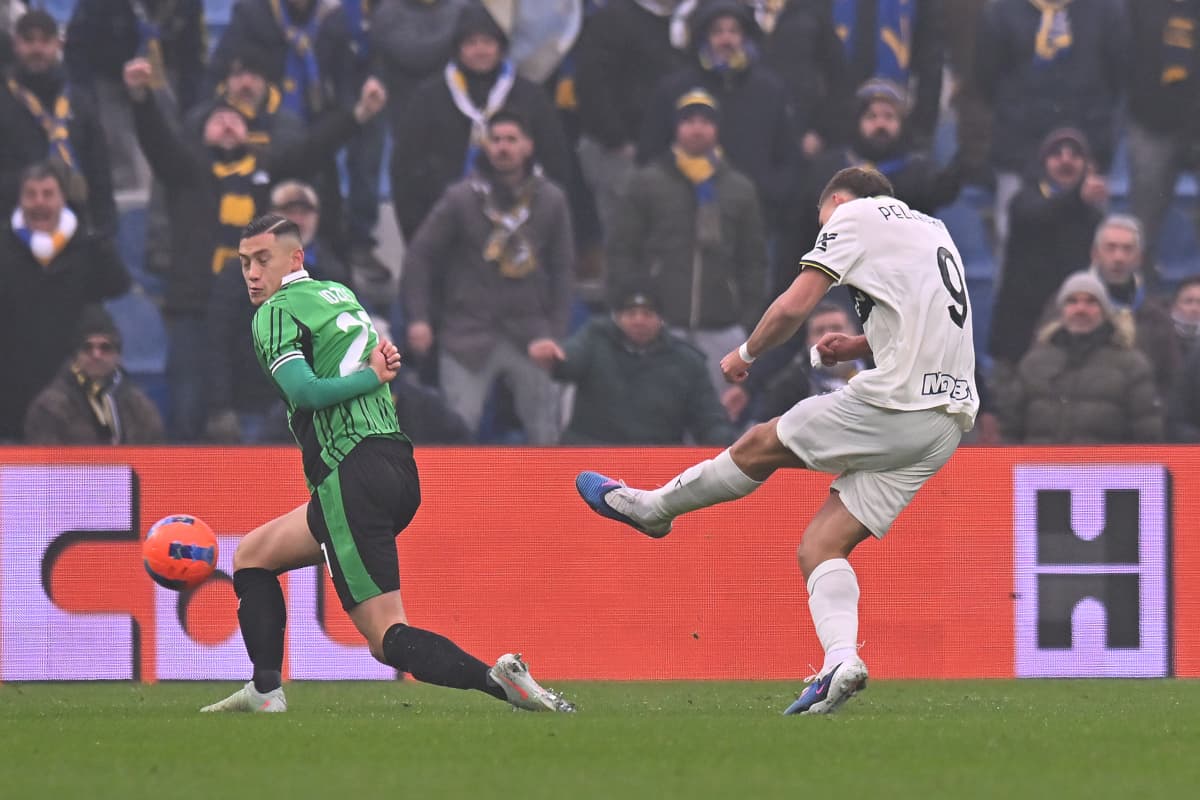
Parma vs Sassuolo: Final Day Serie A Clash
Parma host Sassuolo at Stadio Ennio Tardini on the final day of the 2025 Serie A regular season, a mid-table fixture whose main stakes are positional prize money and optics for next year: Parma sit 13th with 42 points and a -19 goal difference, while Sassuolo are 11th on 49 points with a -3 goal difference in the league phase. Neither side is in the title, European, or relegation fight, but a win could still shift one or two places in the final table and shape the narrative of their 2026 planning.
Head-to-Head Tactical Summary
The most recent meeting came on 3 January 2026 at MAPEI Stadium - Città del Tricolore in Serie A (Regular Season - 18), where Sassuolo and Parma drew 1-1, with a 1-1 scoreline at half-time and no further goals in the second half. Before that, they met in a club friendly at Stadio Ennio Tardini on 2 August 2023 (Club Friendlies 3), where Parma won 1-0 after a 0-0 first half, suggesting Parma were comfortable sitting in and deciding the match late.
On 1 August 2021, also at Stadio Ennio Tardini in a club friendly (Club Friendlies 3), Sassuolo beat Parma 3-0, a clear away win that underlined Sassuolo’s attacking ceiling in open games. Their last Serie A encounter at this venue was on 16 May 2021 (Regular Season - 37), when Sassuolo won 3-1 at Stadio Ennio Tardini after a 1-1 first half, overturning parity with greater second-half efficiency. Earlier that same Serie A season, on 17 January 2021 at MAPEI Stadium - Città del Tricolore (Regular Season - 18), the sides drew 1-1 again, with Parma leading 1-0 at half-time before being pegged back.
Global Season Picture
- League Phase Performance:
Parma: 13th place with 42 points from 37 matches, scoring 27 and conceding 46 in the league phase. That translates to a low-output attack and a vulnerable defense (27 goals for, 46 against).
Sassuolo: 11th place with 49 points from 37 matches, with 46 goals scored and 49 conceded in the league phase, reflecting a more productive attack but still a negative goal difference. - Season Metrics:
Scope detection shows team_statistics games played (37) matching standings (37), so these figures are also in the league phase.
Parma’s attack has been low-volume but structured: 27 goals from 37 games, averaging 0.7 goals per match, with 12 clean sheets and 16 matches where they failed to score in the league phase. The defensive record (46 conceded, 1.2 per match) points to a compact but not impermeable block. Their disciplinary profile is relatively steady but with notable late-game aggression: yellow cards peak in the 46-60 and 76-90 ranges, and red cards are clustered around the 31-45 and 61-90 minutes, indicating stress when games open up.
Sassuolo have played a more open style: 46 goals scored (1.2 per match) and 49 conceded (1.3 per match) in the league phase. They have 8 clean sheets and failed to score 11 times, reflecting higher attacking risk and exposure. Their yellow cards spike late (76-90 minutes), consistent with a team pushing hard in closing phases, and red cards are spread across 16-60 and 76-90 minutes, hinting at aggressive pressing and recovery defending. - Form Trajectory:
Using the standings form strings in the league phase:
Parma come in with "LLLWW" – three consecutive defeats followed by two wins. That pattern suggests a recent corrective upswing after a poor run, with confidence partially restored but underlying inconsistency still present.
Sassuolo’s "LLWDW" shows two defeats, a draw, and two wins in their last five. They have stabilized after back-to-back losses, and the mix of results points to a side still volatile but trending slightly upward in terms of points return.
Tactical Efficiency
With both teams’ statistical profiles drawn in the league phase, the tactical contrast is clear even without explicit xG or Poisson values from the comparison block. Parma’s average of 0.7 goals for and 1.2 against per match indicates a low-efficiency attack and a defense that, while not catastrophic, does not fully compensate (goal difference -19). Their frequent use of three-at-the-back structures (3-5-2, 3-4-2-1, 3-1-4-2) points to a focus on defensive stability and central congestion, but the low scoring rate shows limited conversion of possession into high-quality chances.
Sassuolo, predominantly in a 4-3-3 in the league phase, post 1.2 goals for and 1.3 against per match. This suggests a more expansive, higher-variance game model: their "Attack Index" would grade above Parma’s, with a willingness to commit numbers forward and accept defensive risk. Defensively, conceding 49 goals indicates an "average to fragile" block, particularly away from home, but still superior in net terms to Parma’s balance.
In efficiency terms, this match sets a cautious, low-output Parma against a Sassuolo side that trades some defensive security for offensive volume. Any comparison-based Attack/Defense Index would likely place Sassuolo slightly above league midline in attack but below in defense, while Parma would sit below midline in attack and closer to midline in defense, making marginal gains at both ends decisive on the day.
The Verdict: Seasonal Impact
For Parma, a positive result would likely secure or slightly improve a 13th-place finish in the league phase, turning a negative goal difference and low scoring output into a survivable mid-table story and providing a platform to argue that the late "WW" in their "LLLWW" run represents a genuine upward curve. A defeat, by contrast, would cement the narrative of a fragile attack and leave them vulnerable to being overtaken if teams below close the gap, reinforcing the need for significant offensive recruitment in 2026.
For Sassuolo, a win away at Stadio Ennio Tardini could push them toward the top half or at least consolidate 11th with 50+ points in the league phase, validating their more expansive style despite the negative goal difference. Dropped points would keep them in the same mid-table bracket but might be read as evidence that their attacking risk profile has not translated into enough upward mobility, sharpening the focus on defensive upgrades and game-management in tight matches.
In the broader Serie A landscape, this is not a title, European, or relegation decider, but it is a clarity game: it will help define whether Parma’s recent mini-resurgence is sustainable and whether Sassuolo’s attack-first identity can be the basis for a top-half push in 2026, or if both remain locked in the lower mid-table tier without structural change.