Inter and Hellas Verona Draw in Dramatic Serie A Clash
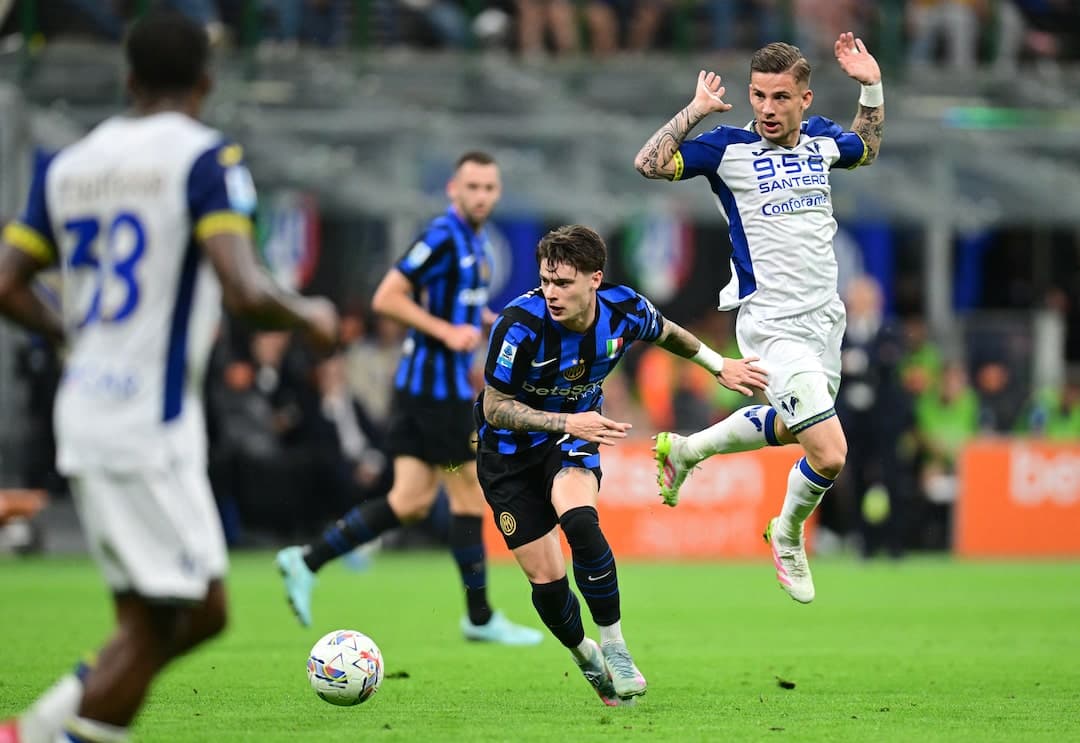
The late spring light over San Siro felt almost ceremonial as Inter and Hellas Verona walked out for this Round 37 Serie A meeting. The league table framed it as a mismatch: Inter, top of the standings on 86 points with a towering overall goal difference of 54 (86 scored, 32 conceded), against a Verona side marooned in 19th with 21 points and an overall goal difference of -34 (25 scored, 59 conceded). Yet the final act refused to follow the script. Over 90 minutes, the champions-elect were dragged into a 1-1 draw that said as much about Verona’s defiance as it did about Inter’s human limits.
Cristian Chivu stayed loyal to Inter’s seasonal DNA, rolling out the familiar 3-5-2 that has underpinned an imposing campaign: at home they had won 14 of 19 league games, scoring 50 and conceding just 16, an average of 2.6 goals for and 0.8 against at San Siro heading into this game. Y. Sommer anchored a back three of M. Darmian, S. de Vrij and F. Acerbi, with Carlos Augusto and Luis Henrique stretching the pitch as wing-backs. Inside, H. Mkhitaryan, P. Sucic and A. Diouf formed the midfield chain, while A. Bonny partnered L. Martinez up front.
On the other bench, Paolo Sammarco accepted the reality of the venue and the opponent. Verona abandoned their more common three-at-the-back shapes and locked into a deep 5-3-2: L. Montipo behind a line of five – M. Frese, N. Valentini, A. Edmundsson, V. Nelsson and R. Belghali – with S. Lovric, R. Gagliardini and A. Bernede tasked with compressing the middle. Up front, T. Suslov and K. Bowie were less a strike pair and more the first line of a pressing trap.
The tactical voids were almost entirely on Verona’s side. D. Mosquera, G. Orban, D. Oyegoke and S. Serdar were all listed as missing the fixture, stripping Sammarco of depth and, in Orban’s case, a direct attacking threat. For a team that had managed only 25 goals overall at an average of 0.7 per match, every absent forward option mattered. Inter, by contrast, arrived with their stars available; the most notable “absence” was on the teamsheet rather than the injury list, as Chivu chose to hold F. Dimarco, N. Barella, H. Calhanoglu and M. Thuram in reserve.
Discipline always loomed as an undercurrent. Inter’s season-long yellow-card profile shows a clear late-game spike: 30.65% of their cautions come between 76-90 minutes, part of a broader pattern where the 61-75 and 76-90 windows combine for over half of their bookings. Verona, meanwhile, are one of the league’s more combustible sides: their yellow cards peak between 46-60 minutes at 23.26%, and they have red-card incidents across multiple phases, including 50.00% of their reds arriving between 76-90 minutes. The script suggested that as legs tired and spaces opened, tempers and timing would be tested.
On the pitch, the “Hunter vs Shield” duel took center stage. Inter’s overall scoring machine – 86 goals at 2.3 per match – was spearheaded by L. Martinez, whose league return of 17 goals and 6 assists underscores his status as Serie A’s top-rated forward. His 69 shots, 39 on target, and 246 duels (112 won) paint the picture of a relentless, all-phase striker. Opposite him was Verona’s fragile defensive record: 59 goals conceded overall at 1.6 per game, with a particularly leaky away profile of 33 goals against in 19 matches, an average of 1.7.
Yet Verona’s shield was not entirely brittle. In M. Frese, Sammarco had a defender who brings both bite and resilience: 79 tackles, 10 blocked shots and 28 interceptions across the season, alongside 8 yellow cards that speak to his edge. Inside, Gagliardini, one of Serie A’s leading collectors of bookings with 10 yellows, patrolled the central lane with 73 tackles, 13 blocked shots and 54 interceptions. He is both anchor and accelerant: vital in Verona’s defensive structure, but always a card risk in those frantic middle-third duels.
Behind them, Montipo has often faced siege conditions. Verona’s 6 clean sheets overall – split evenly between home and away – are hard-earned, and their defensive blocks and last-ditch interventions are more survival than strategy. Still, the 5-3-2 at San Siro was designed to funnel Inter’s attacks into crowded central zones, forcing L. Martinez and Bonny to receive with backs to goal rather than attacking the space behind.
Inter’s “Engine Room” dynamic shifted over the 90 minutes. Starting without the passing authority of Calhanoglu and the vertical energy of Barella, the creative responsibility initially fell on Mkhitaryan and Sucic. Mkhitaryan’s intelligence between the lines was meant to knit play, while Sucic and Diouf offered legs and second-ball pressure. But as Verona’s compact block held and transitions remained scrappy, the weight of expectation inevitably pointed toward the bench: Calhanoglu’s 41 key passes and 90% pass accuracy, Barella’s 72 key passes and 50 successful dribbles, and Dimarco’s league-leading 16 assists and 94 key passes represent a different class of control and incision.
For all Inter’s structural superiority, Verona’s season-long narrative hinted they would not simply fold. Their form line – a scatter of draws and defeats with the occasional win – masks a certain stubbornness: 12 draws overall, 7 of them on their travels, show a team that knows how to drag stronger opponents into attritional contests. They have failed to score in 19 matches, but when they do stay in games, they are adept at turning rhythm into friction.
From a statistical prognosis, the Expected Goals balance would almost certainly tilt toward Inter: a champion-level attack at home against one of the league’s most porous defences should generate a higher xG volume, especially given Inter’s ability to sustain pressure and their 18 clean sheets overall pointing to secure rest defence. Verona’s offensive output – 0.7 goals per game, 13 away goals in 19 matches – suggests their xG in such a fixture would be modest, reliant on set pieces or isolated breaks.
Yet following this result, the story is one of margins rather than metrics. Inter, already superior on every macro indicator – points, goal difference, goals scored, defensive solidity – discovered that even a dominant statistical profile cannot guarantee control of a single afternoon. Verona, ravaged by absences and pinned near the foot of the table, found in their 5-3-2 a structure that could absorb, frustrate and, crucially, strike just enough to leave Milan with a point.
In the end, the champions’ machine met the relegation battler’s resistance, and for one day at the Stadio Giuseppe Meazza, the numbers blinked but did not break.