Fiorentina Defeats Juventus 2-0 in Serie A Showdown
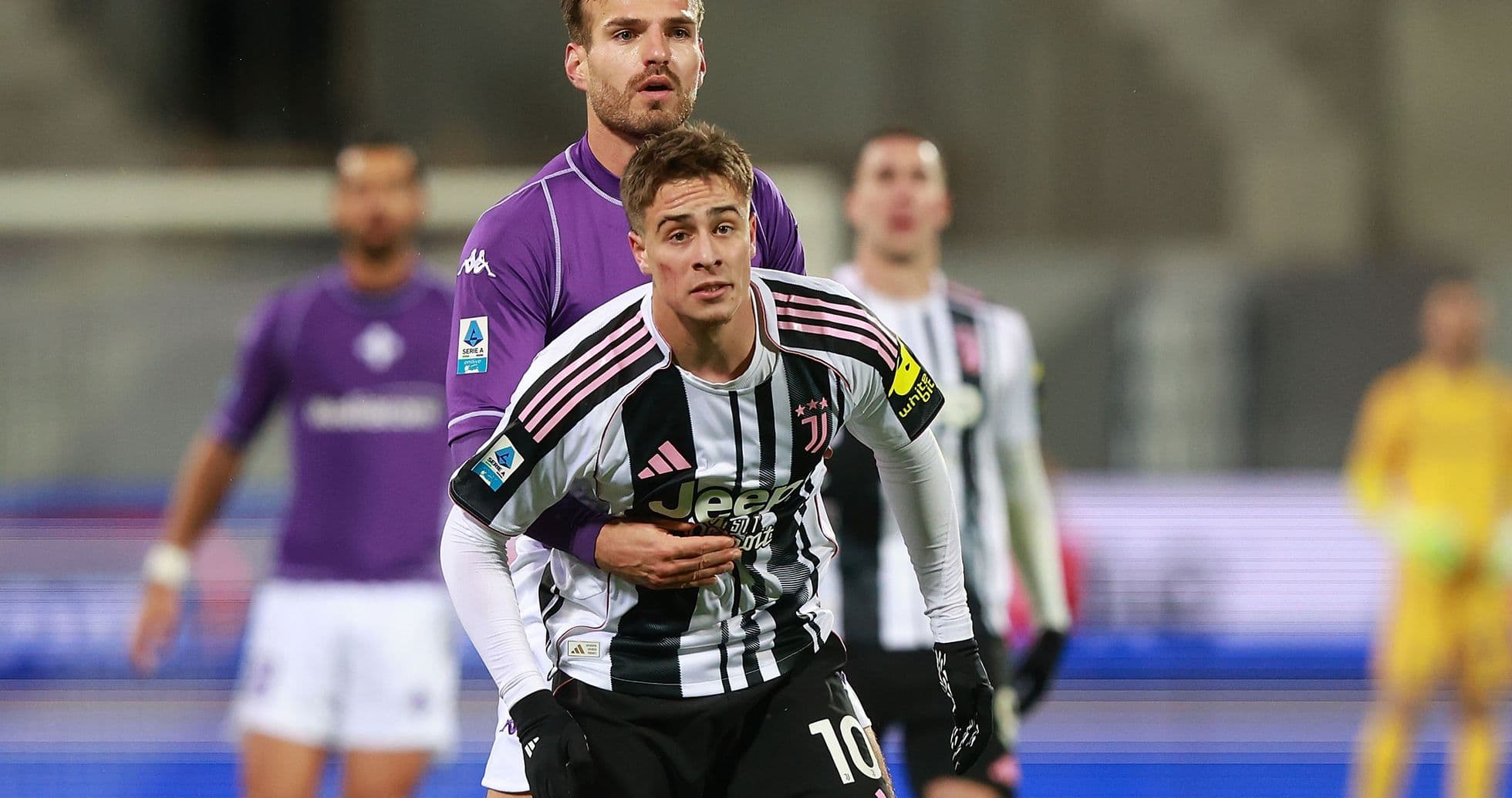
Under the grey Turin sky of Allianz Stadium, a Juventus side chasing Europa League security ran into a Fiorentina fighting to stay clear of the relegation noise. In Serie A’s Regular Season - 37, with Davide Massa in charge, the script flipped: Fiorentina walked away with a 2–0 win, silencing a home crowd used to control and calculation.
Following this result, the table snapshot is stark. Juventus sit 6th on 68 points, their goal difference of 27 built on 59 goals scored and 32 conceded in total. Their season-long identity has been defensive order and efficiency: at home they had scored 35 and conceded just 16 in 19 matches, averaging 1.8 goals for and 0.8 against at Allianz. Fiorentina, by contrast, arrived as a volatile 15th-placed side on 41 points, with a total goal difference of -9 (40 for, 49 against overall). On their travels, they had managed 20 goals and shipped 29 in 19 away games, averaging 1.1 scored and 1.5 conceded away.
Yet in Turin, it was Fiorentina who looked like the structured, ruthless outfit. The 4-3-3 of Paolo Vanoli outmanoeuvred Luciano Spalletti’s 4-2-3-1, and the numbers that defined their seasons felt momentarily irrelevant.
Tactical Voids and Absences
The only confirmed absentee was an intriguing one: M. Kean, listed as a Fiorentina player, missed the fixture with a calf injury. On paper, his absence removed a direct, vertical threat from Vanoli’s bench – a runner who could have attacked the spaces behind Bremer and L. Kelly. In practice, it forced Fiorentina to double down on structure and collective movement rather than relying on a late-game chaos agent.
Juventus, by contrast, came close to full strength. Spalletti’s XI was rich in technical security and tactical intelligence: M. Di Gregorio behind a back four of P. Kalulu, Bremer, L. Kelly and A. Cambiaso; a double pivot of M. Locatelli and T. Koopmeiners; and a fluid band of F. Conceicao, W. McKennie and K. Yildiz behind D. Vlahovic.
From a disciplinary perspective, both teams carried clear season-long profiles into this clash. Juventus had accumulated a notable spread of yellow cards across the 90, with a peak between 61–75 minutes at 22.00% and another surge from 76–90 at 20.00%. Their red-card profile was sharp but rare: 50.00% of reds in the 31–45 range and 50.00% in 76–90, a warning about emotional spikes at the end of each half.
Fiorentina’s card map was even more volatile. Their yellow cards clustered late: 25.30% between 76–90 minutes, and another 15.66% from 91–105, underlining a tendency to lose composure as games stretch. Red cards were heavily concentrated too: 66.67% between 76–90 and 33.33% in an undefined range, a sign of a side that often walks the disciplinary tightrope when protecting or chasing results.
In this match, though, Fiorentina’s discipline held just enough. The back line marshalled by M. Pongracic and L. Ranieri stayed aggressive but controlled, resisting the temptation to over-commit against Vlahovic and the drifting Yildiz.
Key Matchups
Heading into this game, Juventus’ attacking spearhead was less about a single scorer and more about a creative axis. Kenan Yildiz entered as one of Serie A’s standout attackers: 10 goals and 6 assists overall, with 64 total shots and 40 on target, plus 76 key passes and 149 dribble attempts with 78 successful. He is not just a finisher but a system in motion, drawing fouls (56) and destabilising defensive blocks.
Opposite him stood a Fiorentina defence that, in total, had conceded 49 goals, with 29 of those coming away from home. On their travels they allowed 1.5 goals per game on average, a soft underbelly that should have played into Juventus’ home strength. Yet Vanoli’s choice of a 4-3-3 with Dodo and R. Gosens wide, and the rugged pairing of Pongracic and Ranieri centrally, created a compact shell that shrank Yildiz’s operating zones.
Pongracic, Serie A’s leading yellow-card collector with 12 bookings, is the archetype of the aggressive stopper: 32 tackles, 26 blocked shots and 35 interceptions this season. His instinct is to step in front, to break rhythm. Against Vlahovic and the underlapping runs of Yildiz, his timing had to be perfect – and on this day, it was close enough. Every time Juventus tried to slide their No.10 between the lines, the Croatian’s anticipation and R. Gosens’ work on the flank closed the door.
Engine Room
The midfield duel was the game’s true heartbeat. For Juventus, M. Locatelli and T. Koopmeiners formed a double pivot designed to dominate territory and tempo. Locatelli’s season numbers tell the story of a complete controller: 2720 passes at 88% accuracy, 46 key passes, 99 tackles, 23 successful blocks and 38 interceptions. He is both metronome and shield, though his 9 yellow cards and 1 missed penalty underline a player who lives on the edge in duels and set-piece responsibility.
Across from him, Fiorentina’s trio of C. Ndour, N. Fagioli and M. Brescianini brought legs, range and subtlety. Fagioli’s presence against his former club added narrative spice, but the real tactical value was in how the three compacted the central lane. They denied Locatelli his usual comfort in progression, forcing Juventus to funnel more build-up through Cambiaso and Kalulu in wider zones.
This, in turn, dulled the influence of W. McKennie. The American arrived as one of Serie A’s top assist providers with 5 assists and 5 goals, plus 47 key passes and 39 tackles, including 8 blocked shots. Normally, his late box entries and half-space surges are a defining Juventus weapon. Here, Fiorentina’s midfield screened those channels, and McKennie was often receiving with his back to goal rather than on the run.
On the other side, Fiorentina’s front three of F. Parisi, R. Piccoli and M. Solomon stretched Juventus horizontally. Parisi, nominally a forward, played almost as a hybrid wide runner, dragging Kalulu and opening pockets for underlaps from Brescianini. That movement prevented Juventus from locking the game into the central block they usually dominate.
At the back for Juventus, Bremer and L. Kelly were largely solid in duels, but the lack of sustained midfield pressure ahead of them allowed Fiorentina to pick their moments. Once the visitors broke the first line, Juventus’ structure – typically a hallmark of a side with 16 clean sheets overall – looked unusually exposed.
Statistical Prognosis and xG Lens
Even without explicit xG data, the season-long patterns and this match’s tactical flow sketch a clear prognosis. Heading into this fixture, Juventus’ overall average of 1.6 goals scored and 0.9 conceded per game, combined with 16 clean sheets and just 7 total defeats, painted them as a low-variance, high-control side. Fiorentina, with 1.1 goals scored and 1.3 conceded on average, 10 clean sheets and 14 losses, profiled as a team that lives closer to chaos, especially away.
In Turin, the script inverted because Fiorentina managed to drag the game into their preferred emotional and tactical zone without tipping over the disciplinary edge. Their late-game card tendencies – 25.30% of yellows and 66.67% of reds between 76–90 – never fully materialised, allowing them to see out a rare clean away performance.
For Juventus, the loss will sting not only for the scoreline but for how it unfolded. A side built on structure, with a spine of Di Gregorio, Bremer, Locatelli and Yildiz, was forced into chasing, into crosses and hopeful combinations rather than the rehearsed patterns that have delivered 19 wins in 37 matches overall.
Following this result, the underlying metrics still say Juventus are the more stable, sustainable project, with a positive goal difference of 27 against Fiorentina’s -9. Over a full season, their xG and defensive solidity would normally produce a different outcome in this fixture. But football is played in 90-minute snapshots, not spreadsheets, and in this one, Fiorentina’s 4-3-3, anchored by Pongracic’s rugged defending and a disciplined midfield, wrote a defiant chapter in Turin.