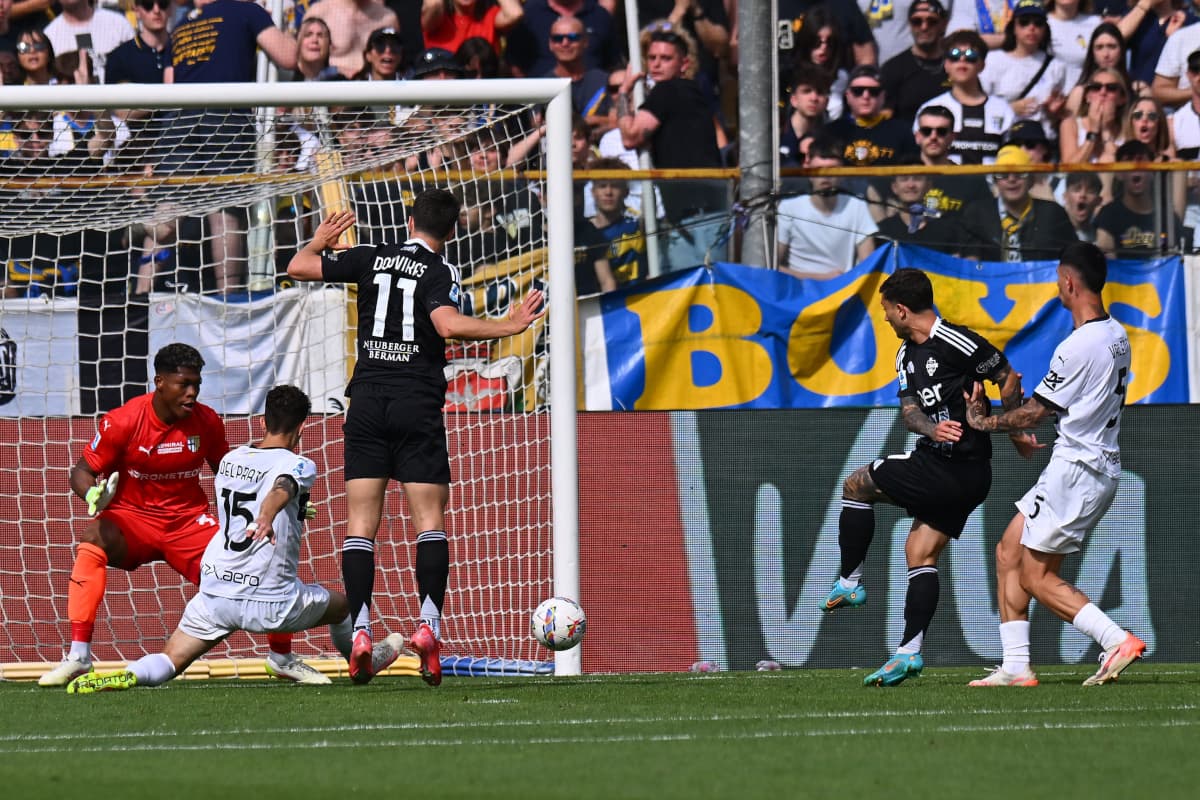
Como's Tactical Mastery Secures 1–0 Victory Over Parma
Stadio Giuseppe Sinigaglia felt like a stage for a statement, and Como delivered one. Following this result, a 1–0 home win over Parma in Serie A’s Round 37, the table tells a clear story: Como sit 5th on 68 points with a goal difference of +33 (61 scored, 28 conceded in total), fully justifying their Europa League push, while Parma remain 13th on 42 points with a total goal difference of -19 (27 for, 46 against). The margins on the day were slim; the broader patterns were anything but.
I. The Big Picture – Systems and Seasonal DNA
Cesc Fabregas stayed loyal to the identity that has underpinned Como’s rise, rolling out a 4-2-3-1 that has been used 33 times this season. J. Butez anchored a back four of I. Van der Brempt, Jacobo Ramon, M. O. Kempf and A. Moreno, with M. Perrone and L. Da Cunha as the double pivot. Ahead of them, the creative line of M. Caqueret, M. Baturina and A. Diao operated behind lone striker A. Douvikas.
This was the structure of a side that, heading into this game, had scored 61 goals in total at an average of 1.6 per match, with 35 of those at home at an average of 1.8. Defensively, Como had conceded only 28 in total, 15 at home, allowing 0.8 goals per game both overall and at home. That balance between proactive possession and compact rest-defense again defined their performance.
Carlos Cuesta’s Parma arrived in a more reactive 3-5-2, a shape he has leaned on most often this season (18 uses). Z. Suzuki stood behind a back three of A. Circati, M. Troilo and L. Valenti. The wing-backs E. Delprato and F. Carboni flanked a central trio of M. Keita, H. Nicolussi Caviglia and C. Ordonez, with M. Pellegrino and G. Strefezza up front.
It is a system built for counterpunching, but the numbers underline the limitations: heading into this game Parma had scored just 27 in total (0.7 per match), with only 12 on their travels at an away average of 0.6, while conceding 46 in total (1.2 per game) and 21 away (1.1). Their clean-sheet record away (8) hinted at resilience, but their lack of punch was always likely to be exposed against a side as structured as Como.
II. Tactical Voids – Absences and Discipline
Both squads had to navigate significant absences. Como were without J. Addai (Achilles tendon injury), N. Paz (knee injury) and A. Valle (injury). The loss of Paz in particular stripped Fabregas of a key two-way midfielder: 12 league goals and 6 assists, 51 key passes and 91 tackles in total are not numbers you simply replace. His penalty profile also mattered tactically: he had scored 0 and missed 2 spot-kicks, a reminder that Como’s perfect team penalty record this season (4 scored from 4 in total) had been built by spreading responsibility rather than relying on him.
Parma’s voids were even more structural. A. Bernabe (muscle injury), B. Cremaschi (knee), M. Frigan (knee), J. Ondrejka (leg) and G. Oristanio (knee) all missed out, along with S. Britschgi, suspended after a red card. That cluster of absentees robbed Cuesta of rotation in the final third and in the half-spaces, forcing greater reliance on M. Pellegrino as a reference point and on G. Strefezza for creativity.
On the disciplinary front, the season-long trends shaped the tone. Como’s yellow-card distribution shows a late-game edge: 20.25% of their cautions arrive between 61–75 minutes and another 20.25% between 76–90, with their red cards concentrated entirely in the 76–90 range (100.00% of their reds). Parma, by contrast, carry risk earlier: 15.63% of their yellows come between 31–45, and their red-card pattern is scattered across 31–45 (40.00%), 61–75 (20.00%), 76–90 (20.00%) and 91–105 (20.00%). This match, cagey and controlled, stayed within those parameters: Como pushed the physical line late, Parma flirted with danger around the interval, but both sides avoided the meltdown that has cost them in other weeks.
III. Key Matchups – Hunter vs Shield, Engine Room vs Enforcer
The headline duel was always going to be “Hunter vs Shield”: A. Douvikas against Parma’s defensive block. Douvikas came into the game as one of Serie A’s most efficient forwards, with 13 goals and 1 assist in total from 37 appearances. He is not just a finisher; 23 key passes and 33 dribble attempts (13 successful) show a striker comfortable dropping off to link and attacking the channels. Against a Parma defense that had conceded 21 away goals and whose centre-backs are used to defending deep, his movement between the lines was decisive.
Behind him, Como’s “Engine Room” was built on subtlety and control. M. Perrone, with 2111 passes at 91% accuracy in total, is the metronome, while M. Caqueret adds forward thrust and incision: 890 total passes at 87% accuracy, 24 key passes and 5 assists. Even without Paz, that duo, supported by L. Da Cunha, tilted the midfield battle. They repeatedly found the half-spaces behind Parma’s narrow three-man central block, forcing M. Keita and H. Nicolussi Caviglia into long defensive shifts rather than progressive roles.
On the other side, Parma’s attacking fulcrum, M. Pellegrino, carried an enormous load. His 8 goals and 1 assist in total this season, from 50 shots and 21 on target, are respectable, but the context matters: he has contested 525 duels and won 224, drawing 67 fouls. He is a magnet for contact and a platform for territory. Yet against Como’s back line, marshalled by Jacobo Ramon and M. O. Kempf, his usual physical edge was dulled. Ramon’s profile is telling: 49 tackles, 17 blocked shots and 36 interceptions in total underline his reading of the game, while 2043 passes at 91% accuracy show how quickly Como can turn defensive stops into controlled possession. Every time Pellegrino tried to pin and roll, Ramon met him early, often stepping in front rather than wrestling from behind.
IV. Statistical Prognosis – Why 1–0 Felt Inevitable
Strip away the narrative and the numbers point to a predictable pattern. Como, with 19 total wins from 37 and 10 at home, have made Sinigaglia a fortress, keeping 10 clean sheets at home and 19 in total. They fail to score at home only 3 times. Parma, meanwhile, had failed to score in 9 away matches and 16 in total, and arrived with an away record of 6 wins, 6 draws and 7 defeats.
Defensively, Como’s structure is elite: 28 total goals conceded, 15 at home, with an average of 0.8 both overall and at home. Parma’s attack, at 0.6 away goals on average, simply does not generate enough high-quality chances to consistently break that kind of block, especially when forced into long spells without the ball.
From an Expected Goals perspective, the underlying profiles suggest a low-scoring, territorially one-sided contest: Como’s controlled build-up, their ability to generate steady but not wild shot volumes, and their penalty reliability (4 scored from 4 in total) all tilt the xG ledger in their favour, even if the raw scoreline stayed narrow. Parma’s reliance on Pellegrino’s duels and sporadic wing-back surges tends to produce half-chances rather than repeated high-value looks.
So while the scoreboard read only 1–0 at full time, the tactical and statistical currents ran much stronger. Como’s 4-2-3-1 once again imposed its rhythm, their back line again protected Butez, and their midfield triangle again dictated where and how the game was played. For Parma, the defeat fits a season-long pattern: organised, brave, but too often blunt, and too often on the wrong side of margins that, in truth, were never quite as thin as they looked.