Como W and Napoli W Battle to a Stalemate in Serie A Women
Stadio Ferruccio felt like a stage for separation in the middle of the Serie A Women table, but following this result Como W and Napoli W walked away locked in a 0–0 that said as much about their identities as it did about their limitations. After 21 league matches, Napoli sit 7th on 31 points with a goal difference of +5 (29 scored, 24 conceded), while Como are 8th on 27 points with a goal difference of -1 (21 scored, 22 conceded). This was a meeting of two mid-table sides whose seasons have been built on fine margins and defensive structure rather than chaos.
Como’s seasonal DNA is that of a team that lives on the edge of equilibrium. Overall they score 1.0 goals per game and concede 1.0, with a particularly fragile record at home: just 0.9 goals for and 1.2 against on their own ground. Napoli arrive with a more expansive profile, averaging 1.4 goals for and 1.1 against overall, and on their travels they carry 1.5 goals per game while conceding 1.2. On paper, this should have been an away side trying to stretch the contest against a home team more comfortable in controlled, low-scoring battles. The final scoreline confirms that Como managed to drag Napoli into their kind of match.
Selena Mazzantini’s selection underlined that intention. With A. Gilardi in goal and a back line anchored by A. Marcussen, S. Howard and K. Ronan, Como leaned into defensive familiarity. Marcussen’s league profile – 21 tackles, 3 blocked shots and 16 interceptions – speaks to a defender who defends space aggressively and steps into duels early. In front of that base, the midfield triangle of M. Pavan, L. Vaitukaityte and M. Bergersen was tasked with compressing central lanes, while V. Bernardi and N. Nischler flanked A. Chidiac to form a front three capable of both pressing and countering.
Napoli, under David Sassarini, mirrored that structural discipline but with more individual firepower. B. Beretta started in goal behind a back line featuring T. Pettenuzzo and M. Jusjong, two of the league’s most active defenders in terms of defensive actions. Pettenuzzo has 22 tackles, 6 blocked shots and 20 interceptions this season; Jusjong has 21 tackles and an impressive 14 blocked shots, a specialist in last-ditch interventions. Ahead of them, M. Bellucci and K. Kozak formed the spine of a midfield that has quietly become one of Serie A Women’s most reliable engines, feeding an attack led by the league’s standout duo C. Fløe and M. Banušić, supported here by L. Faurskov and the hard-running G. Langella.
The tactical voids in this match were less about absences – no missing-player data is listed – and more about risk management. Both sides have disciplinary patterns that shaped their approach. Como’s yellow-card distribution shows a clear spike between 46–60 minutes, where 35.00% of their cautions arrive, and another 25.00% between 31–45. Napoli’s bookings cluster between 31–45 (23.08%) and 61–75 (23.08%). Knowing that, it is no surprise the contest tightened dramatically around the half-time interval and into the early second half, as both benches would have been wary of losing control in precisely the periods where their players tend to overstep.
Individually, the “Hunter vs Shield” storyline was compelling even if it never produced a decisive moment. For Napoli, C. Fløe is the primary hunter: 6 goals and 2 assists, 39 shots with 25 on target, and 25 key passes. She is both finisher and creator, a wide forward who likes to attack the half-spaces and arrive in the box rather than stand in it. Alongside her, M. Banušić has 4 goals and 2 assists in just 13 appearances, with 26 dribble attempts and 14 successful, a ball-carrier who can break lines on her own.
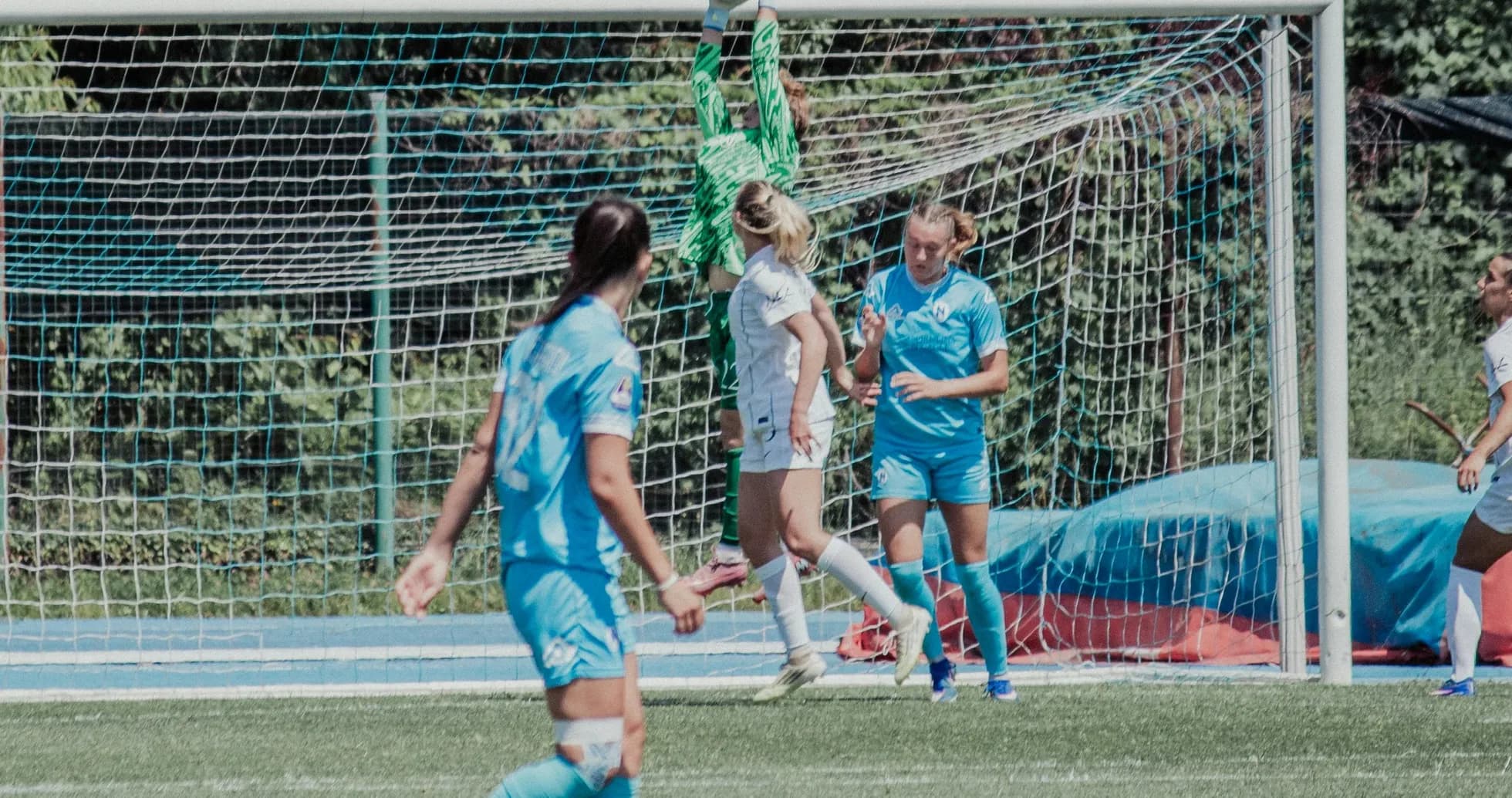
They ran into a Como defence whose overall record – 22 goals conceded in 21 games – marks them as stubborn. At home, they concede 1.2 per game, but that figure is inflated by a handful of bad days; nine clean sheets overall (four at home, five away) show their capacity to lock games down. Gilardi’s back four, with Marcussen stepping out and Ronan offering balance, narrowed the channels where Fløe usually thrives. Every time Napoli tried to isolate their Danish forward, Como’s compactness forced her to receive with her back to goal or wide of the penalty area.
On the other side, Como’s hunter was N. Nischler, a striker with 5 league goals and 1 assist, supported by the teenage impact of Zara Kramžar off the bench in the broader season context. Nischler’s 26 shots and 14 key passes underline her dual threat, but her penalty record is a reminder of fragility: she has scored 1 spot-kick and missed 1, so any future penalty is far from guaranteed. Against Napoli’s shield – the Pettenuzzo–Jusjong axis – she found little space. Napoli have conceded 24 goals overall, just 13 of them on their travels, and their three away clean sheets are built on defenders who win duels (Pettenuzzo has won 37 of 83, Jusjong 46 of 77) and block shooting lanes early.
The “Engine Room” battle was perhaps the purest tactical subplot. Como’s M. Pavan, one of the league’s top assist providers with 3, is a hybrid eight who knits phases together. She has 331 passes at 71% accuracy, 13 key passes and 26 tackles, plus 2 blocked shots and 15 interceptions – a genuine two-way midfielder. Opposite her, Napoli’s Bellucci and Kozak form a double pivot that dictates tempo. Bellucci has completed 733 passes at 76% accuracy with 14 key passes, while Kozak has 307 passes at 71% and 9 key passes, plus 11 tackles and 5 interceptions. In this match, that trio largely cancelled each other out: Pavan’s attempts to progress play were met by Bellucci’s positioning and Kozak’s bite, while Como’s midfield line prevented Napoli’s creators from stepping freely into the final third.
From a statistical prognosis standpoint, the 0–0 feels like the logical meeting point of two profiles. Heading into this game, Napoli’s away attack (1.5 goals per match) and Como’s home defence (1.2 conceded) suggested an Expected Goals edge for the visitors, but not an overwhelming one. Como’s tendency to fail to score – 4 times at home, 8 overall – hinted that any xG they generated would likely come in isolated bursts rather than sustained pressure. Napoli, meanwhile, have failed to score 3 times away and 7 overall, a reminder that even with Fløe and Banušić they can be blunted by well-organised blocks.
Defensively, both sides are mid-table solid rather than elite, but their structure and discipline on the day suppressed the attacking variance. Como’s penalty record (2 taken, 2 scored, 100.00% conversion with no misses) never came into play; Napoli’s perfect 1-from-1 spot-kick record likewise remained theoretical. Instead, this became a match where the underlying xG on both sides was likely modest, shaped by low shot volume and contested zones.
Following this result, the table barely shifts, but the tactical narrative is clear. Como confirmed themselves as a side that can drag more potent opponents into narrow, attritional contests, leaning on a compact back four and a hard-working midfield. Napoli, for all their attacking talent, showed again that when their wide forwards are denied space and their midfield is matched physically, their edge in xG shrinks quickly.
In a league where marginal gains decide European pushes and relegation fights alike, this stalemate at Stadio Ferruccio will be remembered less for missed chances and more as a case study in how two mid-table squads, built on structure and discipline, can neutralise each other almost perfectly over 90 minutes.