Crystal Palace vs Everton: A Tactical Draw Analysis
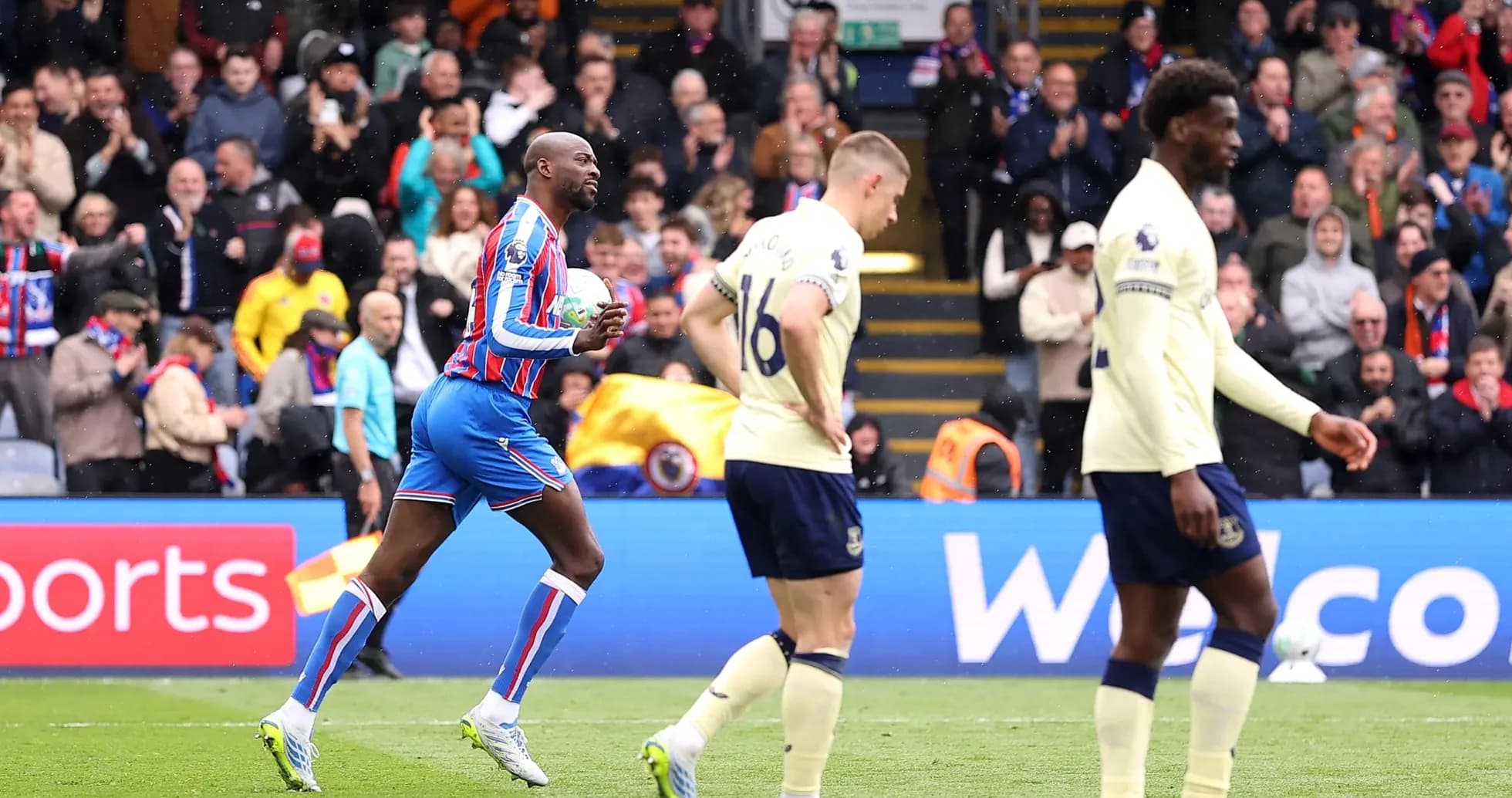
Selhurst Park under grey south London skies, a referee’s whistle from Thomas Bramall, and a Premier League season edging toward its conclusion. Crystal Palace and Everton shared the points in a 2–2 draw, a result that felt perfectly in tune with their broader 2025 campaign profiles: flawed, combative, and tactically intriguing rather than polished.
Heading into this game, Palace were 15th on 44 points, their overall goal difference at -6, built from 38 goals scored and 44 conceded across 35 matches. That profile – 1.1 goals for and 1.3 against per game overall – has been the statistical fingerprint of Oliver Glasner’s tenure: structurally ambitious, but still porous. Everton arrived in London 10th on 49 points, with a perfectly neutral goal difference of 0 from 46 scored and 46 conceded in 36 matches, their season a study in balance and volatility.
I. The Big Picture: Shapes and Seasonal DNA
Glasner doubled down on his preferred 3-4-2-1. D. Henderson anchored the back, with a three of C. Richards, M. Lacroix and J. Canvot in front of him. The wing-backs, D. Munoz on the right and T. Mitchell on the left, stretched the pitch, while A. Wharton and D. Kamada formed the central hinge. Ahead of them, I. Sarr and B. Johnson worked as dual tens, sliding inside and out to support lone striker J. S. Larsen.
This shape mirrored Palace’s season-long identity: a back three that wants to build, wing-backs that must provide both width and defensive cover, and a single striker expected to finish relatively scarce chances. At home, Palace have averaged 1.0 goals scored and 1.2 conceded, a narrow margin that demands efficiency in both boxes. The 2–2 scoreline here exceeded their usual attacking output but also underlined that defensive frailty.
Everton, listed without a formation in the match data, nonetheless resembled their season’s dominant 4-2-3-1 blueprint. J. Pickford started behind a back four of J. O’Brien, J. Tarkowski, M. Keane and V. Mykolenko. The double pivot of T. Iroegbunam and J. Garner underpinned a line of three – M. Rohl, K. Dewsbury-Hall and I. Ndiaye – supporting Beto up front.
Everton’s statistical profile on their travels – 21 goals scored and 22 conceded away, with averages of 1.2 for and 1.2 against – speaks to a side comfortable in mid-block control, willing to grind. That balance was visible here: they never fully seized the game, but they never let it go either.
II. Tactical Voids: Absences and Discipline
The absentees shaped the contest’s texture. Palace were without C. Doucoure, E. Guessand, E. Nketiah and B. Sosa, all ruled out, predominantly through knee and thigh issues. The missing Doucoure, in particular, removed a natural ball-winner and vertical carrier from Palace’s midfield. In his absence, Wharton and Kamada had to split responsibilities: Wharton more as the recycler, Kamada the connector. It made Palace’s central block more technical but less destructive, increasing the burden on Lacroix and Richards to step out and engage.
Everton’s list was equally influential. J. Branthwaite’s hamstring injury stripped them of their most mobile left-sided centre-back, forcing M. Keane into the XI and reducing the back line’s recovery speed. The absence of I. Gueye took away a pure holding presence, and J. Grealish’s foot injury removed a high-end ball-carrier and chance creator from the left half-space. Without Grealish, Everton’s left side leaned more on Mykolenko’s overlaps and Dewsbury-Hall’s industry than on individual incision.
From a disciplinary standpoint, both teams carried season-long warning signs. Palace’s yellow card distribution peaks between 31–45 minutes with 19.72% of their bookings, and remains high between 46–60 minutes at 18.31%. Everton, by contrast, are at their most combustible late: 21.74% of their yellows arrive between 76–90 minutes, with another 15.94% in added time. The red card data is even starker: Everton’s dismissals cluster late (50.00% between 76–90), while Palace’s appear in the 46–75 zone. This fixture, with its 2–2 tension, sat right in that emotional corridor, where tactical plans fray and individual duels become personal.
III. Key Matchups: Hunter vs Shield, Engine Room
The “Hunter vs Shield” narrative for Palace was embodied less by starter J. S. Larsen and more by the looming presence of J. Mateta on the bench. Mateta’s season – 11 league goals from 29 appearances, with 4 penalties scored and none missed – makes him Palace’s most reliable finisher. His 55 shots, 31 on target, speak to a high-volume penalty-box profile. Against an Everton side that have conceded 22 goals away at an average of 1.2 per game, Mateta’s introduction always loomed as a game-state weapon: a pure number nine to attack tired legs and second balls in the box.
On the Everton side, the “Shield” was fractured. Without Branthwaite and Gueye, the responsibility fell heavily on Tarkowski’s positioning and O’Brien’s aggression. O’Brien, whose season includes 1 goal, 1 assist and 16 blocked shots, is a defender who steps out to engage; his red card earlier in the campaign underlines how thin the margin is between proactive defending and overstepping the line.
The “Engine Room” duel centred on J. Garner. Statistically, he has been one of the league’s standout deep midfielders: 7 assists, 1665 passes with 52 key passes, 115 tackles, 9 blocked shots and 54 interceptions. He is both metronome and disruptor. Here, his job was twofold: to screen against Kamada’s drifting between lines and to progress play past Palace’s first press, often by finding Rohl or Dewsbury-Hall in the half-spaces.
For Palace, Kamada’s role was more subtle. With no Doucoure, he had to drop deeper to help Wharton, but still find pockets behind Iroegbunam and Garner. When he received facing forward, the immediate targets were Sarr and Johnson, both tasked with driving at full-backs and dragging Everton’s block out of shape. The success of that pattern was visible in Palace’s ability to score twice, pushing beyond their usual home average of 1.0 goals.
IV. Statistical Prognosis and xG Logic
Even without explicit xG values, the season data frames a plausible expected goals story. Heading into this game, Palace at home were a 1.0-for, 1.2-against team; Everton away, a 1.2-for, 1.2-against side. Overlaying those profiles, a pre-match xG expectation would lean toward something like 1.0–1.2 xG for Palace and 1.1–1.3 xG for Everton – a narrow, marginal battle with both sides likely to create but not dominate.
The 2–2 outcome suggests clinical finishing at key moments or defensive lapses that inflated the raw scoreline above the underlying chance volume. Everton’s clean sheet record on their travels – 5 away shutouts – underlines that conceding twice was below their usual defensive standard. Palace, with 7 clean sheets at home and 21 goals conceded there, likewise conceded above their typical home baseline.
Tactically, the late phases were always likely to be decisive. Everton’s high share of late yellow cards (21.74% between 76–90) and red-card risk in that same window intersected with Palace’s need to chase games – their form line heading into this match (DLLDW) reflecting a side often on the edge. In that context, the presence of impact substitutes such as Mateta and Y. Pino for Palace, and D. McNeil or T. Barry for Everton, offered both sides fresh legs and a potential late xG bump.
Following this result, the statistical prognosis for both teams remains consistent with their season arcs. Palace continue to live on fine margins, their back three and wing-backs system capable of producing multi-goal outings but still leaking enough chances to keep them in danger. Everton maintain their identity as a balanced, occasionally erratic mid-table side, where Garner’s control and Beto’s presence are offset by structural fragility when key defenders are missing.
In narrative terms, this 2–2 at Selhurst Park was less an anomaly and more a crystallisation of who these teams have been all season: tactically ambitious, emotionally volatile, and forever one moment away from tilting a tight xG story into chaos.