AC Milan W vs Parma W: Tactical Insights from Serie A Women Match
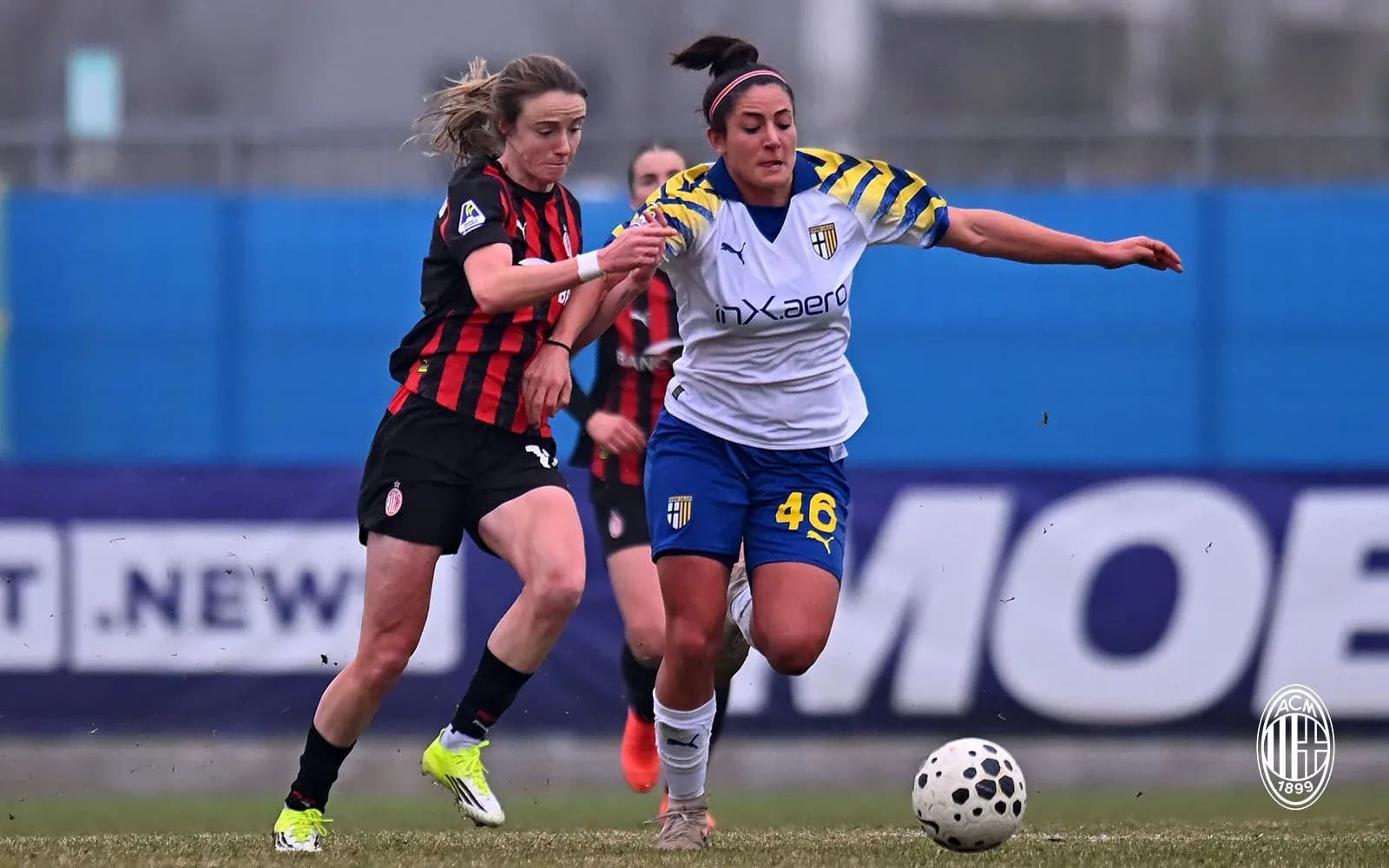
Under the grey Milan sky at Centro Sportivo Peppino Vismara, AC Milan W’s 3–1 victory over Parma W felt less like a routine league win and more like a confirmation of contrasting identities in this Serie A Women season. Following this result in Round 21 of the regular season, the table tells a clear story: Milan are in 6th on 32 points with a goal difference of 6, Parma 10th on 16 points with a goal difference of -13. The numbers frame it; the squads explain it.
I. The Big Picture: Two Paths, One Afternoon
Overall this campaign, Milan have built a profile of controlled aggression. Across 21 matches they have scored 31 goals and conceded 25, their total averages sitting at 1.5 goals for and 1.2 against. At home, that edge is sharper: 18 goals scored and 15 conceded in 11 fixtures, with home averages of 1.6 goals for and 1.4 against. They are imperfect, but dangerous.
Parma arrive as the league’s great paradox. In total this campaign they have drawn 10 of 21 matches, but only won 2, scoring 15 and conceding 28. The total averages – 0.7 goals for, 1.3 against – are stark enough, but the split is even more revealing: at home they manage 1.3 goals per game; on their travels, that collapses to 0.2, with just 2 away goals in 11 matches. A side that can be stubborn, but rarely incisive.
The match itself – 1–1 at half-time, 3–1 at full-time – mirrored those season-long arcs. Milan, already a solid home side, found the extra gear after the interval that Parma’s away form has lacked all year.
II. Tactical Voids and Disciplinary Shadows
There is no explicit injury list in the data, so the absences are tactical rather than medical. Suzanne Bakker leaned on a spine that has defined Milan’s season: Milicia Keijzer at the back, Marta Mascarello and Christy Grimshaw in midfield, and the volatile creativity of Chanté-Mary Delorean Dompig up front.
Keijzer, who has played 868 minutes this season and blocked 3 shots, is more than a simple defender. Her passing volume – 324 passes at 76% accuracy – and 23 tackles speak to a defender comfortable defending high and stepping into midfield. Her presence in the XI here allowed Milan to compress the pitch against a Parma side that prefer to build with three at the back.
Mascarello brings another kind of control. With 368 passes at 77% accuracy and 15 key passes in total this campaign, she is the quiet metronome in a team that often lines up in a 4-3-3 (Milan have used that shape 10 times). Her 4 yellow cards hint at the edge required to protect a back line that concedes an average of 1.4 goals at home.
On the flanks and between the lines, Grimshaw’s season numbers – 263 passes, 11 key passes, 12 shots and 2 assists – mark her as the midfielder who connects Bakker’s structure to Milan’s front line. She tackles (11 total), she blocks (4 blocked shots), she drives. Starting her here was a clear statement: Milan wanted to run at Parma’s back three, not merely play around it.
Giovanni Valenti’s Parma, by contrast, carry their own disciplinary baggage. Manon Uffren, the league’s top yellow-card collector with 7 bookings, again anchored midfield. Her 32 tackles, 34 interceptions and 512 passes at 82% accuracy show why: she is Parma’s organiser and enforcer rolled into one. But her profile – 24 fouls committed and even a missed penalty – also underlines the fine line she walks. When Parma are forced deeper, as they were after the break in Milan, Uffren’s aggression becomes both shield and risk.
III. Key Matchups: Hunter vs Shield, Engine vs Enforcer
The “Hunter vs Shield” storyline for Milan always begins with Kayleigh van Dooren, even if she started this one on the bench. With 5 goals from 18 shots (12 on target), she is Milan’s most efficient finisher in the league. Her total of 242 passes and 8 key passes show she is not just a poacher but a creative hub. Her 1 red card, however, is a reminder that her competitive edge can spill over.
Against Parma’s defensive record – 14 goals conceded away, an average of 1.3 per away match – van Dooren’s profile loomed large over the fixture. Even when not on the pitch, she shapes how Parma have to defend: deeper lines, more compact central zones, and more work for Uffren and the back three to cut off service into the No. 10 space.
On the day, the frontline responsibility fell more heavily on Dompig and the dynamic wide options like Tilde Kyvag and S. Stokic. Dompig, with 1 goal, 1 assist and a red card this season, is a chaos agent. Her 2 successful dribbles from 3 attempts and 5 fouls drawn show how she destabilises defensive structures. Against a Parma side that has already seen 1 red card in the 76–90 minute window and takes 29.17% of their yellow cards late on, Dompig’s directness was always likely to tell as legs tired.
For Parma, the “Hunter” role is more distributed. G. Distefano, with 1 goal and 2 assists, 24 shots and 12 on target, is their most persistent threat. She has attempted 31 dribbles, succeeding 11 times, and drawn 50 fouls – a staggering number that underlines how often Parma’s attacks funnel through her. Her duel volume (151 total, 81 won) shows a forward who is as much target and outlet as finisher.
Yet Distefano’s efforts are continually blunted by Parma’s systemic issue: on their travels they have failed to score in 9 of 11 matches. The supporting cast simply does not arrive in numbers often enough.
In the “Engine Room” duel, Mascarello and Grimshaw against Uffren and C. Prugna shaped the match. Uffren’s 110 duels (60 won) and 8 successful dribbles from 8 attempts highlight her ability to break pressure, but Milan’s midfield trio, backed by Keijzer stepping in, managed to turn many of those escapes into second balls they could reclaim.
IV. Statistical Prognosis and Tactical Verdict
Following this result, Milan’s season-long profile feels coherent. Their total goal difference of 6 is exactly the product of 31 goals scored and 25 conceded; the 3–1 scoreline here fits that pattern of a side that can outscore opponents without being watertight. Their 7 clean sheets in total and 7 matches where they have failed to score point to streaky phases, but when their midfield and front line sync – as they did in the second half – they look like a top-half team with scope to climb.
Parma’s numbers are harsher. Their total goal difference of -13 (15 for, 28 against) and 11 matches without scoring show that their defensive resilience cannot mask their attacking anemia forever. Clean sheets – 6 in total, 4 of them away – tell us they can shut games down, but their inability to threaten consistently means that once they fall behind, as they did after half-time in Milan, they have little structural capacity to chase matches.
From an xG and defensive solidity lens, the patterns are clear even without raw xG figures. Milan’s shot profiles – van Dooren’s efficiency, Grimshaw and Dompig’s involvement, Keijzer’s stepping into midfield – suggest a team generating higher-quality chances than their opponents, especially at home. Parma, with just 2 away goals and frequent reliance on Distefano’s individualism, are almost certainly underperforming in chance volume and quality.
Tactically, this match was a microcosm of the season. Milan’s 4-3-3 base, with a progressive back line and layered midfield, eventually overwhelmed a Parma side built around a back three, a hard-working but overstretched engine room, and a lone creative outlet up front. The late-game disciplinary patterns – Milan taking 31.58% of their yellow cards in the 76–90 minute range, Parma 29.17% plus a red in that same window – hint at why the closing stages tilted red-and-black: Milan had the depth and structure to keep attacking; Parma had only fatigue and fouls left.
In narrative terms, this 3–1 is more than three points. For Milan, it is a confirmation that their squad architecture – van Dooren’s cutting edge, Grimshaw’s drive, Mascarello’s balance, Keijzer’s composure, Dompig’s volatility – can impose itself on mid-to-lower table opponents. For Parma, it is another away chapter written in the same ink: organised, combative, but ultimately short of the attacking clarity needed to rewrite their season’s story.