Cremonese's Statement Win Over Pisa in Serie A
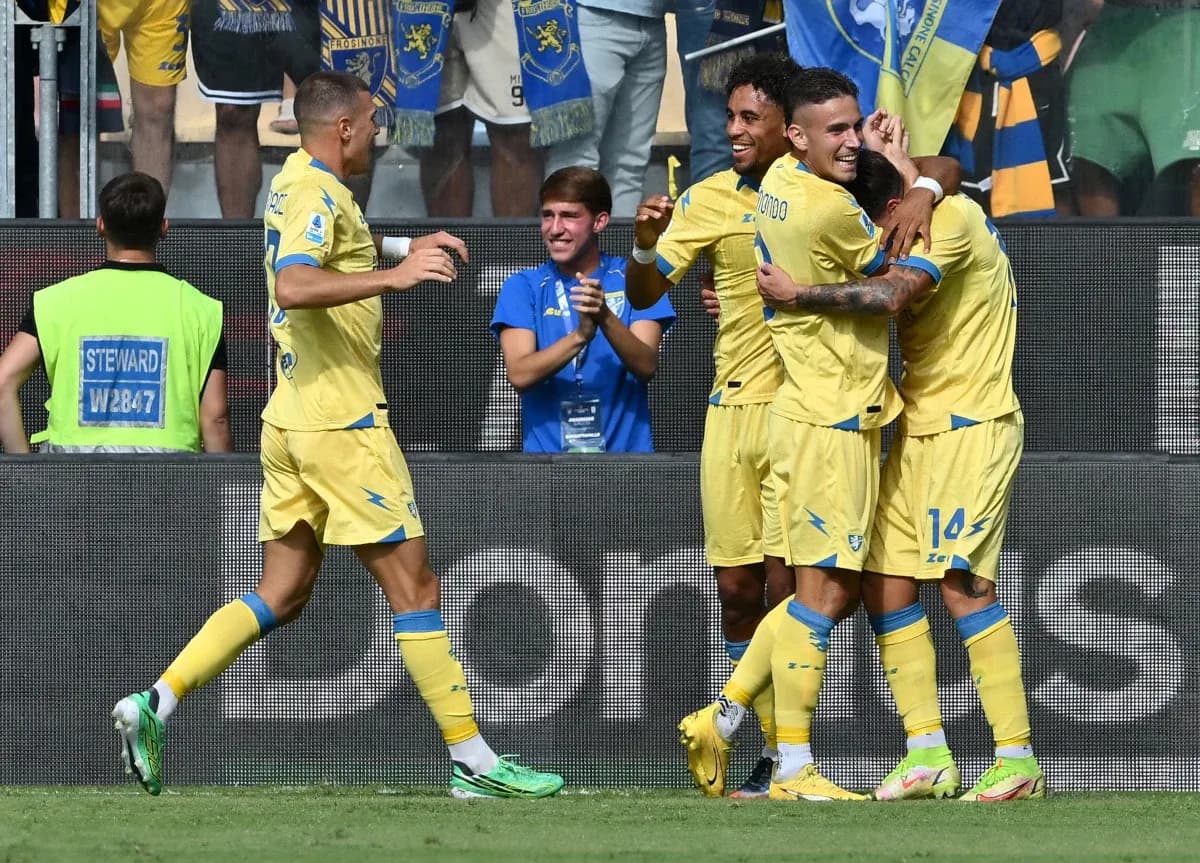
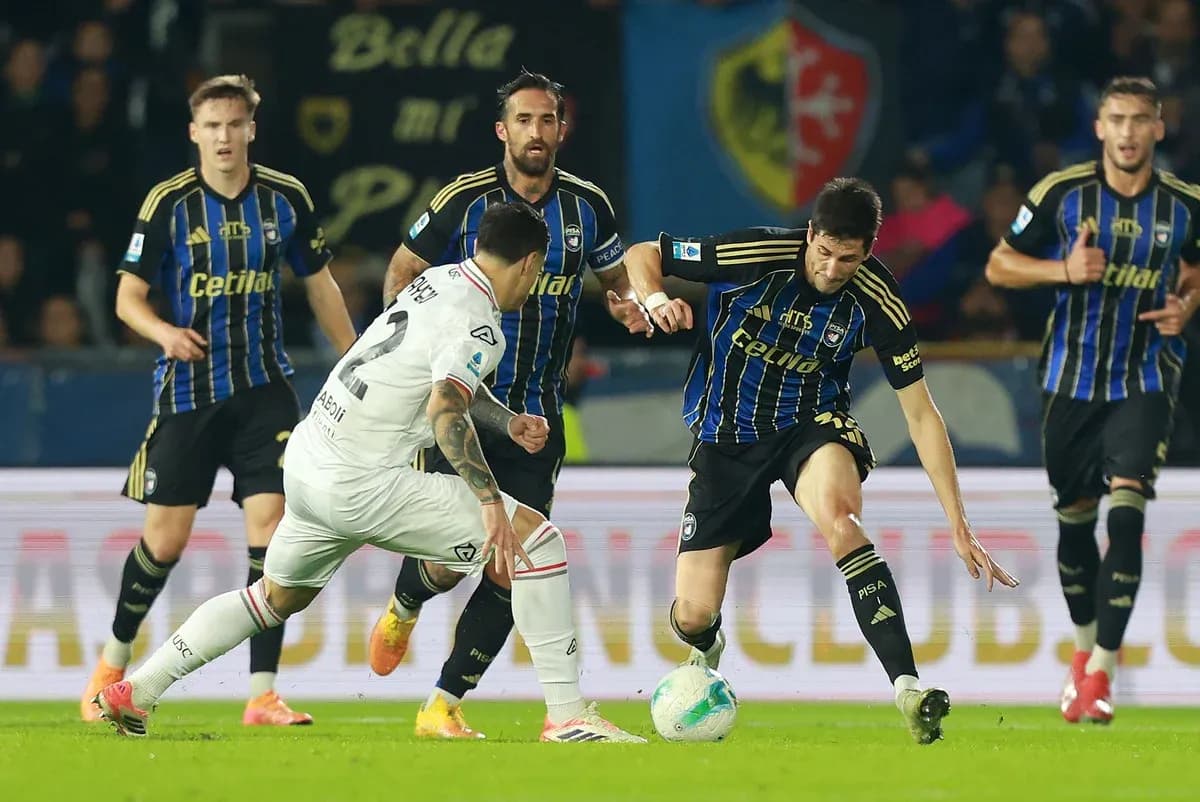
At Stadio Giovanni Zini, in a Serie A season defined by survival scraps rather than title races, Cremonese chose the 36th round to make their loudest statement. Under Marco Giampaolo, they set aside their usual three-at-the-back blueprint and rolled out a bold 4-4-2, dismantling Pisa 3-0 in a match that felt less like a dead rubber and more like a manifesto.
Heading into this game, the table painted a grim backdrop. Cremonese were 18th with 31 points, their overall goal difference at -23, the product of 30 goals for and 53 against. At home they had been cautious and often blunt: 17 goals scored and 25 conceded across 18 matches, an average of 0.9 goals for and 1.4 against at Zini. Pisa, rock bottom in 20th on 18 points, carried an even heavier burden: an overall goal difference of -41, with 25 scored and 66 conceded. On their travels they had not won once, drawing 8 and losing 10, scoring 16 but shipping 43 – an away average of 0.9 goals for and a punishing 2.4 against.
Within that context, Cremonese’s clean, controlled 3-0 home victory – matching their biggest home win of the season – was less about the scoreline and more about how it redefined the squad’s identity: from reactive survivors to a front-foot, structurally coherent unit.
Tactical voids – absences that shaped the plan
Both coaches had to navigate notable absences, and the lineups were quietly sculpted by the medical report.
Cremonese were without F. Baschirotto (thigh injury), R. Floriani and F. Moumbagna (both muscle injuries), and M. Payero (knock). Those absences stripped Giampaolo of defensive depth and an extra midfield runner, nudging him toward a back four built around S. Luperto and M. Bianchetti, with G. Pezzella and F. Terracciano as full-backs. The choice of a 4-4-2, with T. Barbieri and J. Vandeputte wide and a double pivot of A. Grassi and Y. Maleh, suggested a deliberate trade: fewer centre-backs, more control and width.
Pisa’s voids were arguably more damaging to their fragile structure. F. Coppola (muscle injury), D. Denoon (ankle injury), C. Stengs (inactive) and M. Tramoni (muscle injury) removed options in defence and between the lines. Oscar Hiljemark still leaned into a 3-4-2-1, but with a back three of R. Bozhinov, A. Caracciolo and S. Canestrelli, and a midfield square that had to do everything at once: I. Touré and E. Akinsanmiro central, F. Loyola and M. Leris wide.
Disciplinary history also hovered over the match. G. Pezzella came in as one of Serie A’s most carded players, with 8 yellows and 1 red this season, while A. Caracciolo and M. Aebischer brought 9 and 8 yellows respectively into Pisa’s squad. For Pisa, Touré’s own red-card record and combative profile (402 duels contested, 219 won) meant that any high-tempo midfield battle risked tipping into chaos.
Key matchups – hunter vs shield, engine room vs enforcer
Hunter vs shield
The most decisive duel on paper was always going to be between Cremonese’s attacking spearhead and Pisa’s brittle away defence.
Federico Bonazzoli entered this fixture as Cremonese’s standout finisher: 9 goals and 1 assist in 33 league appearances, with 54 shots and 30 on target. His penalty record – 2 scored from 2 – underlined a composure that mirrored the team’s perfect season from the spot (3 penalties scored in total, 0 missed). Bonazzoli is not just a poacher; 803 passes at 84% accuracy and 13 key passes mark him as a forward who can knit attacks and pin centre-backs in uncomfortable zones.
Opposite him stood Pisa’s back line, and particularly Antonio Aldo Caracciolo. Caracciolo’s numbers tell of a defender under siege: 71 tackles, 24 blocked shots and 45 interceptions, a player constantly firefighting. Yet Pisa’s defensive record on their travels – 43 conceded away, the worst in the league – exposed the limits of one man’s resistance.
In this match, the 4-4-2 gave Bonazzoli a true partner in J. Vardy. Vardy’s presence stretched the Pisa back three vertically, forcing Caracciolo and Canestrelli into wider, riskier coverage zones. With Pisa’s wing-backs pinned by Barbieri and Vandeputte, Bonazzoli could repeatedly attack the half-spaces between Caracciolo and Bozhinov. The 3-0 scoreline reflected that structural mismatch more than any single duel.
Engine room – creator vs destroyer
If Bonazzoli versus Pisa’s back line was the headline, the hinge of the game lay in midfield: Jari Vandeputte’s creativity against Idrissa Touré’s physicality.
Vandeputte came into the match as one of Serie A’s more productive creators from wide zones: 5 assists and 1 goal in 30 appearances, 887 passes with 53 key passes, and a willingness to work without the ball – 37 tackles, 2 blocked shots, 18 interceptions. From the left of the four, he could drift inside to overload Pisa’s double pivot, or hold width to isolate Leris and draw Caracciolo out.
Touré, by contrast, is Pisa’s archetypal enforcer. Across 31 appearances he has produced 42 tackles, 8 blocks, 24 interceptions and an imposing 402 duels contested. He is aggressive, direct, and willing to step out of the block to meet the ball-carrier – but that same aggression has already brought him 1 red card this season.
Cremonese’s structure was built to drag Touré into no-man’s land. Grassi and Maleh circulated possession, while Barbieri and Vandeputte alternated between hugging the touchline and underlapping. Each time Touré stepped forward, space opened behind him for Vardy to drop in or for Bonazzoli to curve runs across the blind side of Pisa’s centre-backs. Pisa’s midfield, already stretched by the need to protect a porous back three, could not close all the channels.
Statistical prognosis – what this performance says about both squads
Following this result, the numbers confirm what the eye test suggested: Cremonese’s squad is better than their league position, while Pisa’s issues are systemic.
Cremonese’s overall scoring rate of 0.8 goals per game before this match always felt slightly harsh on a side that creates through wide overloads and set structures. Their 10 clean sheets in total (6 at home, 4 away) already hinted at a defensive base more solid than a -23 goal difference might imply. A 3-0 home win, matching their best margin at Zini this season, aligns more closely with a team whose tactical flexibility now includes a well-drilled 4-4-2.
Pisa’s defensive collapse is, by contrast, entirely consistent with their season-long story. Conceding 66 overall, including 43 away, points to structural fragility rather than isolated errors. Even with high-output defenders like Caracciolo and high-work-rate midfielders like Aebischer and Touré, the unit leaks under sustained pressure. Their 5 clean sheets in total, only 1 on their travels, underline how rare it is for this squad to control space for 90 minutes.
In xG terms, the pattern is clear even without precise figures: Cremonese’s dual-striker setup, wide supply from Vandeputte and Barbieri, and sustained territorial pressure against a side conceding an away average of 2.4 goals against would almost certainly have produced a healthy xG edge. Pisa, whose attack has managed only 0.7 goals per game overall and failed to score in 20 matches, rarely looked capable of generating enough high-quality chances to offset their defensive frailty.
This 3-0, then, is more than a scoreline. It is a snapshot of two squads heading in opposite tactical directions: Cremonese discovering a sharper, more assertive version of themselves just in time, Pisa trapped in a cycle where individual effort cannot compensate for systemic cracks.