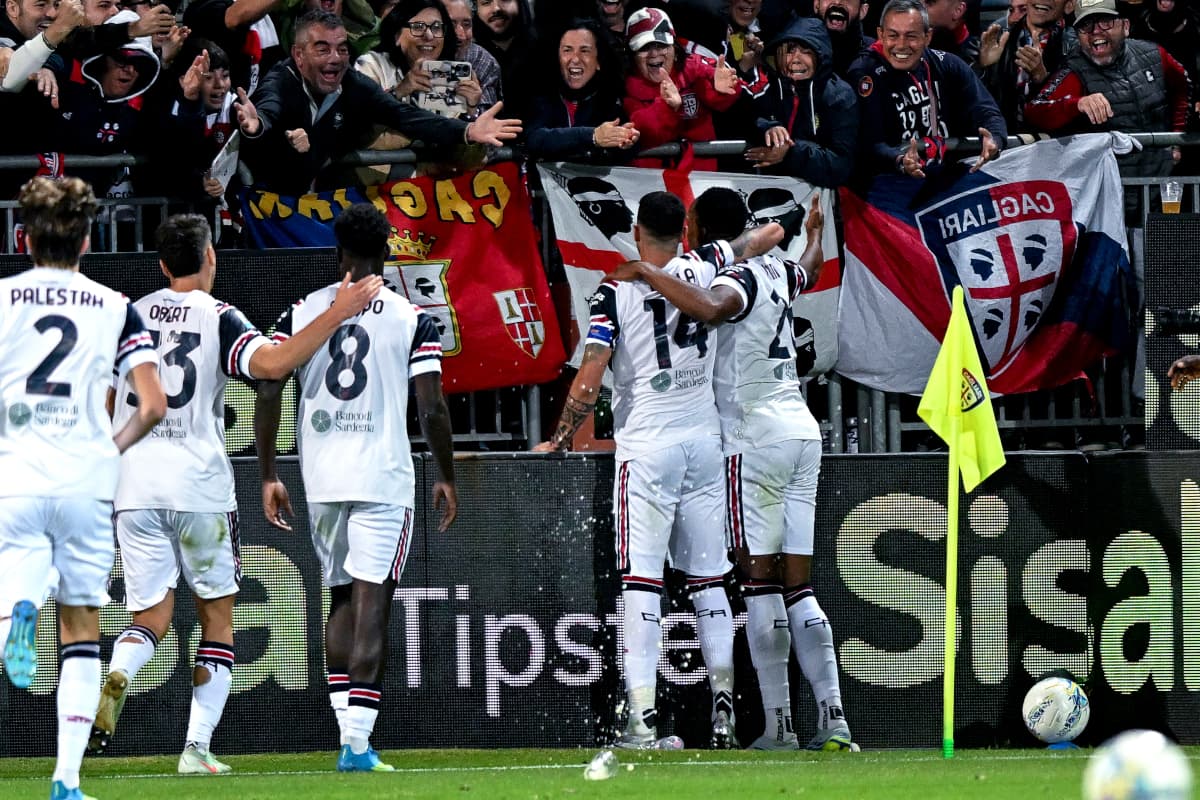
Cagliari's Tactical Triumph Over Torino: A 2–1 Statement Win
On a humid evening at Unipol Domus, Cagliari edged Torino 2–1 in a result that felt less like a dead‑rubber in Round 37 and more like a statement about identity. Following this result, the table still shows Cagliari in 16th on 40 points and Torino 12th with 44, but the way the hosts managed the contest said plenty about why they have survived a season of turbulence in Serie A.
I. The Big Picture – Shapes, stakes, and seasonal DNA
Fabio Pisacane rolled out a 4-3-2-1 that looked, in practice, like a narrow Christmas tree built to protect the central lanes. E. Caprile sat behind a back four of G. Zappa, Y. Mina, A. Dossena and A. Obert, with a compact midfield trio of M. Adopo, G. Gaetano and A. Deiola screening. Ahead of them, M. Palestra and S. Esposito floated between the lines, tasked with feeding lone forward P. Mendy.
Across from them, Leonardo Colucci trusted Torino’s familiar three‑at‑the‑back: a 3-4-2-1 with A. Paleari behind a defensive trio of L. Marianucci, S. Coco and E. Ebosse. The wing‑back band of M. Pedersen and R. Obrador flanked central midfielders E. Ilkhan and M. Prati, while G. Simeone and N. Vlasic supported D. Zapata.
Seasonally, the numbers explain why Cagliari leaned into structure over chaos. Heading into this game, they had scored 38 goals in total and conceded 52, a goal difference of -14, with their home record finely balanced: 22 goals for and 23 against at Unipol Domus, both averaging 1.2 per game. Torino, by contrast, have lived on the edge. Overall they have 42 goals for and 61 against, a goal difference of -19, and on their travels they concede 1.8 goals per game while scoring only 0.9. This is not a side built to chase games away from home.
II. Tactical Voids – Absences and the disciplinary undertow
Both coaches walked into this fixture with key voids to solve. Cagliari were stripped of attacking variety and experience: M. Felici, R. Idrissi and L. Pavoletti all missed out with knee injuries, J. Liteta with a thigh problem, L. Mazzitelli with a calf issue, and J. Pedro through suspension for yellow cards. That list explains the reliance on P. Mendy as the spearhead and the creative burden placed on Esposito and Gaetano; the bench was light on proven Serie A end‑product, even if names like A. Belotti and S. Kilicsoy offered late‑game disruption.
Torino’s absences were equally structural. Z. Aboukhlal (muscle injury) and F. Anjorin (hip injury) removed two potential one‑v‑one outlets who could have stretched Cagliari’s back four horizontally. G. Gineitis, suspended for yellow cards, and A. Ismajli, out with a muscle problem, reduced Colucci’s options both in screening the back three and in rotating defensive profiles. It forced Torino into a more fixed 3-4-2-1, with less capacity to morph into a back four or add an extra destroyer in front of the defence.
Disciplinarily, both sides came in with warning lights flashing. Cagliari’s yellow‑card distribution shows a pronounced late‑game spike: 27.85% of their cautions arrive between 76–90 minutes, and another 24.05% between 46–60. Torino’s curve is more evenly stretched but still rises as games wear on, with 20.00% of yellows from 76–90 and a remarkable 21.43% from 91–105. This is not a fixture for passive endings; it is one where fatigue and desperation usually drag both squads into the referee’s notebook.
III. Key Matchups – Hunter vs Shield, and the engine room
The headline duel was always going to be “Hunter vs Shield”: G. Simeone, Torino’s top scorer with 11 league goals, against a Cagliari defence anchored by Obert and Mina. Simeone’s season profile is that of a relentless presser and penalty‑box predator: 58 shots in total, 28 on target, and 22 key passes underline his ability to both finish moves and connect play. His duels tally (283 total, 110 won) speaks to a forward who lives in contact, constantly testing centre‑backs physically and mentally.
Cagliari’s answer was a defensive line built on timing and aggression. Obert, the league’s leading yellow‑card magnet for Cagliari with 9 yellows and 1 yellow‑red, embodies the edge of this back line. He has made 65 tackles, intercepted 40 passes and, crucially, blocked 18 shots this season. That last number is a tactical statement: Cagliari are comfortable defending their own box, absorbing pressure, and trusting their centre‑backs to get bodies in the way rather than holding a high line they cannot sustain.
Behind that, Caprile’s positioning allowed the back four to squeeze selectively, with Mina stepping into duels with Zapata and Obert tracking Simeone’s diagonal runs. The 4-3-2-1 narrowed central lanes, forcing Torino’s “hunter” to drift into half‑spaces where he met layered resistance rather than isolated duels.
In midfield, the “engine room” battle pitted Cagliari’s creator S. Esposito against Torino’s double pivot of Ilkhan and Prati. Esposito’s season numbers are elite for a relegation‑threatened side: 7 goals, 5 assists, 954 passes with 67 key passes, and a 75% accuracy rate. He is both metronome and scalpel. His 298 duels (141 won) and 52 tackles show he is far from a luxury 10; he is a two‑way midfielder who sets Cagliari’s press triggers.
Torino’s Ilkhan and Prati were tasked with suffocating that influence. Their challenge was compounded by Torino’s structural weakness: on their travels they have failed to score in 8 matches but also conceded 34 goals, often when their midfield screen has been pulled apart in transition. Against a player like Esposito, who can break lines with both passing and dribbling (41 attempted dribbles, 17 successful), any hesitation between the lines is fatal.
IV. Statistical Prognosis – Why 2–1 felt logical
Following this result, the scoreline mirrors the broader statistical logic of these teams. Cagliari at home average 1.2 goals for and 1.2 against; Torino away average 0.9 for and 1.8 against. A 2–1 home win sits almost exactly on that intersection: Cagliari pushing slightly above their home scoring mean, Torino conceding slightly below their away average but still exposed.
Without explicit xG data, the expected‑goals story can be inferred from patterns. Cagliari’s season suggests they do not flood opponents with chances but create high‑value moments through Esposito’s vision and set‑piece delivery. Their 14 total failed‑to‑score games underline a reliance on timing rather than volume. Torino, by contrast, are volatile: their biggest away win is 0-3, but they have also lost 6-0 away, a sign of a side whose defensive structure can collapse when the first line is broken.
In this match, Cagliari’s compact 4-3-2-1 and their willingness to defend deep suited the game state once they got ahead. Torino’s 3-4-2-1 demands wing‑backs to pin the opposition back; instead, Pedersen and Obrador were often forced to track Palestra and Esposito, blunting Torino’s width and leaving Simeone and Vlasic to operate in crowded zones.
The disciplinary trends also played into the narrative. With Cagliari’s yellows clustering late and Torino’s rising steeply after the 76th minute, the closing stages were always likely to be fractured, with more stoppages and less clean possession for the visitors to build a comeback. Cagliari’s ability to manage chaos, backed by Obert’s shot‑blocking and Esposito’s ball retention, allowed them to suffocate Torino’s late push.
In the end, the 2–1 at Unipol Domus was not just a scoreline; it was a crystallisation of two seasons. Cagliari, flawed but organised, leveraged their home resilience and central quality. Torino, dangerous but structurally fragile on their travels, once again found that in Serie A, a potent “hunter” like Simeone is not enough without a shield that can hold.