AS Roma Dominates Lazio in Derby della Capitale
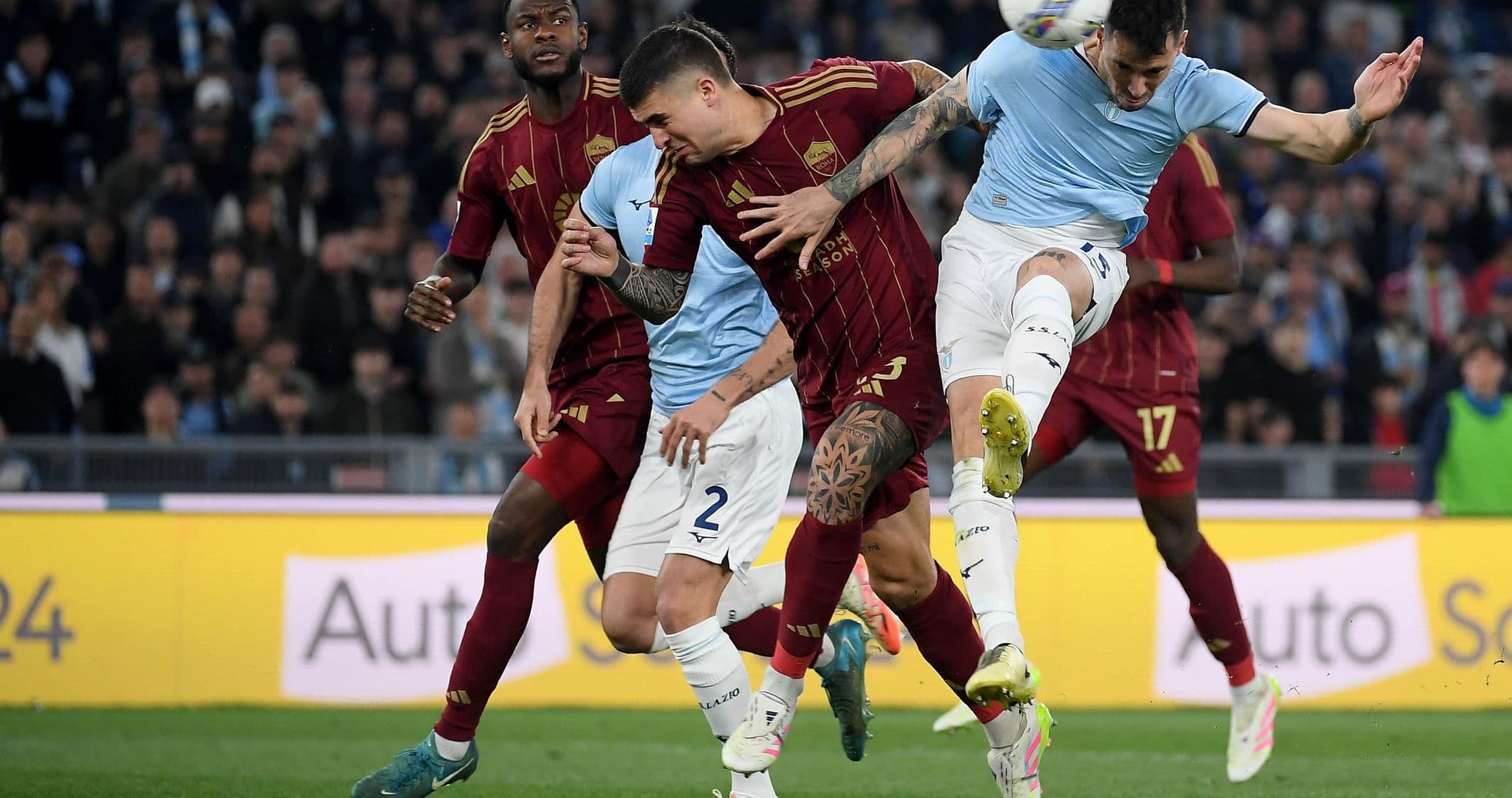
The Derby della Capitale returned to a sun‑drenched Stadio Olimpico with a familiar tension but an unfamiliar hierarchy. Following this result, AS Roma, already shaping a Champions League season, underlined their new status as the city’s dominant force, beating Lazio 2–0 in Serie A’s Round 37. Fourth against ninth on paper, it felt like a changing of the guard on the pitch as well.
Roma’s season‑long identity framed this performance. Overall they have taken 70 points from 37 matches with a goal difference of 26, built on a ruthless balance: 57 goals scored and only 31 conceded. At home they have been particularly imposing, with 13 wins from 19, scoring 33 and conceding just 10. That defensive parsimony – only 0.5 goals conceded on average at home – met a Lazio attack that has struggled on their travels, averaging just 0.7 away goals and failing to score in 11 league matches overall. The script was written in the numbers, and Roma played it almost to perfection.
I. The Big Picture – Structures and Systems
Piero Gasperini Gian doubled down on Roma’s seasonal blueprint with a 3‑4‑2‑1. M. Svilar anchored a back three of G. Mancini, E. Ndicka and M. Hermoso, a trio comfortable defending space and starting moves. Ahead of them, the wing‑back and double‑pivot axis was clear: Z. Çelik and Wesley Franca wide, with B. Cristante and N. El Aynaoui patrolling centrally. Between the lines, P. Dybala and N. Pisilli floated as dual creators, feeding the sharp edge of the attack, D. Malen.
Lazio, under Maurizio Sarri, stayed loyal to their 4‑3‑3, the shape they have used in 35 league matches. With I. Provedel missing through a shoulder injury and A. Romagnoli suspended after a red card, A. Furlanetto started in goal behind a back four of A. Marusic, M. Gila, O. Provstgaard and N. Tavares. The midfield trio of T. Basic, N. Rovella and K. Taylor was tasked with resisting Roma’s overloads, while a front three of M. Cancellieri, B. Dia and T. Noslin tried to stretch Roma’s back line.
The absences were more than a footnote. Roma were without E. Ferguson and B. Zaragoza, but their squad depth – and the presence of high‑impact attackers like Malen and bench option M. Soulé – softened the blow. Lazio, by contrast, were stripped of structural pillars: Provedel’s command of the box, Romagnoli’s leadership and blocks, and M. Zaccagni’s dribbling and foul‑drawing threat. This was a Lazio side missing its spine.
II. Tactical Voids and Discipline
Roma’s season card profile hinted at the game’s rhythm. Heading into this game, 23.88% of their yellow cards came between 76–90 minutes, with another 22.39% between 61–75, a clear pattern of late‑game aggression once the match state demanded protection of a lead. Lazio, for their part, carried a volatile disciplinary edge: 26.32% of their yellow cards and a striking 55.56% of their reds arrived in that same 76–90 window.
This derby never tipped into chaos, but the underlying trends shaped the coaches’ risk calculus. Roma could lean into their defensive solidity – 17 clean sheets overall, 11 of them at home – and trust their structure. Lazio, who have conceded 39 goals overall with a goal difference of 0, had to push at times, but their late‑game disciplinary history limited how aggressively they could chase once Roma were in front.
III. Key Matchups – Hunter vs Shield, Engine Room
The headline duel was always going to be D. Malen against Lazio’s makeshift rearguard. Malen arrived as one of Serie A’s most efficient forwards: 13 goals and 2 assists in 17 appearances, scoring from 46 shots with 29 on target. His movement is built on short, explosive darts into half‑spaces, and Roma’s 3‑4‑2‑1 maximised that, with Dybala and Pisilli dragging markers out of the central lane.
Standing between Malen and the scoresheet was Mario Gila, one of Lazio’s most reliable defenders this season. Gila’s numbers tell the story of a proactive centre‑back: 46 tackles, 17 blocked shots and 25 interceptions in league play, plus 199 duels with 134 won. Without Romagnoli alongside him, Gila had to be both organiser and last line. The 2–0 scoreline reflected how often Roma managed to isolate him, forcing him into wide channels and away from his preferred central zone.
In midfield, the “Engine Room” battle pitted Roma’s double pivot against Lazio’s trio. Cristante and El Aynaoui offered a blend of physicality and circulation, allowing Wesley Franca to step higher. Wesley’s season has been defined by intensity: 53 tackles, 5 blocked shots, 23 interceptions and 317 duels, with 149 won. He also carries a disciplinary edge – 6 yellows and 1 straight red – but his aggression was perfectly suited to disrupting Lazio’s attempts to build through Rovella and Basic.
On Lazio’s side, the absence of M. Guendouzi, a red‑carded figure in their broader season narrative, removed a natural enforcer. Rovella’s passing range and Taylor’s energy could not fully compensate for Roma’s superior numbers between the lines, especially with Dybala dropping into pockets to overload the half‑spaces.
Out wide, Z. Çelik’s duel with N. Tavares was another subtle hinge. Çelik has logged 62 tackles and 26 key passes this season, a two‑way presence who can both lock down his flank and deliver quality in the final third. His ability to step high in Roma’s 3‑4‑2‑1 pinned Lazio’s full‑backs, limiting the support they could offer Noslin and Cancellieri.
IV. Statistical Prognosis and xG Logic
Even without explicit xG figures, the season data sketches a clear expected‑goals landscape. Roma’s overall scoring average of 1.5 goals per game, combined with Lazio’s 1.1 conceded, suggests a baseline expectation of Roma creating the higher‑value chances, particularly at home where they average 1.7 goals and allow only 0.5. Lazio’s away attack, at 0.7 goals on their travels, was always likely to be starved against a Roma side that has failed to score at home only 3 times and kept 11 home clean sheets.
Defensively, Roma’s structure has been elite: 31 goals conceded overall, and only 10 at home. Lazio’s attack, already blunted by the absence of Zaccagni – whose profile includes 60 dribbles attempted and 82 fouls drawn, plus a notable penalty miss – lost its key 1v1 destabiliser. Without his ability to win set‑pieces and penalties, Lazio’s path to high‑quality chances narrowed further.
At the other end, Malen’s penalty record (3 scored from 3, 0 missed) added an extra layer of threat in a derby where any clumsy challenge in the box could tilt the balance. Roma’s own penalty record this season – 5 scored from 5 overall, with 0 missed – reinforced the idea that any xG spike from the spot would almost certainly be converted.
In the end, the 2–0 felt like the logical outcome of all these intersecting lines: Roma’s structured aggression, their home defensive wall, and a Lazio side stripped of key leaders and creative sparks. Following this result, the city’s colours may still be shared, but the tactical and statistical landscape of Rome looks decisively giallorosso.