World Cup Stalemate: Qatar vs Switzerland Tactical Analysis
The first World Cup night at Levi’s Stadium delivered a stalemate that felt anything but static. Qatar and Switzerland shared a 1–1 draw, yet beneath the scoreline lay two very different tactical stories converging in Group B.
I. The Big Picture – Two 4-3-3s, two identities
Both sides arrived in Santa Clara with a perfect statistical symmetry: heading into this game, neither had played before in the group, and following this result both sit on 1 point, with a goal difference of 0 after scoring 1 and conceding 1 overall. Yet how they reached that balance could hardly be more contrasting.
Julen Lopetegui set Qatar up in a 4-3-3 that was compact, conservative without the ball, but surprisingly vertical when possession was secured. At home in this tournament context, Qatar have now played 1 match, scoring 1.0 goals per game and conceding 1.0 at home – a statistical mirror that reflects the match’s narrative: resilience, but fragility.
Murat Yakin’s Switzerland also lined up in a 4-3-3, but with a more established European structure: a back four comfortable in build-up, a double-pivot feel through Granit Xhaka and Remo Freuler, and wide forwards asked to stretch and probe. On their travels, Switzerland have played 1, scoring 1.0 and conceding 1.0 away – a tidy but incomplete performance profile.
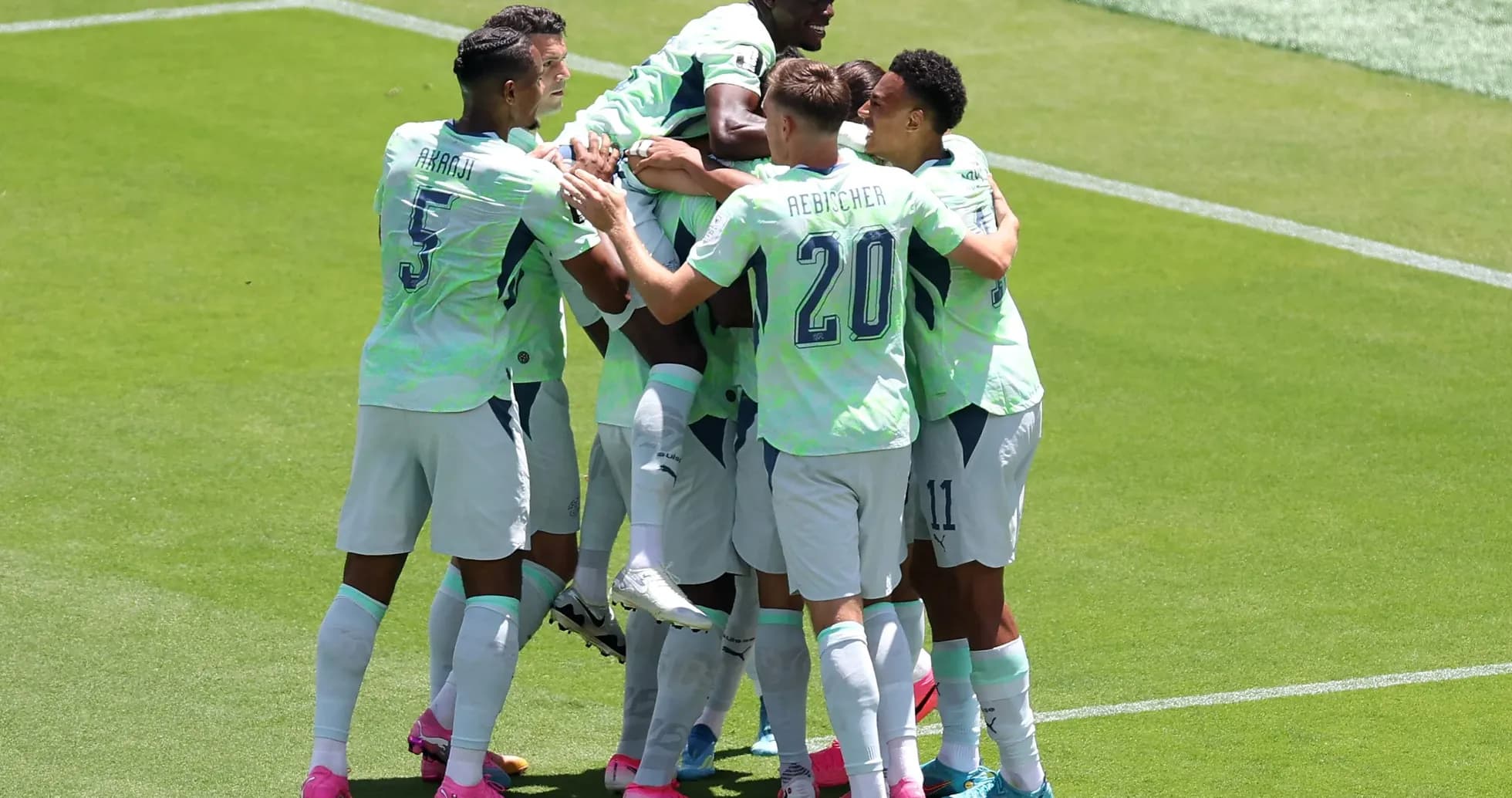
The opening act belonged to the Swiss. Breel Embolo, already on the tournament’s scoring charts, struck from the spot, Switzerland converting their only penalty of the campaign so far: 1 taken, 1 scored, a 100.00% record. Qatar, by contrast, have yet to attempt a penalty in total, still at 0 taken and 0 scored.
Yet the second half bent towards Lopetegui’s men. Qatar found their equaliser and, with it, their foothold in Group B: they sit 3rd in the group table with 1 point from 1 match (0 wins, 1 draw, 0 defeats; 1 goal for, 1 against), while Switzerland, also on 1 point from 1 (0-1-0; 1 for, 1 against), top the early standings on tie-breaks.
II. Tactical Voids – Discipline, risk and the cost of aggression
With no absentees listed, both coaches had full squads to shape their plans. That made the disciplinary patterns even more revealing, because every card was a pure tactical choice rather than forced improvisation.
Qatar’s season card profile shows a sharp, early edge: 100.00% of their yellow cards so far have come between 16-30 minutes. That early aggression was embodied by Jassem Gaber and Mahmud Abunada. Gaber, operating as a combative midfielder, took 1 yellow card in his 60 minutes, committing 2 fouls and engaging in 8 duels, winning 3. His willingness to step out and contest second balls gave Qatar bite, but it also risked destabilising their block.
Behind him, Abunada’s role was even more complex. The goalkeeper not only made 5 saves and completed 31 passes at 64% accuracy; he also collected a yellow card and committed the foul that led to Switzerland’s penalty. His disciplinary line – 1 yellow, 1 foul committed, 1 penalty conceded – underlines Qatar’s high-risk approach to defending depth: aggressive goalkeeping to compensate for a back line that still feels in transition.
On the Swiss side, the card story is calmer but no less telling. Their only yellow so far came in the 31-45’ window, a 100.00% share of their current bookings. It belongs to Denis Zakaria, nominally listed as a defender but operating with the mobility of a hybrid full-back/midfield destroyer. His 1 yellow, 1 foul committed, and 10 duels (6 won) speak to a player tasked with stepping into midfield to suffocate transitions – a vital role against Qatar’s vertical surges through Akram Afif and Edmilson Junior.
III. Key Matchups – Hunter vs Shield, Engine Room vs Enforcer
Hunter vs Shield
This fixture quietly showcased two early attacking reference points in the tournament: Boualem Khoukhi for Qatar and Breel Embolo for Switzerland.
Khoukhi, officially a defender, has become Qatar’s surprise scoring outlet. He has 1 goal in total this campaign, from 1 shot and 1 on target, and his 34 passes at 70% accuracy underline his dual identity: part of the last line, but also a launcher and late threat. He also blocked 1 shot and made 2 interceptions, a reminder that his defensive fundamentals remain intact even as he steps into the spotlight.
Embolo, for Switzerland, is the more orthodox hunter. He has 1 goal in total, 2 shots (1 on target), and a perfect penalty record so far – 1 scored, 0 missed. More intriguingly, he has already produced 5 key passes from just 8 total passes, with a 75% accuracy. That blend of final-third creativity and penalty-box presence makes him the axis of Yakin’s attack. Against Qatar, his movement between the lines dragged Khoukhi and Bassam Al Rawi’s zone into awkward decisions: step out and risk depth, or hold and allow him to turn.
Engine Room vs Enforcer
In midfield, the battle line ran between Qatar’s Jassem Gaber and Switzerland’s Granit Xhaka and Remo Freuler, with Zakaria often sliding inside to form a three.
Gaber’s numbers – 1 tackle, 2 blocked shots, 8 duels (3 won) – show a player fighting above his weight to disrupt a technically superior midfield. His early yellow card, in line with Qatar’s 16-30’ disciplinary spike, forced him to walk a tightrope for the remainder of his hour on the pitch. When he was withdrawn, the balance of Qatar’s press and their ability to contest second balls dipped, even as their attacking transitions improved.
Xhaka and Freuler, though not detailed in the disciplinary tables, formed the metronome behind Switzerland’s structure. With Zakaria adding 3 tackles and 2 interceptions, the Swiss “enforcer” triangle repeatedly stepped into Qatar’s half, pinning their 4-3-3 deep and forcing Afif and Yousuf Abdurisag to defend rather than counter.
IV. Statistical Prognosis – xG shadows and defensive solidity
The raw xG figures are not provided, but the structural hints are clear. Both teams have identical scoring and conceding patterns overall: 1.0 goals for and 1.0 against per match. Neither has kept a clean sheet, and neither has failed to score. This is the profile of two sides whose matches are likely to be decided by fine margins rather than blowouts.
Qatar’s penalty record – 0 taken, 0 scored, 0 missed – contrasts sharply with Switzerland’s clinical 1-from-1 from the spot. In tight group games, that difference in penalty reliability can tilt qualification scenarios. Abunada’s concession of a penalty, without yet facing one at the other end, hints at a Qatar side that lives dangerously in its own box while not yet generating that same pressure in the opposition area.
Defensively, both teams have conceded 1 goal in total, but the manner differs. Qatar’s back line leans heavily on Khoukhi’s anticipation (2 interceptions, 1 blocked shot) and Abunada’s shot-stopping, while Switzerland spread the load across Zakaria’s 3 tackles and 2 interceptions and the positional nous of Manuel Akanji and Nico Elvedi.
Following this result, the prognosis for Group B is of a finely poised race. Switzerland look marginally more stable structurally, buoyed by Embolo’s form and their 100.00% penalty record. Qatar, however, possess a disruptive edge: early-game aggression in the card data, a defender-top-scorer in Khoukhi, and a goalkeeper willing to defend on the front foot.
If this match is a template, their future encounters will be decided not by volume of chances, but by who better manages the thin line between controlled aggression and self-inflicted damage.