USA Dominates Paraguay in World Cup Opener
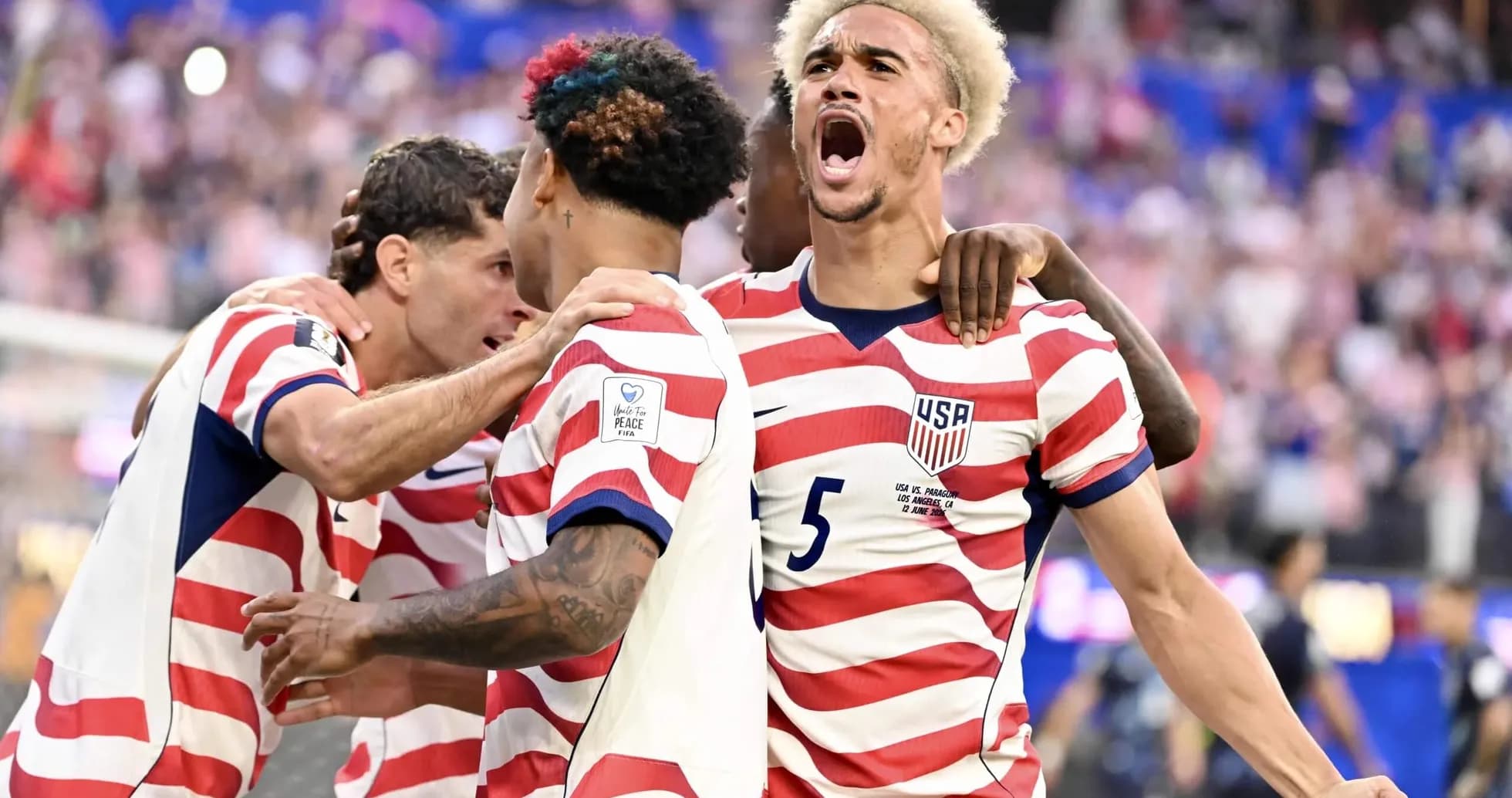
Under the lights of SoFi Stadium, USA’s 4-1 dismantling of Paraguay did more than open Group D with a statement; it sketched out the tactical identities of both sides for the rest of this World Cup campaign.
I. The Big Picture – A Group D hierarchy takes shape
Following this result, USA sit top of Group D in 1st place with 3 points, a goal difference of +3 (4 goals for, 1 against). Paraguay, beaten 4-1, find themselves 4th with 0 points and a goal difference of -3 (1 for, 4 against). The numbers from the season snapshot are still minimal, but already revealing.
Heading into this game, USA’s World Cup profile was untested; now, overall they have played 1 match, winning 1, scoring 4.0 goals on average in total and conceding 1.0. Paraguay, on their travels, have played 1, lost 1, scoring 1.0 and conceding 4.0 on average away. No penalties have been taken by either side so far, so there is no drama yet from the spot.
The formations told their own story. Mauricio Pochettino’s USA lined up in a 4-2-3-1, leaning into a modern, flexible attacking structure. Gustavo Alfaro’s Paraguay chose a 4-4-2, more traditional and ostensibly solid, but it was soon stretched to breaking point.
II. Tactical Voids – Discipline, balance, and the hidden costs
In terms of absences, there is no recorded injury list in the data, so both coaches effectively had full decks. The real voids emerged in live play: structural imbalances and disciplinary strain.
USA’s card map is clean but telling. Their only yellow so far in this World Cup comes between 46-60 minutes, with 100.00% of their cautions arriving in that window. It hints at a team that starts fast, then has to manage the emotional and physical spike right after half-time when games can become ragged.
Paraguay’s disciplinary profile is far more scattered and worrying. Overall, their yellow cards are distributed as follows:
- 0-15 minutes: 1 yellow (20.00%) – early nerves.
- 46-60 minutes: 1 yellow (20.00%) – post-interval strain.
- 76-90 minutes: 2 yellows (40.00%) – a late-game surge of frustration.
- 91-105 minutes: 1 yellow (20.00%) – even into added time, the fouls keep coming.
Players like A. Arce, J. Caceres, and M. Almiron each carry a yellow already, and all three are among Paraguay’s top carded players. This is not incidental: it underlines a side that, when stretched, defends by fouling rather than by compressing space.
For Alfaro, that creates an immediate selection headache. J. Caceres, who has already logged 5 tackles and 3 fouls committed, is both an aggressive outlet and a disciplinary risk on the right of the back four. M. Almiron, with his blend of dribbles and defensive work, is walking the same tightrope. Paraguay do not have a red card yet, but the profile screams “one bad night away” if the game-state turns against them again.
III. Key Matchups – Hunter vs Shield, Engine Room vs Enforcer
Hunter vs Shield: F. Balogun vs the Paraguayan back line
No one embodied USA’s cutting edge more than F. Balogun. With 2 goals from 4 shots (3 on target) and a 9.2 rating, he has emerged as the competition’s leading scorer so far. His 10 duels, winning 5, and 3 dribble attempts show a forward who does not merely finish moves but initiates and sustains them.
He is fed by a creative triad: C. Pulisic, M. Tillman, and G. Reyna. Pulisic’s 22 passes at 81% accuracy, 2 key passes, and 1 assist made him one of the top providers in the tournament so far. Tillman added another assist, 3 shots (2 on target), and 18 duels, winning 7 – a physical, all-action presence between the lines. Reyna, off the bench, contributed 1 goal, 1 shot on target, 8 passes at 100% accuracy and a 7.9 rating, a reminder that Pochettino can change the tempo and profile of his attack mid-game.
Against that, Paraguay’s “shield” looked brittle. The central pairing of G. Gomez and O. Alderete were exposed by USA’s vertical runs and rotation. J. Alonso and J. Caceres at full-back were dragged inside by the narrow positioning of Pulisic and Tillman, leaving lanes for overlapping threats like A. Freeman and S. Dest. Freeman, in particular, quietly had an outstanding game: 74 passes at 86% accuracy, 1 assist, 2 interceptions, and 3 successful dribbles from right-back. He is not just a defender; he is a deep-lying playmaker in wide zones.
Engine Room: T. Adams vs A. Cubas
In midfield, the contest between the holding players framed the entire narrative. T. Adams anchored USA’s double pivot, allowing W. McKennie and the advanced three to roam. His presence ensured that when Paraguay tried to break through M. Almiron and J. Enciso, they met a compact shield rather than open grass.
On the other side, A. Cubas had to put out fires everywhere. With Paraguay conceding 4.0 goals on average away in this campaign, his role as screen is being overwhelmed by structural gaps. Enciso, though, remains a bright spot: 25 passes at 80% accuracy, 1 assist, 4 dribbles attempted with 2 successful, and 14 duels with 8 won. He is both creator and outlet, but too often isolated.
Mauricio, Paraguay’s scorer and one of their statistical standouts, offers a different dimension from midfield: 1 goal from his only shot, 20 passes at 70% accuracy, and 2 tackles in 54 minutes. His introduction gave Paraguay a more vertical threat from deep, but by then the game-state was already tilted.
IV. Statistical Prognosis – Where this is heading
Following this result, the numbers are stark. Overall, USA’s goal difference is +3 (4 scored, 1 conceded), Paraguay’s is -3 (1 scored, 4 conceded). USA have yet to keep a clean sheet, but their attacking volume – 4.0 goals on average in total – suggests they can outscore defensive lapses for now. Paraguay have failed to keep a clean sheet as well, and their 4.0 goals conceded on average away underline a defensive unit that is conceding too many high-quality chances.
With no penalties taken or missed by either side, the story is being written in open play and transition. USA’s 4-2-3-1, already used once in this campaign, looks settled. Paraguay’s 4-4-2 has also been used once, but feels more reactive than proactive.
The tactical intersection is clear: a USA side brimming with attacking variety and bench impact against a Paraguay team whose late-game discipline (40.00% of their yellows in 76-90 minutes) crumbles under pressure. Unless Paraguay can tighten their defensive spacing and control their emotions, the numbers suggest their World Cup will remain an uphill climb, while USA look every inch a Round of 32 side with ambitions far beyond that line.