UEFA Champions League Final: Arsenal vs Paris Saint Germain
At Puskas Arena in Budapest, Paris Saint Germain and Arsenal meet in the UEFA Champions League Final, a one-off game that will define their entire 2025 campaign. In the league phase, Arsenal arrive as the dominant benchmark, top of the overall table with 24 points from 8 wins out of 8, while Paris Saint Germain come in as a dangerous but less consistent challenger, ranked 11th with 14 points from 4 wins, 2 draws and 2 defeats. This is not about qualification anymore: it is a straight fight for the trophy, legacy, and validation of two very different European projects.
Head-to-Head Tactical Summary
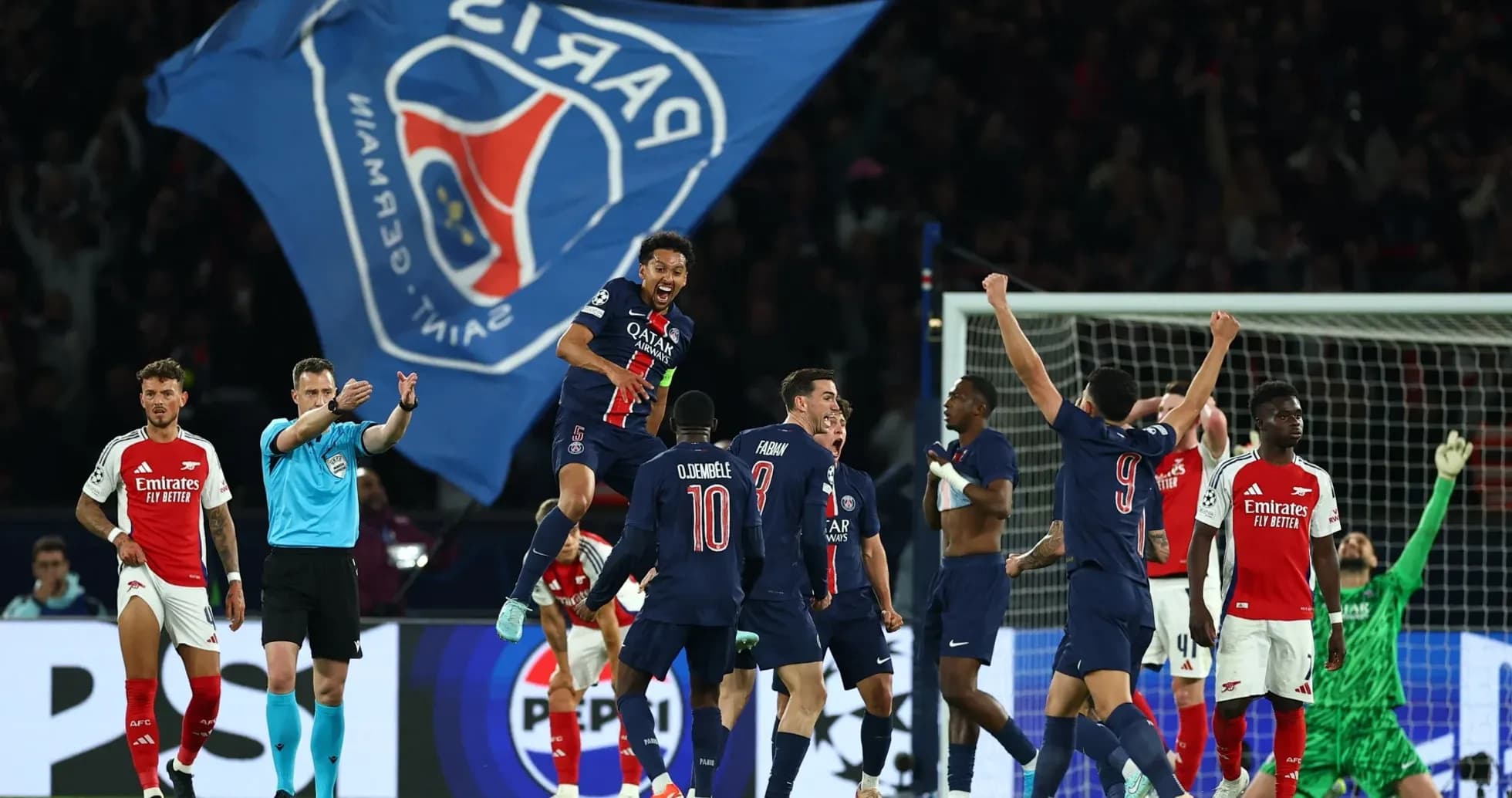
The recent Champions League semi-final in 2025 showed how finely balanced this matchup can be. On 7 May 2025 at Parc des Princes in Paris, Paris Saint Germain beat Arsenal 2-1 (HT 1-0) in the second leg, overturning some of the narrative around Arsenal’s control. A week earlier, on 29 April 2025 at Emirates Stadium in London, Paris Saint Germain had already edged a 1-0 away win (HT 1-0), leaning on compact structure and efficiency in both boxes.
In the 2024 league stage on 1 October 2024, also at Emirates Stadium, Arsenal imposed themselves more clearly with a 2-0 home victory (HT 2-0), underlining their capacity to front‑foot games when they control territory. Further back, in the International Champions Cup on 28 July 2018 at The National Stadium (Singapore), Arsenal produced a 5-1 win (HT 1-0), a pre-season context but still a reminder of how their pressing and vertical play can overwhelm Paris Saint Germain in open contests. The 2-2 draw at Emirates Stadium on 23 November 2016 (HT 1-1) in the Champions League group stage highlighted an earlier, more transitional phase in this rivalry, with both sides trading control in a more open tactical landscape.
Global Season Picture
- League Phase Performance: In the league phase, Paris Saint Germain’s path to the final has been built on a high-output attack and a more vulnerable defensive structure: 21 goals for and 11 against in 8 matches, earning 14 points and an 11th-place ranking. Arsenal, by contrast, have combined control and defensive solidity at an elite level: 23 goals for and only 4 against in 8 matches, taking the maximum 24 points and sitting 1st overall. Arsenal’s +19 goal difference versus Paris Saint Germain’s +10 underlines a clear edge in balance and control over the league phase.
- Season Metrics: Scope detection shows team statistics totals (16 and 14 games) closely aligned with the 8 league-phase fixtures, so these numbers reflect performance in the league phase. Paris Saint Germain’s profile is that of an aggressive, high-variance side: 44 goals scored and 22 conceded in 16 matches, averaging 2.8 goals for and 1.4 against per game, with only 5 clean sheets and just 1 match without scoring. Their card distribution shows a tendency to pick up yellow cards late (42.86% of yellows between minutes 76-90), which can be costly in tight knockout football. Arsenal’s metrics point to a controlled, defensively disciplined unit: 29 goals for and only 6 conceded in 14 matches, averaging 2.1 scored and 0.4 conceded, with 9 clean sheets and only 1 game without a goal. Their card pattern is more evenly spread, but with a concentration of yellows between minutes 61-75 (31.82%), often coinciding with game-management phases when they protect leads.
- Form Trajectory: In the league phase, Paris Saint Germain’s recent form string of “DLDWL” signals inconsistency: only 1 win in the last 5, with 2 draws and 2 defeats, mirroring a side that can dominate on their day but struggles to sustain control across a run of high-stakes fixtures. Arsenal’s “WWWWW” run is the opposite: 5 straight wins, maintaining a perfect league-phase record and entering the final with maximum momentum and confidence. The contrast is clear: Paris Saint Germain arrive as a high-ceiling, volatile finalist; Arsenal as the relentlessly efficient machine.
Tactical Efficiency
In the league phase, Paris Saint Germain’s attacking efficiency is reflected in their 2.8 goals per game, but the 1.4 goals conceded per match exposes a defense that is comparatively open and reliant on outscoring opponents rather than locking games down. Their frequent use of a 4-3-3 structure over 16 matches suggests a commitment to width and forward volume, which amplifies their attacking threat but can leave space between lines, especially in transition.
Arsenal’s 2.1 goals scored and just 0.4 conceded per game in the league phase indicate a more controlled, low-variance model: they do not need to create chaos to win. The mix of 4-3-3 and 4-2-3-1 over 14 matches points to tactical flexibility, allowing them to add an extra midfielder for control or an extra attacker between lines depending on game state. Without an explicit numerical “Attack/Defense Index” from the comparison block, the best proxy is this goals profile: Arsenal’s ratio of goals for to against is significantly superior, giving them a higher combined efficiency at both ends than Paris Saint Germain.
Penalty conversion (both at 100% for each side in the league phase) reinforces that neither team wastes clear, high-xG chances from the spot. However, Arsenal’s greater number of clean sheets (9 versus Paris Saint Germain’s 5) and their unbeaten record suggest that their defensive “index” is substantially higher, enabling them to win even on days when attacking output is closer to average.
The Verdict: Seasonal Impact
This final will fundamentally shape how 2025 is remembered for both clubs. For Arsenal, already 1st in the league phase with 24 points and a perfect record, victory would confirm them as the undisputed reference point in Europe: an invincible league-phase run crowned by the Champions League trophy. It would validate their controlled, low-concession model and strengthen their status as the team others must tactically adapt to in future European campaigns.
For Paris Saint Germain, ranked 11th in the league phase and arriving with a more erratic “DLDWL” form line, winning the final would transform a solid but not dominant campaign into a historic success. It would show that their high-variance, attacking approach can still peak at the decisive moment, rewriting a narrative that currently favours Arsenal’s stability. A defeat, by contrast, would reinforce the perception that while their attack is elite, the defensive concessions and inconsistency in the league phase remain a barrier to sustained European supremacy.
In strategic terms, this final is less about qualification and more about long-term positioning. If Arsenal win, they set the tactical benchmark for 2026: control, defensive solidity, and structural flexibility as the optimal Champions League model. If Paris Saint Germain lift the trophy, it re-opens the debate in favour of aggressive, high-output football, proving that a side ranked outside the top 10 in the league phase can still climb to the summit if it peaks at the right time. The seasonal impact, in either case, will extend well beyond Budapest and into how Europe’s elite build and adjust their squads for the next cycle.