France vs England: A Battle for Bronze in World Cup
France and England meet again on Saturday night chasing the prize nobody dares talk about wanting. Third place. Bronze. The game that feels like an obligation until the whistle blows and pride, reputation and careers suddenly sit on the line.
For Didier Deschamps, it is the final act of an era. For Thomas Tuchel, it may be the last stand of a regime already under heavy scrutiny.
Deschamps’ last dance
When the semi-final with Spain kicked off, Deschamps stood on the touchline knowing he was either right about La Roja being favourites or about to reach yet another World Cup final. Spain answered that question with ruthless clarity.
Mikel Oyarzabal’s nerveless penalty and a crisp finish from Pedro Porro sent Spain through and tore up France’s script. Les Bleus, so often devastating in transition, mustered just 0.31 Expected Goals in Dallas. Kylian Mbappe barely laid a glove on a back line that handled the much-hyped defence-vs-attack duel with icy composure.
It was a historic night for Deschamps in one sense – he broke the record for most World Cup matches managed. In another, it was brutal. The consensus, inside the camp and out, was that he misjudged it. Mbappe did not hide his frustration with the tactical approach in the aftermath. The criticism landed hard.
Now the 57-year-old, who never imagined his France tenure would end in a third-place playoff, has one last job: salvage a bronze and walk away with something tangible from his final tournament. France have history with this fixture. They beat West Germany 6-3 in 1958 – Just Fontaine scoring four – and edged Belgium 4-2 in 1986. Only in 1982, when Poland took third, did they leave empty-handed.
This is their first crack at the consolation podium in four decades. It is not the stage Deschamps wanted, but it is the one he has.
England’s familiar fall
Across the bracket, England’s collapse felt painfully familiar.
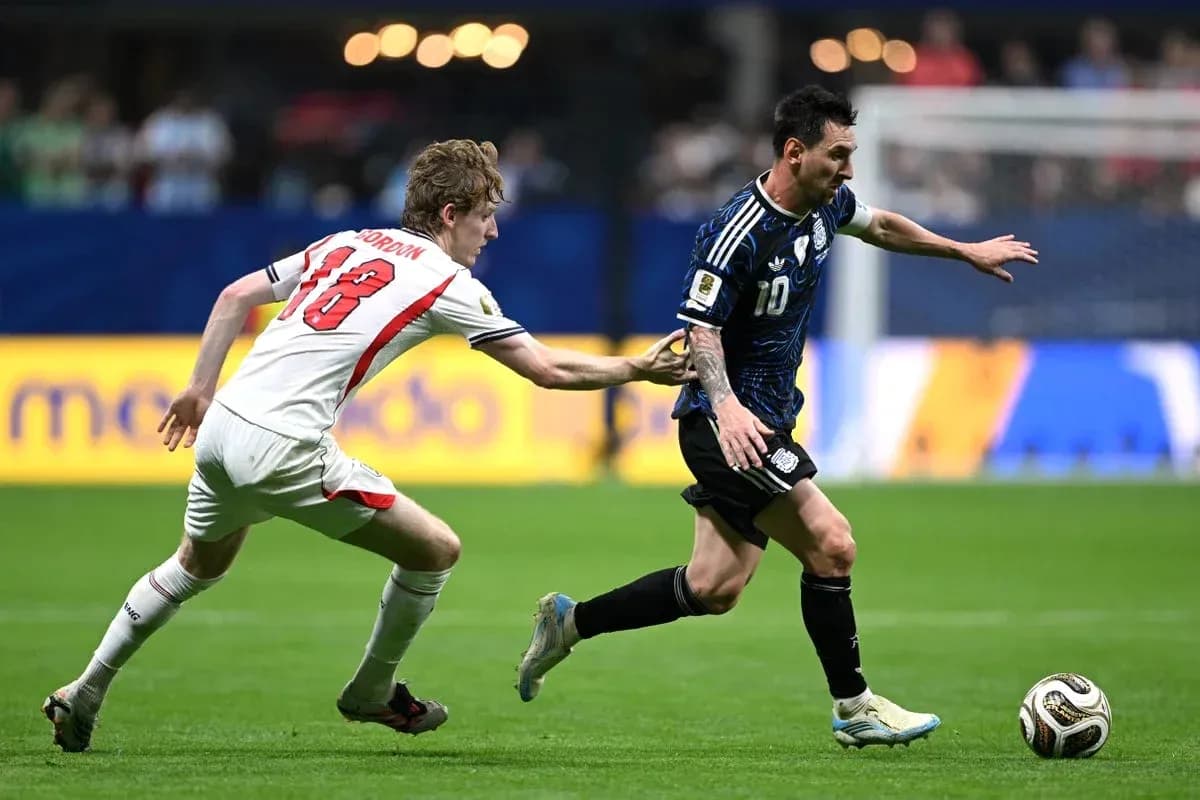
Buoyed by pre-match optimism and convinced they had finally found a way to live with the best, the Three Lions struck first against Argentina in Atlanta. They targeted the champions’ soft spots out wide and were rewarded when Anthony Gordon finished a sharp move to give England the lead.
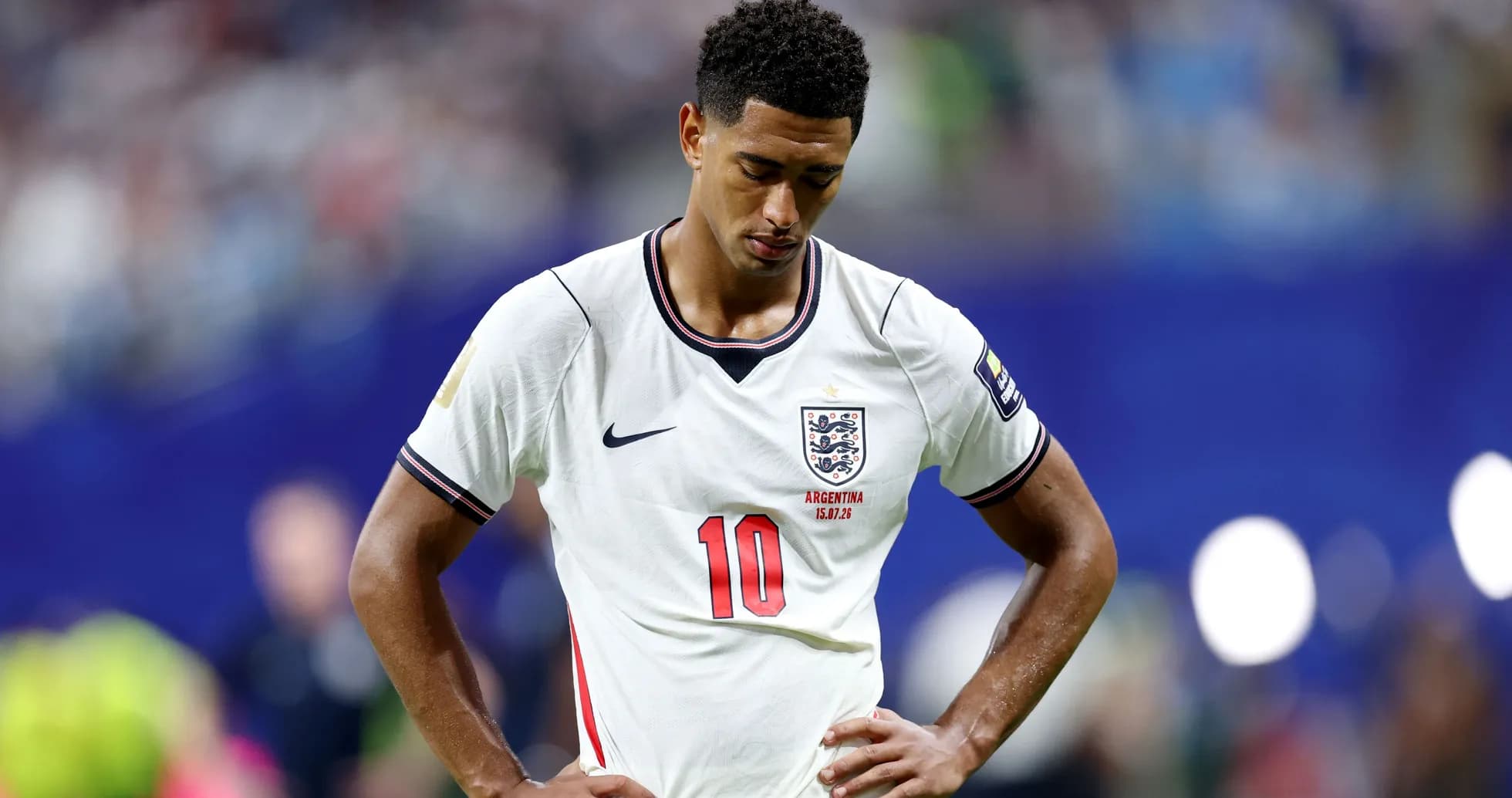
Then they stopped. Tuchel’s side retreated into a “try and break us down” shell against Lionel Messi and the reigning world champions. Messi did exactly that, orchestrating the comeback with two assists – one for Enzo Fernandez, one for Lautaro Martinez – as Argentina turned the semi-final on its head and kept alive their bid for back-to-back titles.
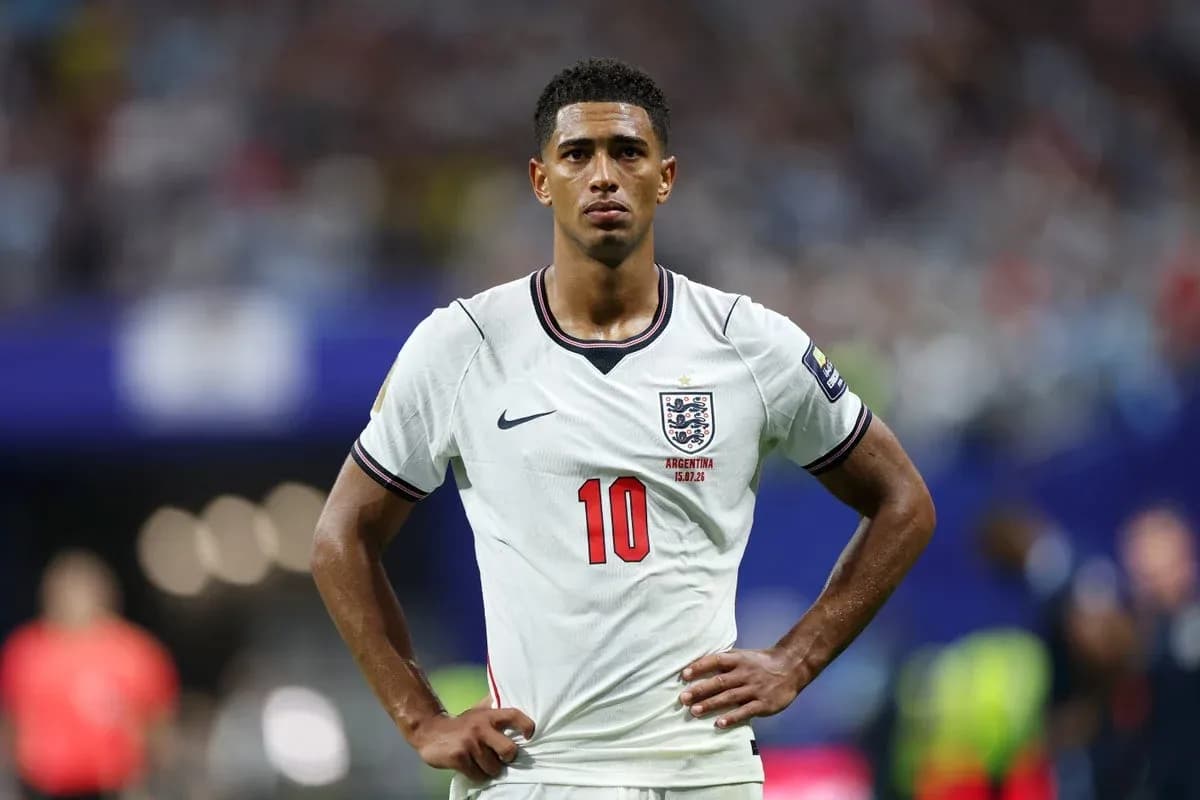
The inquest began before the players had even left the pitch. This was 2018 all over again: an early lead in a World Cup semi-final, a top-ranked opponent, and England wilting when the game demanded authority. They have now lost all seven of their World Cup knockout ties against teams inside the top 10 of the world rankings. No other nation has twice led a men’s World Cup semi-final in this century and failed to progress. England have managed it twice – Croatia then, Argentina now.
Tuchel’s recently extended contract with the FA already looks like a live debate rather than a settled decision.
He can still deliver England’s second-best World Cup finish. That is the dry, statistical upside. Their two previous third-place playoffs both ended in defeat – 2-1 to Italy in 1990, 2-0 to Belgium in 2018. A bronze medal in 2026 would sit above those campaigns in the record books, even if emotionally it would feel like a consolation prize for a squad that believed it was ready to win the whole thing.
History does not help the mood either. England have beaten France just once in their last nine meetings and were knocked out by Deschamps’s defending champions in the 2022 quarter-finals. The rivalry is real; the recent balance of power is not in England’s favour.
Injuries bite on both sides
The third-place game is often a laboratory for rotation. This one comes with enforced changes.
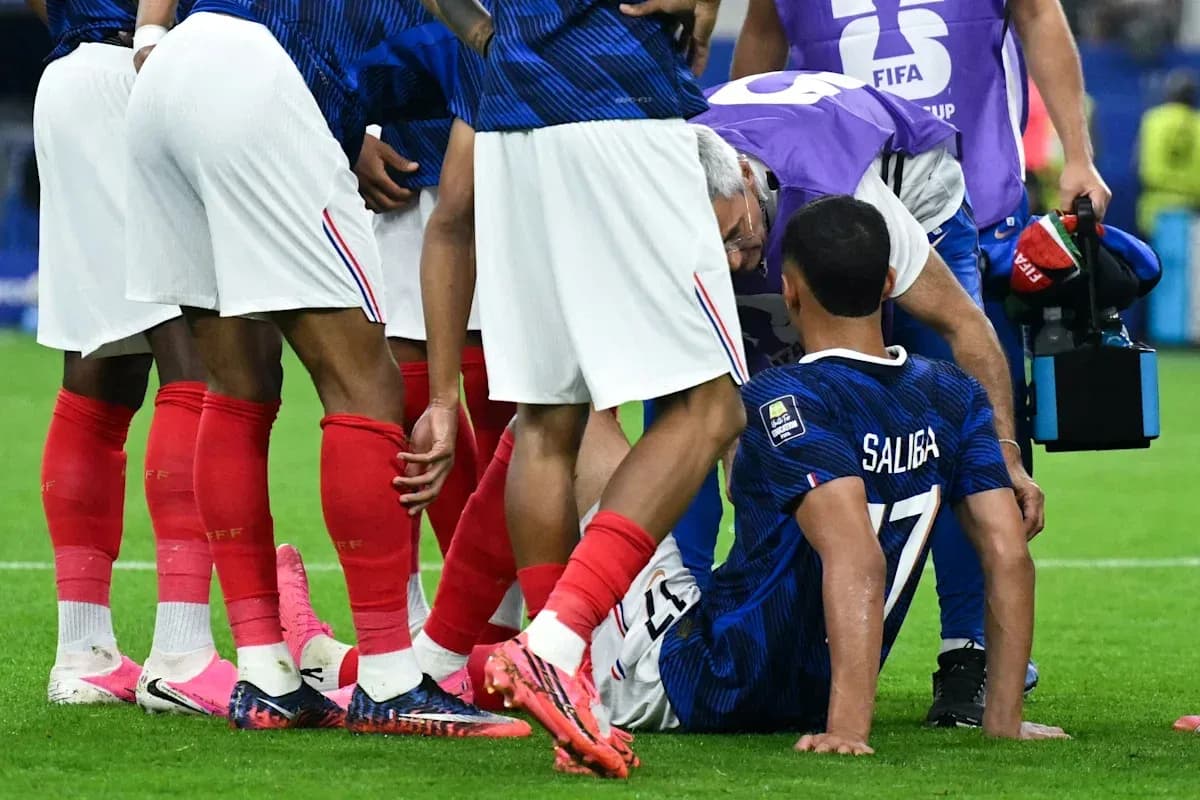
France’s most alarming moment against Spain came not from the scoreboard but from William Saliba’s words as he left the pitch: “My back is gone, my back is gone.” The Arsenal defender’s long-standing back issue flared again, ending his semi-final in the first half and almost certainly ruling him out of Saturday.
Maxence Lacroix, who replaced him in Arlington, should start. Deschamps chose the Crystal Palace defender over Ibrahima Konate in midweek, citing Konate’s form and discomfort on the left side of central defence. Now, with Saliba sidelined, the Real Madrid-bound Konate could yet come back into the XI, potentially at Dayot Upamecano’s expense, as Deschamps tweaks his back line for the final time.
Backup goalkeeper Brice Samba picked up a knock in France’s first training session after the semi-final, but Mike Maignan’s place was never under threat.
England’s problems mirror France’s in one key area: full-back. Reece James, whose injury record reads like a medical file rather than a CV, limped off with another muscular issue against Argentina barely a week after returning from a hamstring problem. His tournament is over.
Jarell Quansah is available again after serving a two-game suspension and offers one option, but the reshuffle is likely to continue. Djed Spence, England’s standout in recent games, is expected to switch flanks, opening the door for Nico O’Reilly to come back in on the left side of defence.
Jordan Henderson remains out with a wrist injury, but otherwise Tuchel has a full squad and every incentive to field a strong side. This is not a night for experimental line-ups and empty gestures. Not for a manager whose authority has already taken a hit.
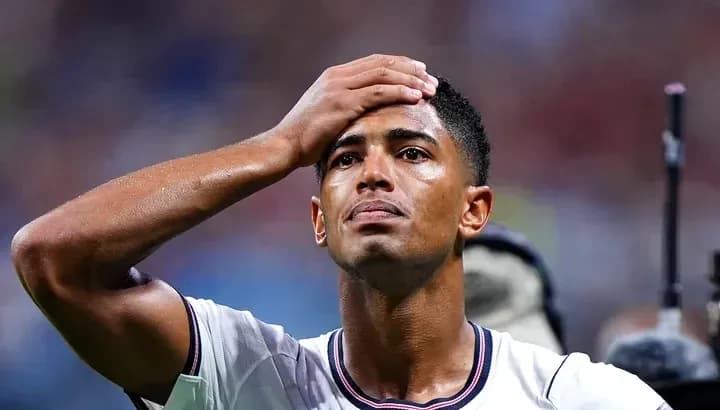
One shadow lingers: Jude Bellingham. Cameras caught the midfielder slapping the back of Valentin Barco’s head during Argentina’s post-match celebrations. Any disciplinary action would not affect this game unless fast-tracked, but the incident has created an unwelcome subplot around England’s star man.
Likely line-ups and tactical edges
Deschamps is expected to stay loyal to his core, even as he tinkers at the back. A probable France XI: Maignan; Kounde, Konate, Lacroix, Theo Hernandez; Kone, Zaire-Emery; Cherki, Olise, Doue; Mbappe.
Tuchel should respond with something close to full strength as well: Pickford; Spence, Konsa, Guehi, O’Reilly; Rice, Anderson; Rogers, Bellingham, Gordon; Kane.
Spain have shown the world how to suffocate this France attack: deny space in behind, compress the central lanes, force Mbappe and company into static possession rather than breakaway chaos. England, though, have not looked like Spain at this tournament. They have yet to keep a clean sheet in the knockout rounds and have repeatedly invited pressure when in front.
France, crucially, have had an extra day to recover from the physical and psychological strain of their semi-final. For a squad loaded with players used to high-stakes club football, that extra 24 hours could matter.
The stakes may not be what they were a week ago, but the verdict will still echo. For Deschamps, it is a chance to climb onto the podium one last time. For England, it is another test of whether they can finally finish a major tournament with something more than regret.