Spain's Tactical Superiority Over France in World Cup Semi-finals
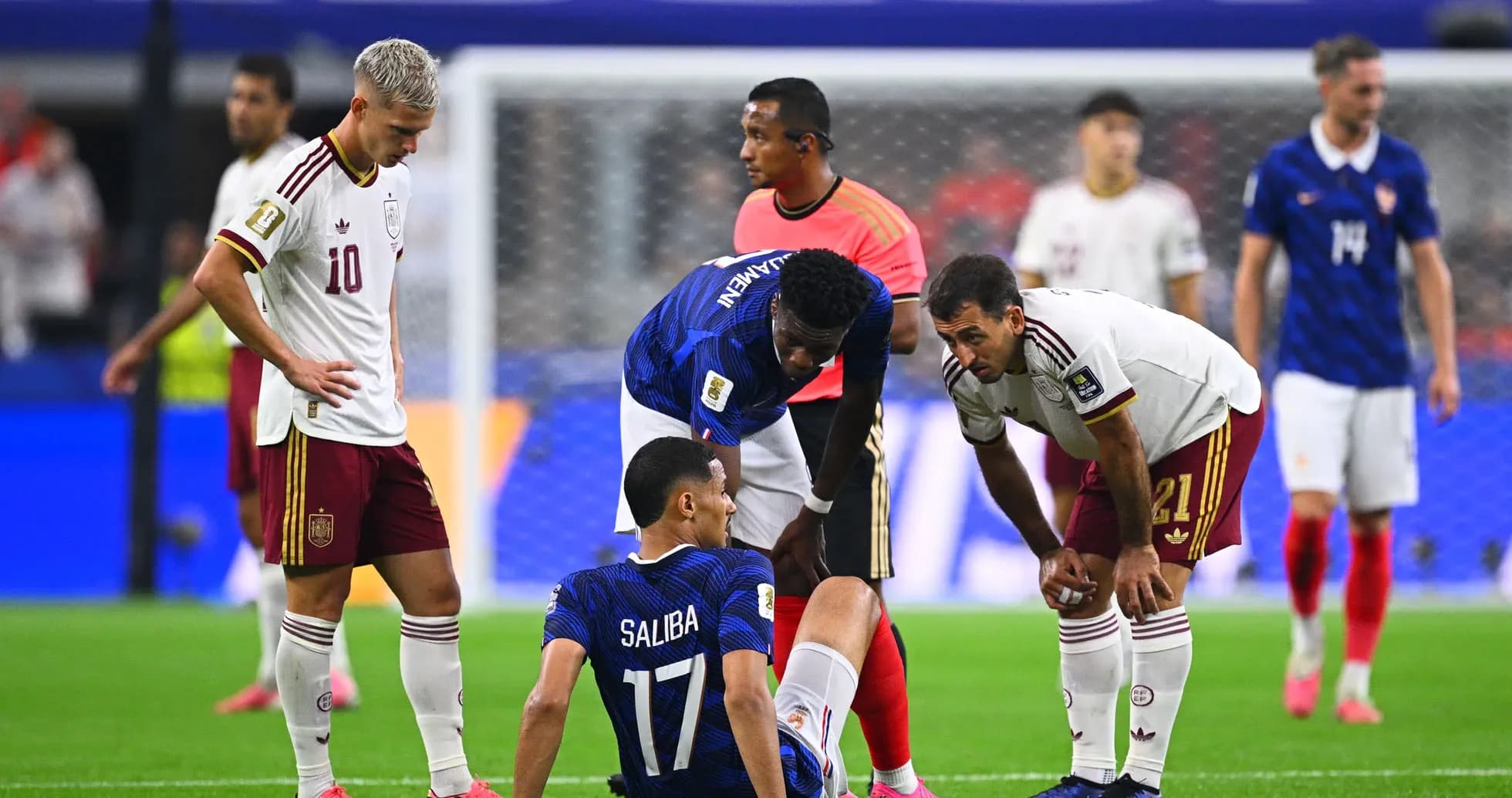
Under the Texan sky of Dallas Stadium, the World Cup Semi-finals brought together two sides whose entire tournament had been building toward this collision. France, ruthless front-runners of Group I and serial knockout operators, met a Spain side that had glided through Group H without conceding, a team whose control and clarity of idea had turned the ball itself into their twelfth man. By full time, Spain’s 2–0 win felt less like an upset and more like the logical conclusion of their structural superiority.
I. The Big Picture – Two Perfect Machines, One Tiny Edge
Heading into this game, both teams arrived with almost immaculate campaigns. France’s overall record showed 7 matches played, 6 wins and just 1 defeat, with 16 goals scored and 4 conceded. At home, they had been particularly devastating: 5 fixtures, 4 wins, 1 loss, 11 goals for and only 3 against, an average of 2.2 goals for and 0.6 against at home. Spain’s numbers were even more austere defensively. Across 7 matches in total, they were unbeaten, with 6 wins, 1 draw, 13 goals scored and just 1 conceded. At home they averaged 2.3 goals for and 0.3 against; away, 1.3 for and 0.0 against, with clean sheets in all 3 away games.
The group-stage standings framed this semi-final as a meeting of equals at the top of their respective pools. France had topped Group I with 9 points from 3 games, 10 goals scored and 2 conceded, a goal difference of 8. Spain had led Group H with 7 points, 5 scored and none conceded, a goal difference of 5. Both had punched their ticket from the group into the Round of 32 without a stumble; the Semi-finals were the natural destination for such profiles.
And yet the tactical DNA of the two sides was markedly different. France, locked into a 4-2-3-1 that they had used in all 7 matches, leaned on individual brilliance and vertical surges. Spain, more flexible, had alternated between 4-1-2-3, 4-3-3 and 4-2-3-1, but here Luis de la Fuente trusted his most stable shape: 4-1-2-3, with Rodri as the single pivot, Dani Olmo and Fabián Ruiz as the advanced interiors, and a front three of Lamine Yamal, Mikel Oyarzabal and Álex Baena.
II. Tactical Voids – Where Control Met Constraint
France’s starting XI was star-laden but structurally conservative. Mike Maignan in goal behind a back four of Jules Koundé, Dayot Upamecano, William Saliba and Lucas Digne suggested a priority on defensive stability. Aurélien Tchouaméni and Adrien Rabiot formed the double pivot, while the attacking band of Ousmane Dembélé, Michael Olise and Bradley Barcola was tasked with feeding Kylian Mbappé, the tournament’s deadliest finisher with 8 goals and 3 assists in 7 appearances.
Yet within that shape lay a void: France’s 4-2-3-1 often left Tchouaméni and Rabiot outnumbered against Spain’s midfield triangle. With no natural third midfielder stepping inside consistently, the French block risked being stretched between Spain’s lines, forcing the wingers into deeper defensive work and blunting their transition threat.
Spain, by contrast, had almost no structural gaps. Rodri screened the back four of Pedro Porro, Pau Cubarsí Paredes, Aymeric Laporte and Marc Cucurella with his usual metronomic presence. Ahead of him, Dani Olmo and Fabián Ruiz could both drop to help build or step beyond the French pivots. Lamine Yamal’s width on the right and Baena’s drifting from the left created constant decision points for France’s full-backs: step out and leave space in behind, or hold the line and allow Spain to progress unopposed.
Disciplinary trends added another layer of tension. France’s yellow cards this tournament had a late-game skew: 33.33% of their cautions had come between 76–90 minutes, and another 16.67% between 91–105 minutes. Spain’s bookings were similarly back-loaded, with 33.33% between 31–45 minutes and 50.00% between 91–105 minutes. Both sides, in other words, tended to fray at the edges as matches wore on. In a Semi-finals setting, that risk of late indiscipline hung over every duel.
III. Key Matchups – Hunter vs Shield, Engine vs Engine
Hunter vs Shield: Mbappé vs Spain’s Back Five
Kylian Mbappé arrived as the competition’s most ruthless “hunter”: 8 goals from 30 shots, 19 on target, plus 3 assists and a rating of 7.96 across 608 minutes. He had even lived the full drama of the spot-kick narrative, scoring 1 penalty and missing 1; France’s overall penalty profile was split perfectly, with 2 awarded, 1 scored and 1 missed. Against a Spain that had conceded just 1 goal in 7 matches, with 6 clean sheets in total and none on their travels, this was the defining duel.
Spain’s “shield” was not just Laporte and Cubarsí, but the entire structure around them. Rodri’s positioning cut the supply lines into Mbappé’s preferred half-spaces, while Cucurella and Porro managed the wide zones where Dembélé and Barcola sought to isolate and dribble. Mbappé’s duel numbers – 55 contested, 21 won – hinted at a player constantly engaged in individual battles. But Spain’s collective defending, which had allowed only 1 goal at home and 0 away, was designed to ensure those duels occurred far from Unai Simón’s penalty area.
Engine Room: Olise and Dembélé vs Rodri and the Spanish Interiors
If Mbappé was the finisher, Michael Olise was France’s cerebral hub. With 5 assists, 355 completed passes at 86% accuracy and 13 key passes, he orchestrated much of their attacking rhythm, while also winning 42 of 78 duels and making 10 tackles and 3 interceptions. Alongside him, Dembélé added incision: 5 goals, 2 assists, 16 key passes and 13 duels won from 30.
Their challenge was to outplay Spain’s central axis. Rodri’s role as the single pivot gave Spain both a passing outlet and a defensive shield. Dani Olmo and Fabián Ruiz, comfortable receiving under pressure, could pull Tchouaméni and Rabiot away from their zones, forcing Olise to choose between pressing high and protecting the space behind him. Each time Olise stepped out, Spain could find Rodri and pivot away from France’s first line of pressure, turning the French 4-2-3-1 into a reactive block.
On the other side, Spain had their own “hunter” in Oyarzabal, whose 5 goals and 1 assist came from intelligent movement rather than sheer pace. His 20 shots, 11 on target, and 17 duels won from 38 made him the quiet assassin between the lines, constantly testing the distances between Upamecano and Saliba. With Yamal stretching Koundé wide and Baena drifting inside, Oyarzabal often found himself arriving into pockets that France’s double pivot struggled to monitor.
IV. Statistical Prognosis – Why Spain’s Structure Prevailed
From a statistical and tactical standpoint, Spain entered this Semi-finals with the more robust defensive platform. Their overall goals against record – 1 conceded in 7, an average of 0.1 per game – was significantly stingier than France’s 0.6. While France’s attack was more explosive (16 goals in total at 2.3 per game, with a home average of 2.2), Spain’s balance between attack and control suggested that, in a high-stakes knockout, the side that managed space better would prevail over the one that simply created more chaos.
France’s reliance on late surges and individual brilliance had carried them through earlier rounds, but against a Spain that did not allow transitions, those strengths were muted. Spain’s ability to keep clean sheets both at home and away, their structural superiority in midfield, and their capacity to spread goals across Oyarzabal and the supporting cast gave them multiple paths to goal while maintaining defensive perfection.
Following this result, the narrative of the Semi-finals felt consistent with the numbers. France’s great hunter was contained by the tournament’s most impregnable shield, and in the engine room, Spain’s calm geometry outlasted France’s vertical fury. In a match where margins were always going to be microscopic, it was the team with the stronger defensive solidity and more layered attacking structure that advanced – exactly as the season’s underlying statistics had been hinting all along.