Sweden's Dominant 5-1 Victory Over Tunisia: Tactical Analysis
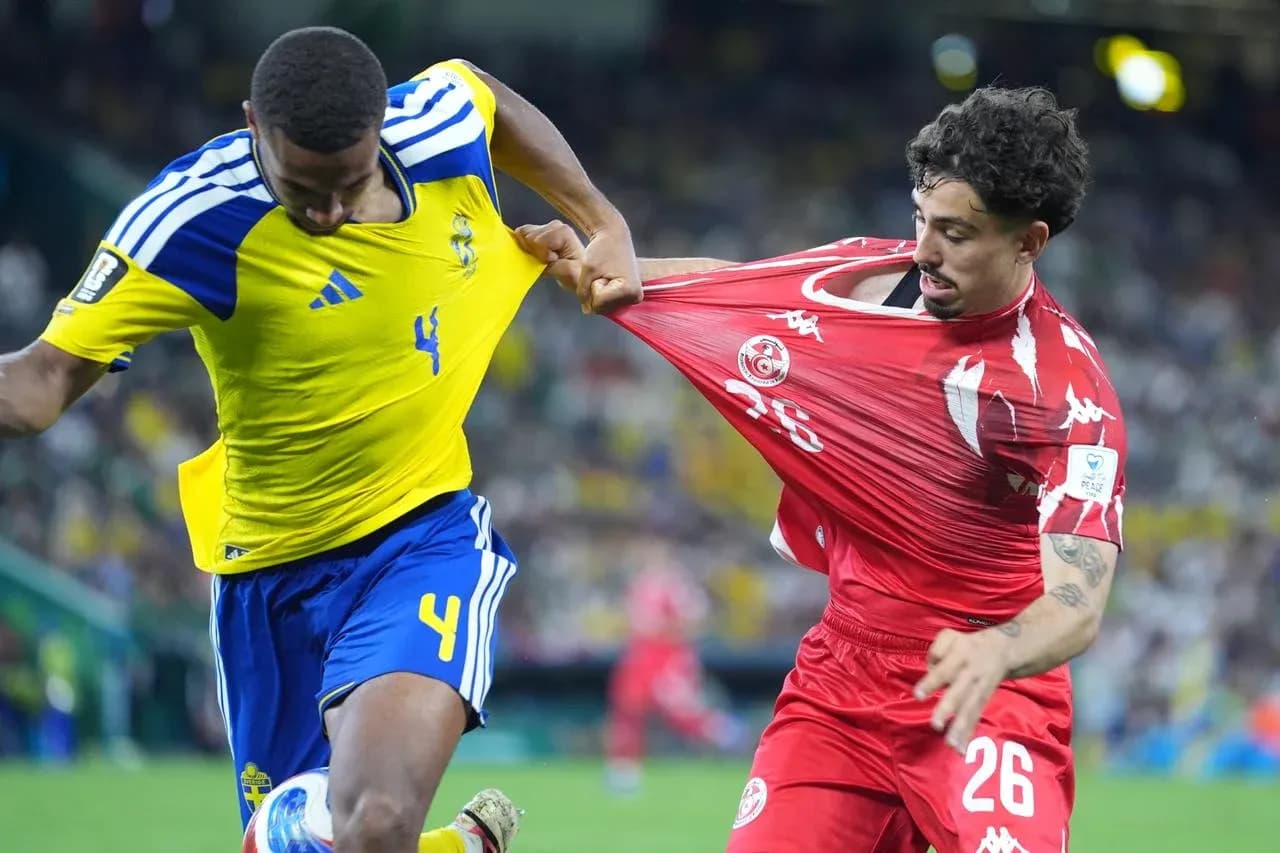
Under the lights of Estadio BBVA in Monterrey, Sweden’s World Cup campaign began not with a cautious step but with a statement. A 5–1 dismantling of Tunisia in Group F has not only placed Sweden top of the section with 3 points and a goal difference of +4 (5 goals for, 1 against), it has also revealed a tactical blueprint that looks built for tournament damage.
This was no cagey opener. Sweden, nominally the “home” side, leaned fully into Graham Potter’s bold 3-1-4-2, a shape that turns defence into launchpad and midfield into a rotating carousel of runners. Tunisia, in contrast, arrived in a compact 5-3-2 under Sabri Lamouchi, hoping their back five could absorb and counter. Over 90 minutes, that plan was ripped apart.
I. The Big Picture: Structure and Intent
On paper, Sweden’s 3-1-4-2 is simple: three centre-backs, a single pivot, a line of four aggressive midfielders, and a front two. In practice, it looked like a constantly morphing attacking wave.
V. Lindelof, I. Hien and G. Lagerbielke formed the back three, with J. Karlstrom as the lone screening midfielder. Ahead of them, the band of four – G. Gudmundsson, Y. Ayari, B. Nygren and A. Bernhardsson – stretched Tunisia horizontally, while V. Gyökeres and A. Isak pinned the Tunisian centre-backs and threatened the space behind.
Heading into this game, Sweden’s seasonal identity was an unknown at World Cup level. Following this result, the numbers are emphatic: in total this campaign they have scored 5 goals from 1 match, all at home, with an average of 5.0 home goals for and 1.0 home goal against. There is no clean sheet yet, but everything else about this opener screams attacking intent.
Tunisia’s 5-3-2, anchored by M. Talbi in the middle of a back three flanked by O. Rekik and M. Ben Hamida, with Y. Valery and A. Abdi as wing-backs, was designed to deny central access and protect the box. Ahead of them, R. Khedira, E. Skhiri and H. Mejbri formed a hard-working midfield triangle, with E. Saad and A. Slimane asked to threaten in transition.
But with Tunisia conceding 5 goals on their travels in this single outing – an away average of 5.0 goals against and only 1.0 away goal for – the structure simply could not withstand Sweden’s layered pressure.
II. Tactical Voids: Where the Plans Frayed
There were no listed injuries or suspensions in the pre-match data, so both managers had their core options available. That made the tactical choices stark.
For Sweden, the “void” was theoretical: could a single pivot in Karlstrom protect a back three against counters? Tunisia’s lone goal showed the risk – a moment where the screen was bypassed and the back line exposed. With no clean sheets and 1 goal conceded at home so far, this remains the one structural question mark in an otherwise dominant display.
For Tunisia, the void was more glaring: progression. Their 5-3-2 rarely turned into a 3-5-2 in possession. Wing-backs Valery and Abdi were pinned deep by Sweden’s wide midfielders, leaving Khedira and Skhiri constantly retreating rather than stepping into midfield to dictate. Mejbri, nominally the creative hub, was forced too often into defensive fire-fighting.
Disciplinary data underlines the imbalance. Tunisia’s yellow card profile shows a single booking in the 46–60' window, a sign of a side chasing shadows early in the second half and resorting to tactical fouls as Sweden accelerated. Sweden, by contrast, emerge from this opener without a recorded card peak; their aggression was channelled into structured pressing rather than reckless challenges.
III. Key Matchups: Hunter vs Shield, Engine Room Battles
The headline act in this game – and potentially in Group F – is the Swedish front-and-midfield axis.
Y. Ayari has exploded into the tournament as both scorer and tempo-breaker. With 2 goals in total, 2 shots on target from 2 attempts and an 8.6 rating, he is already among the top scorers in the competition. Operating from the left half-space of that midfield four, he constantly found seams between Tunisia’s midfield and defence, turning the 3-1-4-2 into a 3-1-2-4 when he joined the front line.
Alongside him, A. Isak has taken on the role of complete forward. In total this campaign he has 1 goal and 2 assists, with 2 shots on target and 17 completed passes at 82% accuracy. His movement dragged Talbi and Rekik into uncomfortable zones, creating corridors for Gyökeres and the late-arriving midfielders. As a “hunter”, Isak is not just finishing moves; he is manufacturing them.
Gyökeres, with 1 goal and 1 assist, 4 total shots and 4 key passes from 19 total passes at 84% accuracy, embodies Sweden’s vertical threat. He runs channels, he holds the ball, he links play. Against a Tunisia side that has already conceded 5 away goals and carries a total goal difference of -4 (1 scored, 5 conceded), this front line looked like a mismatch.
In the engine room, Karlstrom’s role as the single pivot was critical. His screening allowed Gudmundsson and Nygren to push high and wide, effectively pinning Tunisia’s wing-backs. That left Khedira and Skhiri overworked: tasked with closing Ayari and Bernhardsson while also protecting the half-spaces. They could not be everywhere at once.
Tunisia’s best hope of resistance lay in Mejbri’s ability to carry the ball out and connect with Saad and Slimane. But with Sweden’s central defenders stepping aggressively into duels and Karlstrom blocking passing lanes, those transitions were sporadic rather than sustained.
From the bench, Sweden showed they can change the texture of games. M. Svanberg, with 1 goal from just 1 shot on target in 13 minutes and a 7.7 rating, offered a late, surging presence from midfield. L. Bergvall, who recorded 1 assist, 6 passes at 83% accuracy and 1 successful dribble in 25 minutes, added fresh legs and line-breaking quality. This depth means Sweden can maintain tempo deep into the second half – a crucial edge in tournament football.
IV. Statistical Prognosis: Where This Is Heading
With only one match played for each side, xG models are not provided in the raw data, but the available numbers still paint a clear early trajectory.
Sweden’s offensive profile is blistering: in total this campaign, 5 goals from 1 match, a home average of 5.0 goals for, and a front unit already populating both top scorer and top assist charts. Their biggest win so far – 5–1 at home – is also their only result, but it sets a benchmark of ruthlessness.
Defensively, the single goal conceded at home (an average of 1.0) and the absence of clean sheets hint at a team that will trade minor defensive risk for major attacking reward. The back three plus single pivot structure will be tested by stronger counter-attacking sides than Tunisia, but the upside is clear.
Tunisia, meanwhile, begin with a worrying defensive baseline: 5 goals conceded on their travels, an away average of 5.0 goals against, and only 1.0 away goal for. Their biggest loss – 5–1 away – is already etched into the group narrative. The yellow-card spike between 46–60' underlines how quickly games can run away from them once they are forced to open up.
Following this result, the tactical story of Group F is simple: Sweden have unveiled a high-ceiling, front-loaded system built around Ayari, Isak and Gyökeres, supported by intelligent depth in Svanberg and Bergvall. Tunisia must now decide whether to double down on their 5-3-2 and refine it, or to add more progressive elements to avoid being pinned back so brutally again.
For now, Sweden stride away from Monterrey as early pace-setters, their 3-1-4-2 leaving a vivid imprint on the tournament’s opening chapter. Tunisia, by contrast, leave with hard lessons in spacing, progression and the cost of inviting this Swedish front line to attack in waves.