South Korea's World Cup Struggles: A Tale of Defeat and Opportunity
The scene outside the mixed zone in Monterrey told the story better than any statistic.
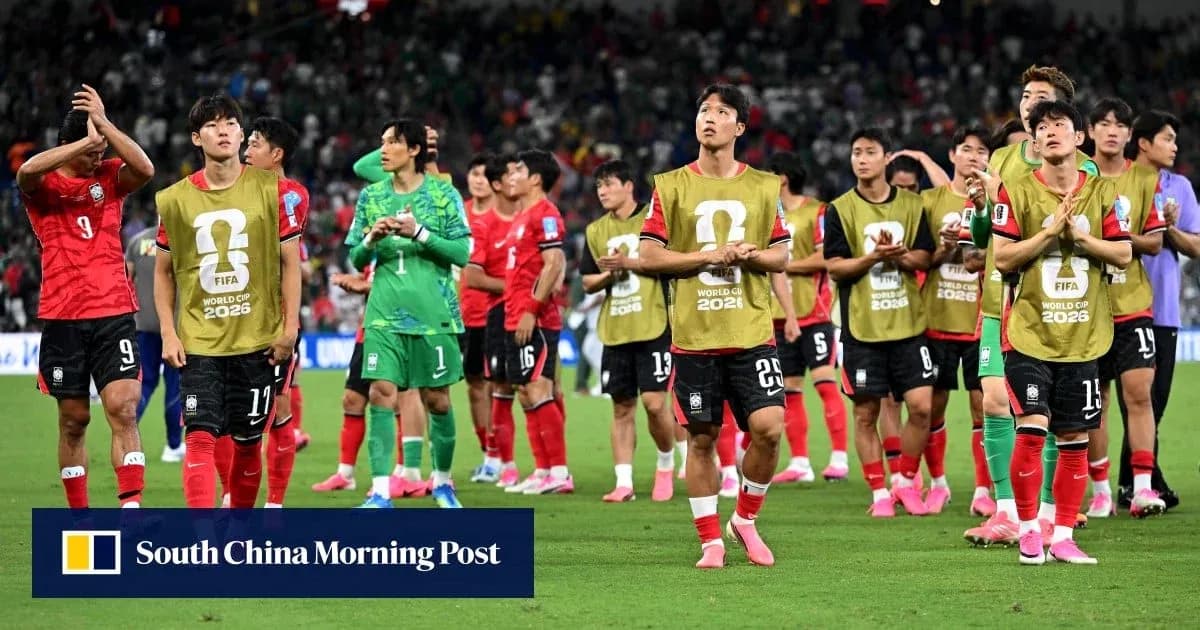
On one side, South Korean players shuffled through, shoulders slumped, voices low, still trying to process a dispiriting 1-0 defeat to South Africa. On the other, their conquerors streamed past in waves of noise and colour, singing, laughing, embracing staff and teammates as if the corridor itself were an extension of the pitch.
The worlds collided in a flash.
Brushed by a member of the South African staff, Hwang In-beom snapped. The midfielder, bristling with frustration, turned and barked at the unwitting offender to “show some f****** respect”. For a moment, the tension crackled. It looked as if the night might descend into something uglier than a war of words.
It didn’t. The moment passed. The corridor moved on.
If only South Korea had carried that same edge, that same refusal to be pushed around, onto the grass.
Hours earlier, they had been flat when they needed to be fierce, passive when the occasion demanded urgency. South Africa seized their chance; South Korea let theirs drift away. The contrast in the tunnel was simply the final, brutal illustration.
Son Heung-min emerged long after most of his teammates had gone. Selected for doping control, the captain did not appear in front of the Korean media until more than two hours after the final whistle. By then, the initial sting of defeat had dulled, but the questions had not.
“There’s no problem with the vibe in our dressing room,” Son said, standing in the harsh glare of the cameras. “I can honestly tell you that we’ve had zero issues with our team atmosphere.”
His words were measured, deliberate. No hint of a fractured camp, no admission of internal strife, only a firm insistence that unity is not the problem. The implication is unavoidable: the issues lie elsewhere — in execution, in intensity, in the cold reality of tournament football.
And yet, for all their shortcomings, South Korea’s World Cup story is not over.
The structure of this expanded tournament leaves the door ajar. Three group games played, three points collected, a goal difference of -1, and still the knockout stages remain within reach. It is a quirk of the format that a side so unconvincing can stand on the edge of progression, that inconsistency can be rewarded with opportunity.
For South Korea, that is both a lifeline and an indictment. The table says they are alive. The performances say something far less flattering.
The question now is not whether the atmosphere in the dressing room is intact. Son has nailed that point down. The question is whether this team can find, in 90 minutes on the pitch, the fire that briefly flared in a narrow corridor in Monterrey — before this World Cup quietly slips away.