Scotland vs Haiti: World Cup Group C Clash
Under the Boston lights at Gillette Stadium, Group C’s narrative opened with a study in contrast: Haiti’s brave but blunt debut against a Scotland side that understood how to manage a World Cup night. Following this result, Scotland sit 1st in Group C with 3 points and a goal difference of 1, while Haiti are 4th with 0 points and a goal difference of -1. The 1-0 scoreline reflects more than a single moment; it underlines two very different squad identities.
I. The Big Picture – Two 4-4-2s, two different worlds
Both coaches declared their intentions with matching 4-4-2 shapes, but the way those systems breathed was markedly different.
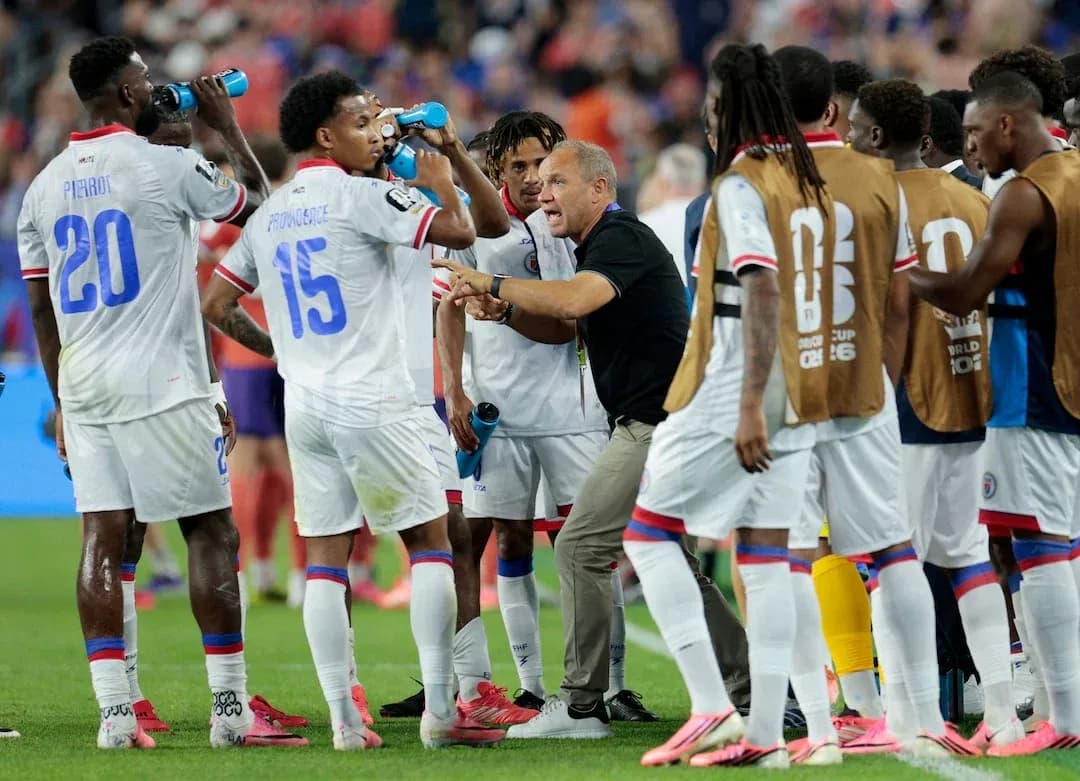
Sebastien Migne’s Haiti lined up with Johny Placide in goal behind a back four of Carlens Arcus, Ricardo Adé, Hannes Delcroix and Martin Expérience. Ahead of them, a hard‑working midfield line of Louicius Don Deedson, Danley Jean Jacques, Jean-Ricner Bellegarde and Ruben Providence was tasked with bridging the gap to the front pair, Frantzdy Pierrot and Wilson Isidor.
On the opposite side, Steve Clarke trusted a familiar framework. Angus Gunn anchored a defence of Aaron Hickey, Grant Hanley, Jack Hendry and Andy Robertson. The midfield quartet of Ben Gannon-Doak, Scott McTominay, Lewis Ferguson and John McGinn supported a forward partnership of Lawrence Shankland and Che Adams.
Heading into this game, Haiti’s statistical profile was blank; by full time, the numbers told a harsh first chapter. In total this campaign, they have played 1 match, lost 1, failed to score and conceded 1. At home, they have played 1, lost 1, with 0.0 goals scored on average and 1.0 conceded. Scotland, on their travels, have started with a perfect away record: 1 win from 1, 1.0 goals scored on average and 0.0 conceded, wrapped inside a clean sheet that underpinned their early control of the group.
II. Tactical Voids – Edges, naivety and discipline
Neither side reported absentees in the data, so the tactical voids were less about missing names and more about structural gaps.
For Haiti, the clearest void was between midfield and attack. Bellegarde and Jean Jacques worked tirelessly, but the 4-4-2 often flattened into a 4-4-1-1 without the ball, leaving Pierrot and Isidor isolated. With no goals in total this campaign and a “failed to score” count of 1, Haiti’s early World Cup identity is one of endeavour without incision.
Defensively, though, they were not broken. In total this campaign, they have conceded just 1 goal, and the all-round goal difference of -1 (0 scored, 1 against) reflects a side that can stay in games. The back four, marshalled by Adé and Delcroix, kept Scotland’s forwards largely honest, forcing the visitors to work through wide areas and late runs from midfield rather than slicing through the centre at will.
Discipline is already a storyline. Haiti’s only yellow card in total this campaign arrived in the 31-45 minute band, a 100.00% concentration of their bookings in that pre‑interval window. It hints at a side that becomes stretched as the half wears on, forced into recovery fouls as legs and focus fade.
Scotland’s disciplinary map is more complex. On their travels, they have yet to concede a goal, but they have lived on the edge in the closing stages. In total this campaign, 33.33% of their yellow cards arrived between 46-60 minutes and 66.67% between 91-105 minutes. The data on individuals sharpens that picture: Aaron Hickey, Findlay Curtis and Kenny McLean all carry a yellow each, with Hickey committing 2 fouls, Curtis and McLean 1 apiece. Clarke’s side know how to shut a game down, but they do so with an aggressive edge that could become costly against more ruthless opponents.
III. Key Matchups – Hunter vs Shield, Engine Room vs Enforcer
Hunter vs Shield
Haiti’s “hunters” are clearly Pierrot and Isidor, but the statistics offer no goals yet to frame their threat. Their duel was with a Scotland defence that, following this result, has not conceded in total this campaign: 0 goals against overall, 0.0 goals against on average away. Hanley and Hendry, protected by a compact midfield, formed a shield that rarely allowed Haiti’s front two to receive to feet between the lines.
For future group games, this clash highlights Haiti’s need to create higher-quality central service. Without a recognised scorer in the data so far, the onus will fall on Bellegarde and Providence to break lines earlier and closer to the box, rather than relying on hopeful deliveries from deep.
Engine Room
In midfield, the “engine room” battle tilted decisively in Scotland’s favour. McTominay and Ferguson offered the steel and structure, while McGinn roamed as the connector. Against them, Jean Jacques and Bellegarde represented Haiti’s enforcers and carriers, but they were often outnumbered around second balls.
The numbers from Scotland’s card leaders underline how combative their bench options are. McLean, in just 15 minutes, completed 2 passes at 100% accuracy, made 1 tackle and 1 interception, and still committed 1 foul and picked up a yellow. Curtis, another 15‑minute cameo, attempted 1 duel, committed 1 foul and was also booked. Clarke’s capacity to inject fresh, physical midfield and attacking legs late on means Scotland can raise the intensity rather than protect tired bodies.
On the flanks, Hickey’s profile captures Scotland’s modern full-back template. In 75 minutes he completed 35 passes at 88% accuracy, produced 2 key passes and contested 7 duels, winning 5. He also drew 4 fouls and committed 2, plus a yellow card – a constant two‑way presence. Opposite him, Haiti’s wide men, Don Deedson and Providence, struggled to consistently pin back Robertson and Hickey, and that territorial loss slowly suffocated Haiti’s counters.
IV. Statistical Prognosis – What this result really says
For Haiti, the early verdict is unforgiving but not terminal. In total this campaign they have 0 points, 0 goals for, 1 against, and 0 clean sheets. The defensive base is there; the issue is transforming honest running into chances. Without penalty involvement (0 taken, 0 scored, 0 missed), they also lack the “easy” route back into tight games that spot-kicks can offer.
Scotland, by contrast, have crafted the ideal launchpad. On their travels, they have 1 win from 1, 1 goal scored, 0 conceded, and 1 clean sheet. Their goal difference of 1 (1 scored, 0 against) may be slim, but it is underpinned by a structure that has yet to be breached. The card distribution warns of late‑game rashness, especially with 66.67% of their yellows arriving from 91-105 minutes, but it also speaks to a side willing to do the dark work to see out leads.
Without xG values in the data, the tactical eye becomes the primary lens. It suggests a Scotland team whose Expected Goals profile would be modest but efficient, built on set pieces, wide overloads and midfield arrivals, against a Haiti whose xG would likely be low – half-chances on transition rather than sustained pressure.
Following this result, the squads move in opposite emotional directions. Haiti leave Boston knowing their defensive shape belongs at this level, but their attacking patterns must evolve quickly. Scotland depart with the quiet confidence of a side whose first step into the World Cup has matched their identity: organised, combative, and just incisive enough.