Saudi Arabia vs Uruguay: World Cup 2026 Tactical Analysis
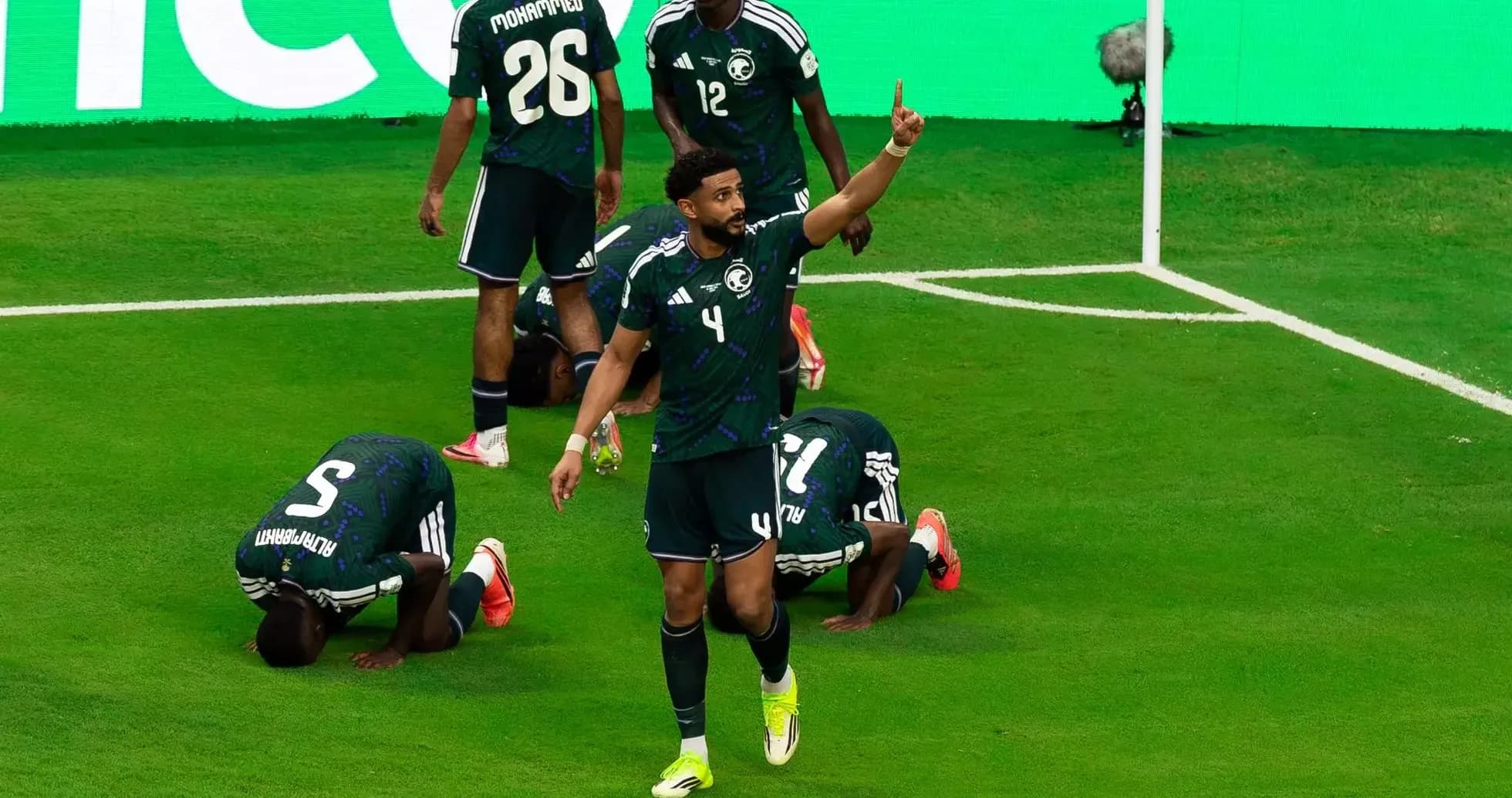
Under the Miami lights of Hard Rock Stadium, Saudi Arabia and Uruguay opened their World Cup 2026 journeys with a 1–1 draw that felt less like a settled verdict and more like the opening chapter of a tactical saga. In Group H, where margins will be thin, both sides leave this Group Stage – 1 fixture with a point, identical overall records, and very different questions to answer.
Following this result, Saudi Arabia sit 2nd in Group H, Uruguay 1st, both on 1 point with an overall goal difference of 0 (1 goal for and 1 against each). The symmetry on the table masks contrasting identities: Saudi Arabia, at home in this fixture, leaned into a compact 4-4-2; Uruguay, on their travels, unfolded Marcelo Bielsa’s aggressive 4-2-3-1.
I. The Big Picture – Structures and Seasonal DNA
Saudi Arabia’s season snapshot is still embryonic but revealing. Heading into this game, they had played 1 match overall, and that was this home fixture: 1 draw, 0 wins, 0 losses. At home they have scored 1.0 goals on average and conceded 1.0, with no clean sheets and no failures to score. The numbers tell of a side that will trade punches but has yet to prove it can shut a game down.
Georgios Donis doubled down on a classic 4-4-2, and the lineup data confirms it is not an experiment but a plan: their only recorded formation this World Cup is that 4-4-2, played once. M. Al Owais anchored the side in goal, with a back four of S. Abdulhamid, A. Al Amri, H. Tambakti, and M. Al Harbi. Ahead of them, the midfield band of four—M. Abu Al Shamat, M. Kanno, A. Al Khaibari, and S. Al Dawsari—served as both shield and springboard for the front pairing of F. Al Buraikan and M. Al Juwayr.
Uruguay, by contrast, arrived as the nominal away team and immediately stamped their structural identity. Heading into this game, their only recorded formation was the 4-2-3-1, used in this away outing. The double pivot of M. Ugarte and R. Bentancur sat beneath a creative line of three—F. Valverde, F. Vinas, and M. Araujo—feeding the lone striker D. Nunez. The back four of G. Varela, S. Caceres, M. Olivera, and M. Vina shielded F. Muslera.
Statistically, Uruguay mirror Saudi Arabia’s balance: on their travels they average 1.0 goal for and 1.0 against, with 0 clean sheets and 0 failures to score. Both teams, then, are built to score and be scored upon; neither has yet found the defensive serenity required for tournament control.
II. Tactical Voids and Discipline – Where the Edges Fray
Injury and suspension data offers no explicit absentees, so the voids here are structural rather than personnel-based. For Saudi Arabia, the most glaring gap is defensive assurance. With 1 goal conceded at home and no clean sheets overall, the back four remains more reactive than authoritative. The card distribution underlines a key psychological pattern: their only yellow card so far arrived between 31–45 minutes, a 100.00% share of their cautions. This suggests a tendency for the game’s tension to peak just before half-time, when concentration and emotional control are most tested.
Uruguay, intriguingly, emerge from this opening fixture with no recorded yellow or red cards in any minute range. Bielsa’s sides are often aggressive without the ball, but here the data points to controlled intensity rather than reckless pressing. That discipline could be a quiet advantage as the group tightens.
III. Key Matchups – Hunter vs Shield, Engine Room vs Enforcer
Hunter vs Shield
Up front, Saudi Arabia’s “hunters” are F. Al Buraikan and M. Al Juwayr. Their presence in a true front two asks direct questions of Uruguay’s central defenders S. Caceres and M. Olivera. The numbers say Saudi Arabia, overall, produce 1.0 goal per match and concede 1.0; Uruguay, on their travels, mirror that exact 1.0 for and 1.0 against. This symmetry sets up a delicate balance: any lapse by Uruguay’s back line against the twin threat could tilt a match where both teams are used to conceding.
D. Nunez, Uruguay’s spearhead, is the purest expression of “hunter” in this fixture. Behind him, the creative trio—F. Valverde’s vertical running, F. Vinas’ link play, and M. Araujo’s off-ball movement—work to isolate him against the Saudi centre-backs A. Al Amri and H. Tambakti. Saudi Arabia’s overall defensive record of 1.0 goals against per game hints at vulnerability when dragged into wide spaces or when the lines are stretched by late runs from deep.
Engine Room – Playmaker vs Enforcer
The midfield battle is where this matchup truly breathes. For Saudi Arabia, M. Kanno and A. Al Khaibari form the central spine, flanked by S. Al Dawsari and M. Abu Al Shamat. Kanno’s role as tempo-setter is crucial: he must resist Uruguay’s press and connect the first and second lines. S. Al Dawsari, operating from the left, is the creative wildcard, tasked with carrying the ball between the lines and forcing Uruguay’s double pivot to turn.
Opposite them, M. Ugarte and R. Bentancur are the “enforcers” in Bielsa’s 4-2-3-1. Ugarte hunts the ball, compressing space around Saudi Arabia’s midfield, while Bentancur knits transitions into structured attacks. Just ahead, F. Valverde becomes the hybrid: part playmaker, part destroyer, arriving late to overload zones that Saudi Arabia’s flat four may struggle to track.
IV. Statistical Prognosis – xG Shadows and Defensive Solidity
We do not have explicit xG numbers, but the structural and scoring data allow a reasoned projection. Both teams, heading into and following this result, live at a baseline of 1.0 goals scored and 1.0 conceded per match in total. That equilibrium suggests that in most simulations of this matchup, the underlying Expected Goals would hover near parity, with neither side consistently generating a large volume of high-quality chances.
Saudi Arabia’s lack of clean sheets overall and their single yellow card clustering in the 31–45 minute band hint at a side that suffers under sustained pressure before the break. Uruguay’s clean disciplinary slate and their readiness to play on the front foot away from home suggest they can edge the territorial battle without self-sabotage.
In a replay of this fixture, the likely pattern is clear: Uruguay’s 4-2-3-1 would push the game’s xG slightly in their favour through volume and territory, while Saudi Arabia’s 4-4-2 would rely on efficiency and quick, direct combinations between F. Al Buraikan, M. Al Juwayr, and the surging S. Al Dawsari. The defensive solidity question remains open for both: with each conceding 1.0 goals on average and owning an overall goal difference of 0, neither has yet shown the capacity to suffocate a contest.
Following this result, the story of Group H is one of balance and unresolved tension. Saudi Arabia have proven they can stand toe-to-toe with a heavyweight structure like Uruguay’s; Uruguay have shown they can dominate phases without losing their disciplinary edge. The next chapters will be written by which side can turn that statistical symmetry into a decisive advantage—either by sharpening the hunter’s edge up front, or finally forging a shield at the back that does more than merely hold.