Saudi Arabia vs Uruguay: Tactical Analysis of a 1-1 Draw
Saudi Arabia’s 1-1 draw with Uruguay at Hard Rock Stadium was a classic clash of game models: deep, compact resistance in a 4-4-2 against a high-volume, possession-heavy 4-2-3-1. The statistical profile underlines how extreme the contrast was. Uruguay had 67% of the ball, launched 27 total shots (10 on goal) and forced 14 corners, yet needed an 80th-minute strike from Maximiliano Araújo to rescue a point. Saudi Arabia, with only 33% possession and 7 total shots, maximised their limited attacking phases and leaned heavily on structure, sacrifice, and goalkeeping.
Saudi Arabia's Setup
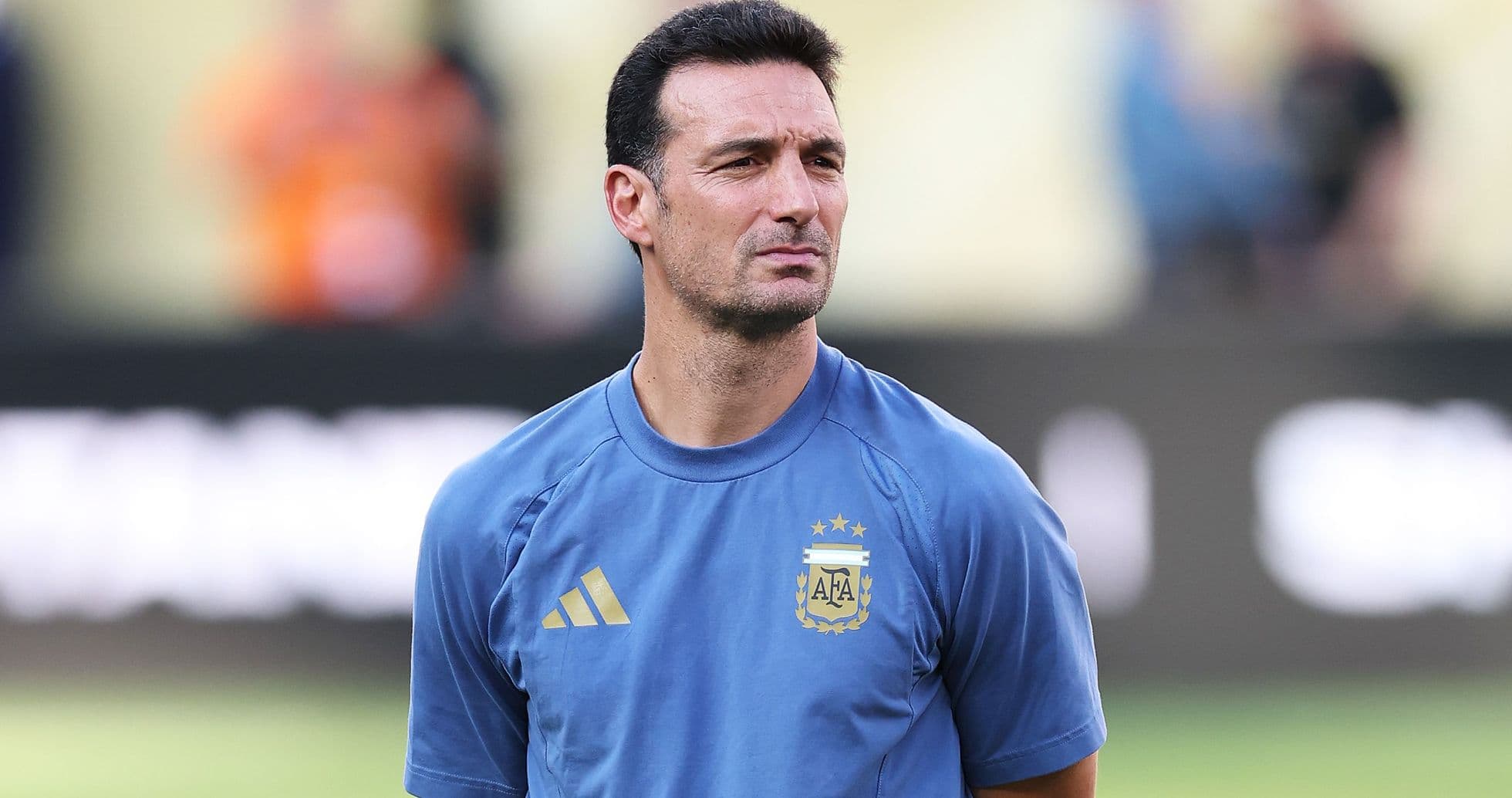
Georgios Donis set Saudi Arabia up in a textbook 4-4-2: Mohammed Al-Owais in goal; a back four of Moteb Al-Harbi, Hassan Altambakti, Abdulelah Al-Amri and Saud Abdulhamid; a flat midfield line of Salem Al-Dawsari, Abdullah Al-Khaibari, Mohamed Kanno and Mohammed Abu Al-Shamat; and a front pair of Firas Al-Buraikan and Musab Al Juwayr. The priorities were clear: protect central zones, compress the pitch vertically, and accept long spells without the ball. The defensive line sat relatively deep, with the two banks of four staying narrow to funnel Uruguay’s possession into wide areas.
Defensive Structure
Out of possession, Saudi Arabia’s 4-4-2 block worked in stages. The two forwards were primarily screeners, curving their runs to deny easy progression through Manuel Ugarte and Rodrigo Bentancur when they were on the pitch, rather than pressing Fernando Muslera or the centre-backs aggressively. The midfield four stayed tight horizontally, with Kanno and Al-Khaibari protecting the half-spaces in front of Al-Amri and Altambakti. That compactness forced Uruguay to circulate the ball and attack with volume rather than incision, which is reflected in the visitors’ 16 shots inside the box but only one goal, and an xG of 1.72.
Key Moments
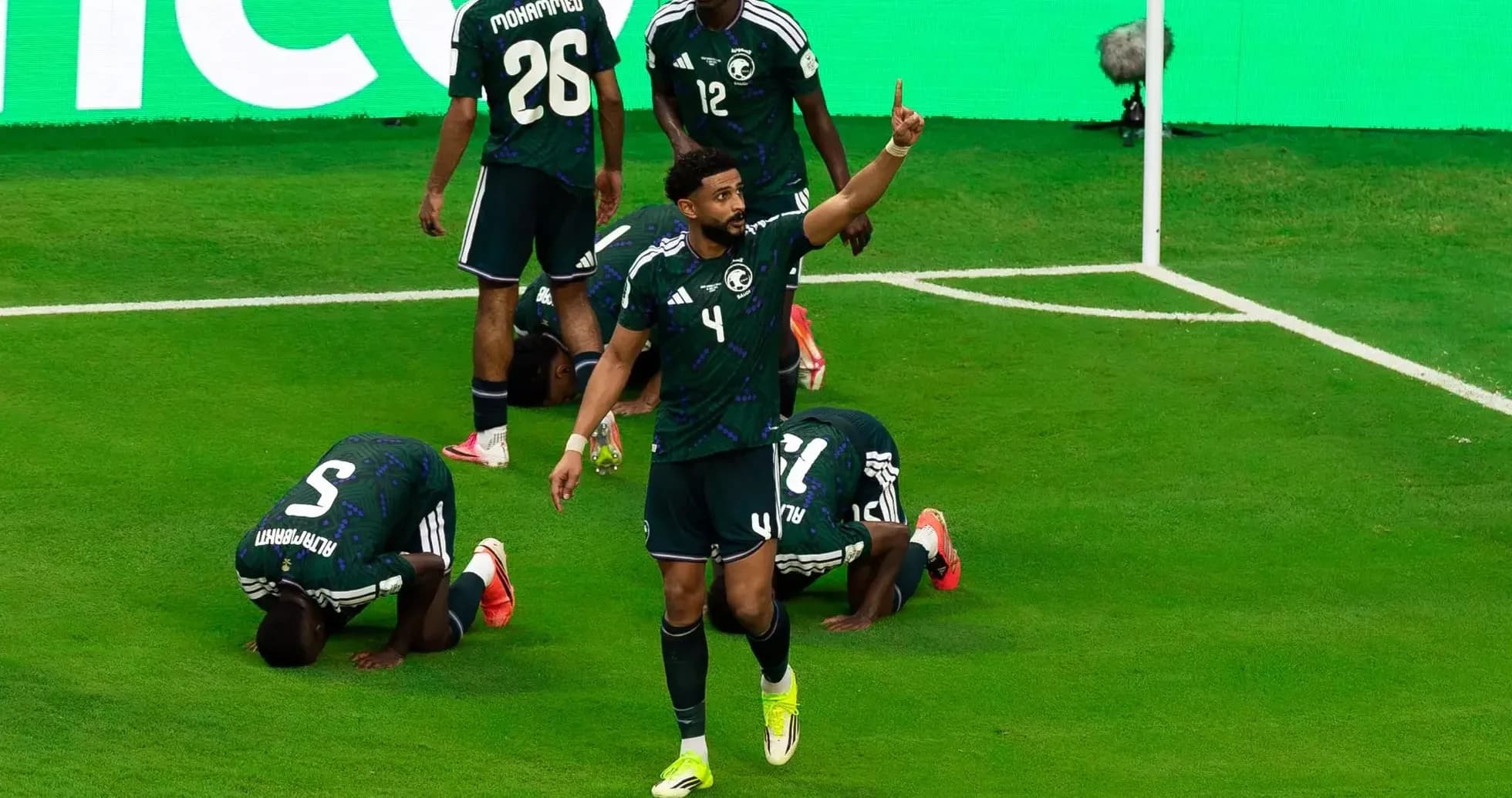
Al-Amri’s role was pivotal in both boxes. His 41st-minute goal, arriving from Saudi Arabia’s limited attacking platforms, gave Donis’s side a scoreboard cushion that validated their conservative approach. Yet his 44' yellow card for “Foul” also highlighted the edge they had to maintain in duels to survive so much defending. Saudi Arabia committed 11 fouls to Uruguay’s 6, a natural by-product of repeated last-ditch interventions as the block was stretched late on.
The defensive resistance was anchored by Mohammed Al-Owais (Saudi Arabia), who made 9 saves. That number, against 10 shots on goal, underlines how much pressure the Saudi box came under. Uruguay were not simply shooting from distance: 16 efforts came from inside the area, and Saudi Arabia blocked 1 additional shot on top of what Al-Owais had to handle. His shot-stopping kept the game within reach, particularly as legs tired and Uruguay’s wide rotations began to create clearer looks.
Saudi Arabia's Attack
With the ball, Saudi Arabia were necessarily direct and selective. They completed 236 accurate passes from 322 total (73%), a modest volume that reflects their limited possession phases. The pattern was simple: play early into the front two, use Al-Dawsari and the far-side midfielder to attack second balls, and try to win territory or set-pieces. Their 4 corner kicks versus Uruguay’s 14 show how rarely they could sustain pressure in the final third. Still, 4 of their 7 shots came from inside the box, and an xG of 0.66 from so few attacks indicates they did manage to generate some reasonably high-quality looks when they did commit forward.
Uruguay's Tactics
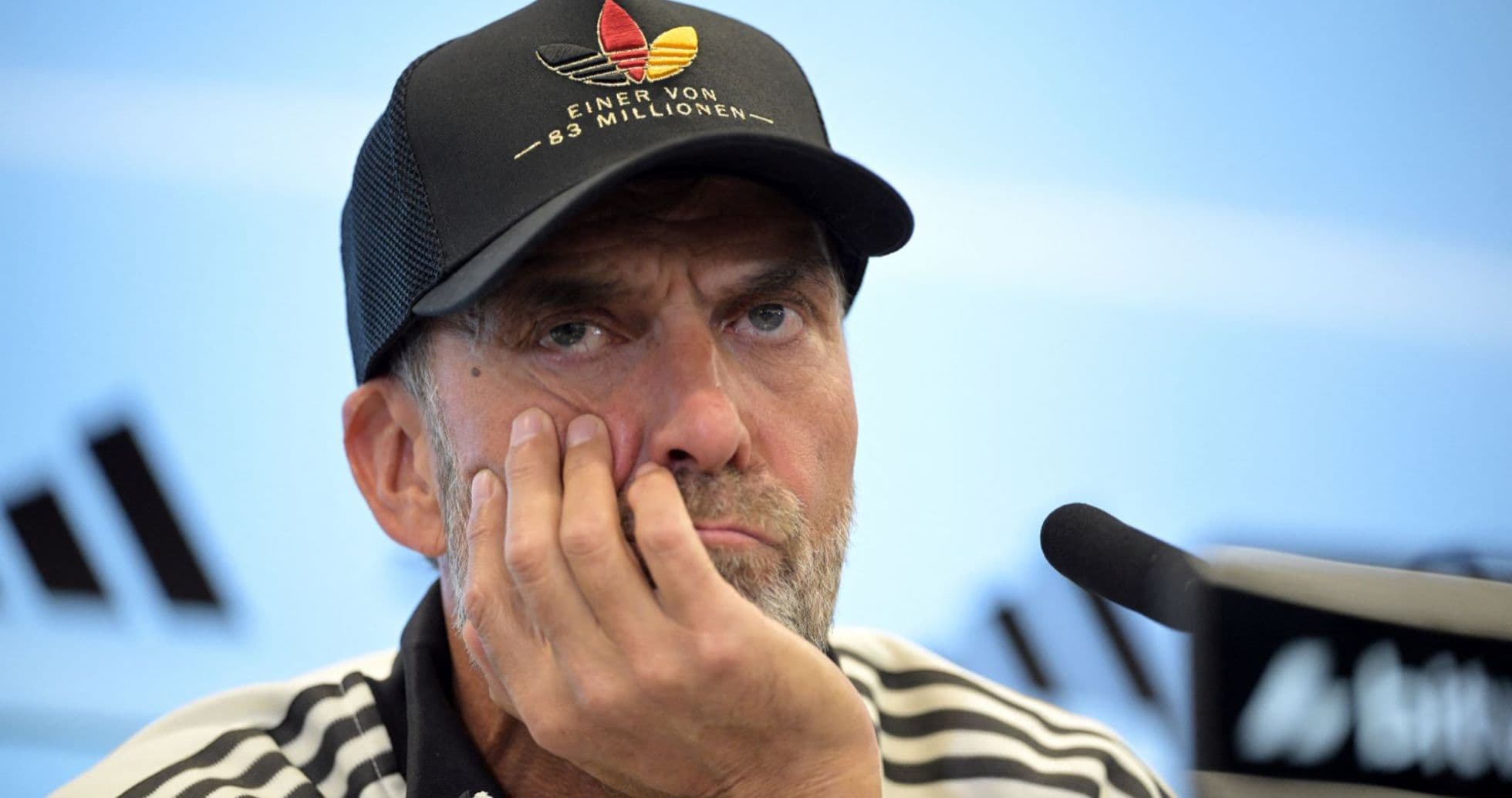
Marcelo Bielsa’s Uruguay, by contrast, imposed a recognisable 4-2-3-1 structure with strong emphasis on circulation and overloads. Fernando Muslera (Uruguay) had a quiet night in terms of shot-stopping, facing only 3 shots on goal and making 2 saves. Uruguay’s high line and territorial dominance meant their defensive work was mostly about rest-defence and counter-pressing rather than box defending. The back four of Matías Viña, Mathías Olivera, Sebastián Cáceres and Guillermo Varela played high, squeezing the field to keep Saudi Arabia pinned.
In midfield, the double pivot—anchored by Ugarte and Bentancur before Ugarte’s substitution for Nicolás de la Cruz—controlled tempo. Uruguay completed 540 accurate passes from 612 total (88%), a figure that illustrates both technical superiority and structural stability. The ball was frequently recycled through Valverde and the full-backs, with Maximiliano Araújo and Federico Viñas providing width and half-space occupation. The 14 corners earned are a direct consequence of this territorial siege and repeated wide deliveries.
Finishing Frustration
Yet the finishing pattern exposes Uruguay’s main tactical frustration. Despite 27 total shots, Saudi Arabia blocked 1 and Al-Owais saved 9, leaving a large volume of efforts that were rushed, taken under pressure, or from suboptimal angles. The negative goals prevented value for both goalkeepers (each at -0.35) suggests that, relative to xG, the finishing slightly outstripped the shot-stopping on the night, but not enough to turn dominance into victory for Uruguay.
Substitutions and Tactical Shifts
Bielsa’s substitutions were clearly aimed at raising the attacking tempo. Agustín Canobbio (IN) came on for Darwin Núñez (OUT) at 46', and Juan Sanabria (IN) replaced Matías Viña (OUT) at the same moment, signalling a shift towards more aggressive wide play and overlapping from deeper starting positions. Later, Nicolás de la Cruz (IN) for Manuel Ugarte (OUT) at 72' added creativity and vertical passing from the base of midfield. Brian Rodríguez (IN) for Maximiliano Araújo (OUT) at 81', and Rodrigo Aguirre (IN) for Federico Viñas (OUT) at 90' further stacked the front line with dribblers and box presence.
Conclusion
The key tactical payoff arrived in the 80th minute, when Araújo’s equaliser finally broke Saudi Arabia’s resistance. By that stage, Uruguay’s sustained crossing, cut-backs and second-ball pressure had repeatedly disorganised the Saudi back four, and the cumulative effect of defending deep for so long told. Saudi Arabia’s late triple change at 90'—Ali Lajami (IN) for Saud Abdulhamid (OUT), Ala'a Al-Hejji (IN) for Firas Al-Buraikan (OUT), and Abdullah Al-Hamdan (IN) for Moteb Al-Harbi (OUT)—was more about injecting fresh legs to see out the point than altering the structure.
From a statistical verdict, the draw is a story of tactical trade-offs. Uruguay’s 1.72 xG versus Saudi Arabia’s 0.66, their 67% possession, 27-7 shot advantage, and 14-4 corner superiority all point to a side that controlled the game and created more. However, Saudi Arabia’s defensive index—reflected in Al-Owais’s 9 saves, disciplined 4-4-2 block, and willingness to absorb pressure—allowed them to punch above their offensive numbers. Uruguay’s lack of cards compared to Saudi Arabia’s single yellow for Al-Amri underlines how little defending they had to do in their own third.
In pure tactical terms, Uruguay’s overall form with the ball was strong, but their box efficiency lagged behind their build-up quality. Saudi Arabia, conversely, executed a low-possession, high-resilience plan effectively enough to turn minimal attacking output into a valuable group-stage point.