Premier League Fixture Release: Manchester United and City Prepare for 2026/27
The Premier League calendar drops today, and in Manchester it feels less like a list of dates and more like a verdict.
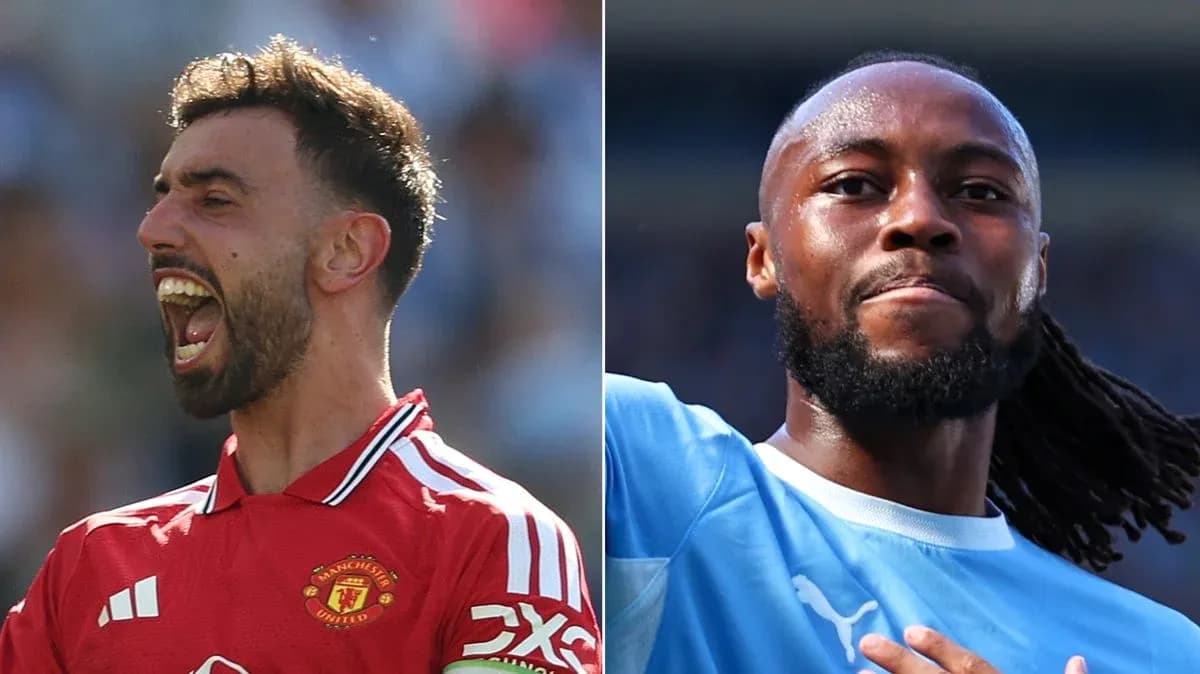
Less than a month after the 2025/26 season closed and with a World Cup still raging in the background, the domestic machine cranks back into life. At 10am, Manchester United and Manchester City will discover the path that will define their 2026/27 campaigns: where the traps are laid, where the opportunities lie, and when the pressure will be at its most suffocating.
Carrick’s next step – and United’s demand
Old Trafford goes into this fixture release with something it hasn’t had for a while: momentum that actually feels sustainable.
Michael Carrick, parachuted in mid-season after Ruben Amorim’s exit in January, didn’t just steady the ship. He turned it around and pointed it back towards the Champions League with room to spare. That revival has earned him the job on a permanent basis and a platform to build from, not just survive on.
Inside the club, the language has already shifted. Omar Berrada has spoken openly about targeting the Premier League title as soon as next season. On paper, that sounds bold for a side that finished nine points behind City and 14 off champions Arsenal. But this is United. Nobody is patting themselves on the back for finishing third.
The fixture list will either feed that ambition or test its foundations. What United want is simple: a clean runway. No gauntlet of Arsenal, City and Chelsea inside the first few weeks like last year, when they scraped seven points from a brutal opening five games. Give Carrick a manageable start, let the early results match the mood, and belief could harden into something far more dangerous for their rivals.
The dates around Europe will be crucial. United will play eight games in the new Champions League league phase. The club will be watching closely to see what follows those nights. Nobody wants a long away trip in the league on the back of a draining European assignment, and no manager willingly walks into a title rival three days after a continental slog. Those “after Europe” fixtures will tell Carrick how ruthless his rotation will need to be.
City’s reset – and Maresca’s waiting game
Across town, the mood is very different. Not panicked, but unsettled.
Pep Guardiola has gone, leaving behind the kind of vacuum City have spent more than a decade trying to avoid. Enzo Maresca is still expected to be the man to step into that space, the former Chelsea boss lined up as the heir to one of the most demanding jobs in world football. But as fixture release morning dawns, his appointment remains unconfirmed, the final details taking longer than hoped.
The fixtures will not wait for a signature.
City’s mission is brutally clear: prove that the Guardiola era was a chapter, not the whole story. To do that, the Premier League has to be reclaimed and reasserted as their territory. Last season’s stumbles – a flying 4-0 start at Wolves, then back-to-back defeats to Spurs and Brighton before a response with a 3-0 derby win and a draw with Arsenal – underlined how quickly a campaign can fray at the edges.
This season, with a new man likely in the dugout, the opening run will carry even more weight. Who Maresca faces in his first weeks as City boss will shape the narrative around him before he has even fully unpacked at the Etihad. A soft start buys time. A brutal one will test his ideas and his authority immediately.
The Champions League dates are already locked in – September 8-10, October 13-14 and 20-21, November 3-4 and 24-25, December 8-9, and then January 19-20 and 27. City, like United, will be scanning for the domestic fixtures that sit either side of those nights. The title race is often decided not under the midweek lights, but in the tired legs and tight turnarounds that follow.
New faces, old stakes
The league itself will look a little different when the curtain goes up on August 22.
Wolves, Burnley and West Ham have dropped out. In their place come Coventry City, Ipswich Town and Hull City, three very different stories converging on the same stage.
Coventry arrive as Championship winners, 11 points clear of Ipswich, under Frank Lampard – a former Chelsea player and manager now back in the Premier League in a different shade of blue. Their return to the top flight brings another emotional subplot to a division already heavy with them.
Ipswich sealed automatic promotion on the final day under Kieran McKenna, the former United assistant who has been one of the rising coaching figures in the English game. His decision this summer to step down and take time away from football has jolted the club just as they re-enter the elite. Ole Gunnar Solskjaer, a legend at Old Trafford, is among those being considered to replace him. If that happens, United will see a familiar face in a very different technical area.
Hull’s route was the most chaotic of all. They finished sixth, then tore through the play-offs, beating third-placed Millwall over two legs. Their final was supposed to be against Southampton, but the Saints were sensationally kicked out of the play-offs for spying on semi-final opponents Middlesbrough, who were reinstated. Hull still made it count at Wembley, Oli McBurnie scoring a last-minute winner to drag the Tigers back into the Premier League. City and United will both circle that fixture and quietly note: no newly-promoted side arrives without bite.
The machine behind the madness
Behind the drama, the fixture list itself is the product of cold logic and a lot of planning.
Work on the 2026/27 schedule started six months ago. The Premier League’s scheduling team fed in Champions League dates, local policing requirements, stadium availability and a thicket of other constraints before handing it all to the league’s so-called “supercomputer” to spit out the order.
There are strict rules. Across any five games, clubs must have either three at home and two away, or the reverse. No team is allowed more than two home or two away matches in a row. The league tries to ensure clubs are at home and away either side of FA Cup ties and international breaks, and nobody starts or finishes the season with back-to-back home or away fixtures.
The festive period, always a flashpoint, has its own logic. After a controversial 2025/26 Boxing Day that saw only one Premier League match – United hosting Newcastle in an 8pm kick-off – the league has pledged a fuller schedule this time. Boxing Day falls on a Saturday, and the Premier League has promised more fixtures on that day while also insisting that no club plays within 60 hours of another match across rounds 18, 19 and 20. Recovery time is being built in, even as tradition is preserved.
The season itself starts later. The first ball will be kicked on Saturday, August 22, one week later than last year. The league has framed that decision as a player welfare measure in an increasingly congested global calendar, allowing for 89 clear days from the end of the last Premier League season and 33 days from the FIFA World Cup 2026 final. The final round of league fixtures lands on Sunday, May 30, with the Champions League final set for June 5 at the Metropolitano Stadium in Madrid.
Different pressures, same city
Strip away the detail and both Manchester clubs walk into this fixture release with a single, sharp objective.
For United, it is about closing the gap. Nine points to City, 14 to Arsenal – those numbers are pinned to every conversation about what constitutes progress. Carrick knows third place means very little in the corridors of Old Trafford. The demand is simple: get closer to the top, and do it quickly.
For City, it is about restoration. After years of certainty under Guardiola, they must prove they can remain the standard without him. That makes this arguably their most important season in a long time. A new manager, a familiar expectation: win the Premier League.
By 10am, both clubs will have the roadmap. Fans will immediately scan for derbies, for Boxing Day, for the run-in. Managers will look for the stretches that can define or derail a campaign. Analysts will circle those Champions League-adjacent fixtures and start calculating risk.
The calendar will not decide the title on its own. But in Manchester, where one club is desperate to return to the summit and the other is desperate to stay there without its architect, the order of the journey matters almost as much as the destination.
Now it’s down to the dates to show who really has the nerve for what’s coming.