Pochettino Defends U.S. Team After Turkey Loss: Celebrating Group Victory
INGLEWOOD, Calif. — The questions kept coming, sharp and skeptical. Mauricio Pochettino’s patience did not.
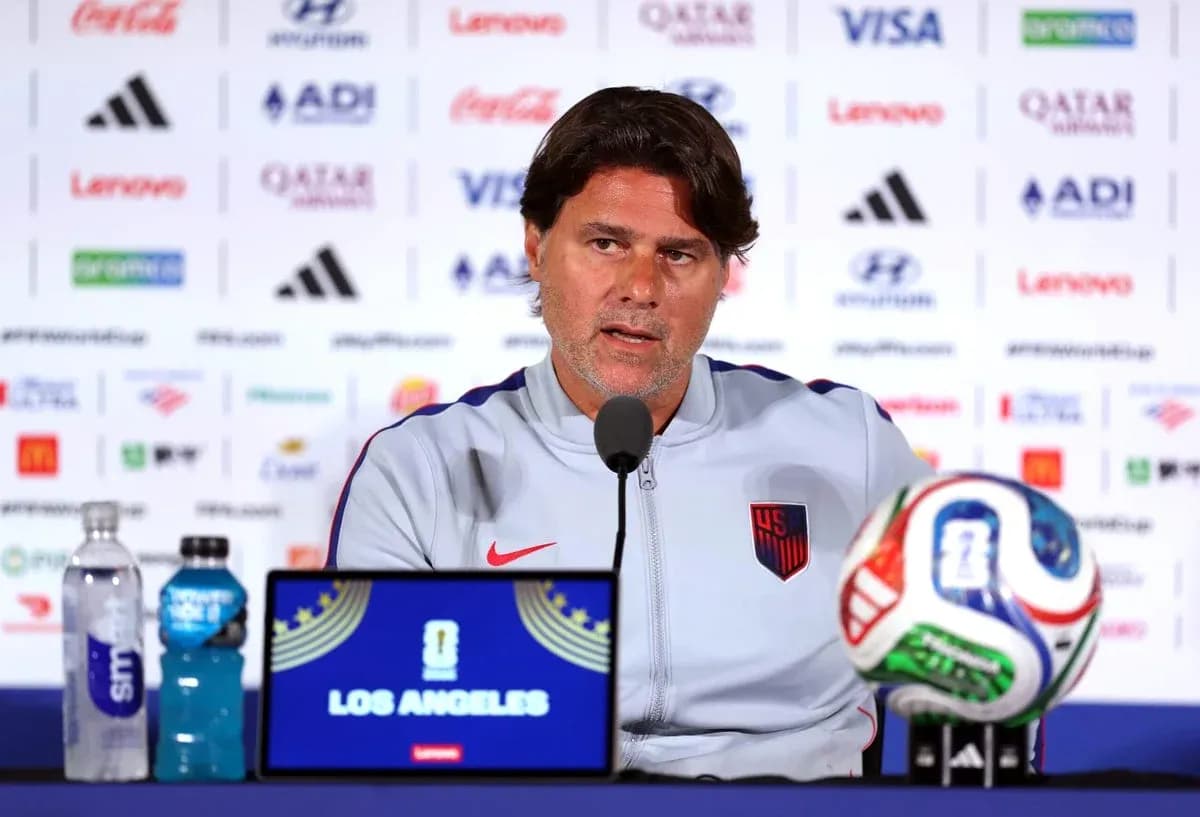
Minutes after a rotated U.S. men’s national team lost 3-2 to Turkey at SoFi Stadium, the head coach bristled, pushed back and then walked out — leaving a clear message behind him: he is not in the mood to apologize for winning a World Cup group.
“It cannot be possible that Turkey celebrates three points, Australia celebrates getting through, Paraguay celebrates getting through… for you to not say congratulations for winning the group, it’s a little bit sad,” he said, his voice tightening.
“I need to remind everyone we won the group, sorry guys, we won,” he added, standing up and leaving the room in one motion. Cold exit. Point made.
A dead-rubber defeat, a live-wire manager
The loss itself came with the final kick of the game, Turkey snatching a winner in the eighth minute of stoppage time. On paper, it changed nothing: the U.S. had locked up first place in Group D after two matches. Pochettino treated the match like a luxury — a rare chance to rotate heavily, protect key players and manage minutes.
The press, though, wanted to talk about momentum, about whether a late collapse and a first defeat had dented the mood.
“I’m happy, maybe I’m not showing because your questions are a little bit weird,” he said earlier in the press conference. “But I’m happy, the players are happy because we are first. I’m confused, maybe the vibes are like we go home tonight and Turkey stays (in the World Cup), no?”
The tension in the room said enough. Pochettino saw a celebration of jeopardy where he felt there was none.
Rotation, risk and a manager’s calculation
The lineup told the story of his priorities. Only Ricardo Pepi and Weston McKennie kept their places from the win over Australia. Tyler Adams, Folarin Balogun, Chris Richards and Antonee Robinson — all one yellow card from suspension — never touched the pitch. Their slates now wipe clean for the round of 32.
This was a coach managing a tournament, not a one-off occasion.
So when the word “momentum” surfaced, Pochettino snapped back.
“Explain what you mean in momentum — I don’t understand,” he said. “To play with the same team we played against Australia to take a risk? To receive a yellow card (suspension)? To risk players who maybe have problems? I don’t understand. Germany lost momentum too and they played with (mostly) the same team (in their loss to Ecuador on Thursday).”
For him, the calculation was simple: preserve legs, protect suspensions, live with whatever noise followed a dead rubber.
Trusty strikes, Guler dazzles, Berhalter answers
On the field, the U.S. mix-and-match side still punched back.
Auston Trusty opened the scoring, a reward for a fringe group trying to stake its claim. Turkey responded, then tilted the game through the brilliance of Arda Guler. The young star not only scored but orchestrated, dictating Turkey’s best attacking moments and dragging the tempo where he wanted it.
Sebastian Berhalter dragged the U.S. level early in the second half, another depth piece seizing a rare World Cup stage. Yet as the clock bled into stoppage time, the rotated back line finally cracked, and Turkey walked away with the win.
Pulisic returns — and changes everything
The most important sight of the night for the U.S. came just before the hour mark.
Christian Pulisic, out since a calf issue forced him off at halftime against Paraguay, stepped onto the pitch in the 58th minute, replacing Tim Weah on the left. He moved freely. He drove at defenders. Instantly, he looked like the sharpest American attacker on the field.
The U.S. didn’t need the result. It needed that reassurance.
“The objective was not just to win, but to get Christian 30-40 minutes,” Pochettino said. “He finished well and he made an impact on the pitch.”
There was one blemish. Pulisic was nutmegged by Guler in the buildup to Turkey’s late winner, a small indignity on a night primarily about his fitness. For Pochettino, the trade-off was obvious: a fully firing Pulisic in the knockout rounds is worth far more than a clean stat line in a match that didn’t alter the table.
History, ignored in the noise
Strip away the drama of stoppage time and the sparring in the media room, and the numbers are blunt: with six points, this is technically the U.S.’s best-ever World Cup group-stage performance, matching the 1930 team when wins were worth only two points.
That context barely surfaced in the questioning. Pochettino noticed.
“No one congratulated us for finishing first in a very difficult group,” he said. “I congratulate the players, staff and fans. Now I’ll answer your question. You always learn when you are in a World Cup.”
He wanted the milestone acknowledged, not buried under concerns about form and flow. The room, and the result, refused to play along.
Bosnia and Herzegovina await
Earlier in the day, the bracket had already delivered the next challenge: Bosnia and Herzegovina in the round of 32, in Santa Clara next Wednesday. That is where Pochettino believes the real judgment should fall — not on a rotated side’s late collapse in Inglewood.
“We’re a much better team now than we were before,” he said. “That will be put to the test next game.”
The group is won. The margin for error is gone. The defiance, clearly, is not.