Pisa vs Napoli: Serie A Clash of Extremes
Arena Garibaldi – Stadio Romeo Anconetani stages a clash of extremes in Serie A on 17 May 2026, as bottom‑placed Pisa host title‑chasing Napoli in the penultimate round of the league season. For Pisa, rooted to 20th with 18 points and already consigned to relegation, this is about pride and a final home statement. Napoli, second on 70 points, are trying to lock in Champions League qualification and keep pressure on the top of the table.
Context and stakes
In the league, the table could hardly be more stark. Pisa have won just 2 of 36 matches, with 12 draws and 22 defeats, and a goal difference of -41 (25 scored, 66 conceded). Their form line of “LLLLL” underlines a side limping towards Serie B.
Napoli, by contrast, sit 2nd with 21 wins, 7 draws and 8 defeats, scoring 54 and conceding 36. Their recent form “LDWLD” hints at some late‑season inconsistency, but they remain one of the division’s most balanced outfits, strong at both ends and with enough depth to absorb injuries.
For Pisa, this is a chance to give their supporters one big performance before dropping down. For Napoli, it is about professionalism: finish the job away from home and avoid any last‑minute drama in the race for Champions League places.
Tactical outlook: Pisa’s damage limitation vs Napoli’s control
Across all phases, Pisa’s season profile is that of a side constantly under siege. They average just 0.7 goals per game (25 in 36) and concede 1.8 (66 in 36). At home, the numbers are even more sobering in attack: 9 goals in 18 matches, an average of 0.5 per game, with 11 home matches where they failed to score. Defensively they have been slightly more solid in Pisa than on the road (23 conceded at home, 43 away), but 12 home defeats from 18 underline how fragile they are.
Tactically, Pisa have leaned heavily on three‑at‑the‑back structures. Their most used formations are 3‑5‑2 (19 times) and 3‑4‑2‑1 (12 times), with occasional switches to 5‑3‑2 or four‑man back lines. Expect something conservative again: a back five out of possession, wing‑backs tucked deep, and two strikers working mainly off scraps and counters. With such limited attacking output, set‑pieces and penalties have been vital; Pisa have converted all 6 penalties they have been awarded across the season, giving them at least one reliable route to goal.
Napoli arrive with a very different profile. They score 1.5 goals per game (54 in 36) and concede just 1.0 (36 in 36). Away from home, they are solid if slightly less explosive than at the Stadio Diego Armando Maradona: 9 wins, 3 draws, 6 defeats, with 22 scored and 18 conceded. Seven away clean sheets in 18 underline how comfortable they are defending space and managing games on the road.
Formationally, Napoli are flexible but clearly structured. Their primary shape has been 3‑4‑2‑1 (21 times), complemented by 4‑1‑4‑1 (8 times), with occasional use of 3‑4‑3 and 4‑3‑3. In Pisa, a 3‑4‑2‑1 feels likely: a back three to control transitions, wing‑backs high to pin Pisa’s wide players, and two attacking midfielders operating between the lines behind a lone striker.
The key tactical contrast will be in midfield. Napoli’s ability to circulate the ball and compress the pitch should keep Pisa penned in. Pisa’s best hope is to stay compact in a low block, deny central spaces, and try to drag the game into a physical, stop‑start battle. However, their disciplinary record – multiple red cards across different time ranges – suggests that desperation can easily spill into rash challenges.
Head‑to‑head snapshot
The recent competitive history between these sides in Serie A is limited in the data set, but instructive. The one recorded league meeting in this campaign came on 22 September 2025 in Naples, where Napoli beat Pisa 3-2 at Stadio Diego Armando Maradona. That match, in the regular season round 4, showed that while Pisa can find moments to score against superior opposition, Napoli have the extra gear to take all three points.
- Napoli wins: 1
- Pisa wins: 0
- Draws: 0
There are no friendlies listed, so no additional context to add.
Team news and selection issues
Pisa come into this game heavily depleted. They will definitely be without:
- R. Bozhinov (red card – Missing Fixture)
- F. Loyola (red card – Missing Fixture)
- D. Denoon (ankle injury – Missing Fixture)
- M. Tramoni (muscle injury – Missing Fixture)
On top of that, two players are listed as questionable:
- F. Coppola (muscle injury – Questionable)
- C. Stengs (inactive – Questionable)
For a squad already short on quality at Serie A level, losing multiple players to suspension and injury is a serious blow. It may force Pisa into further reshuffles at the back and in midfield, potentially weakening their already fragile defensive structure and limiting options off the bench.
Napoli are not at full strength either. They will be missing:
- David Neres (ankle injury – Missing Fixture)
- R. Lukaku (hip injury – Missing Fixture)
Both absences remove power and creativity from the forward line. Neres’ one‑v‑one threat and Lukaku’s penalty‑box presence would have been useful against a deep block. There is also a significant doubt over:
- K. De Bruyne (eye injury – Questionable)
If De Bruyne is not fit to start, Napoli lose their most incisive passer and set‑piece specialist, which could make them slightly more predictable in possession. Even so, their squad depth and structural coherence mean they can still field a high‑level XI.
Key players and match‑ups
Napoli’s main attacking reference is Rasmus Højlund. The 22‑year‑old striker has 10 league goals and 4 assists in 31 appearances, from 42 shots (22 on target). His physical profile and willingness to run the channels fit perfectly with Napoli’s 3‑4‑2‑1: he can pin Pisa’s central defenders, attack crosses, and exploit any space behind an over‑stretched back line. He has also scored 1 penalty without missing, underlining his composure from the spot.
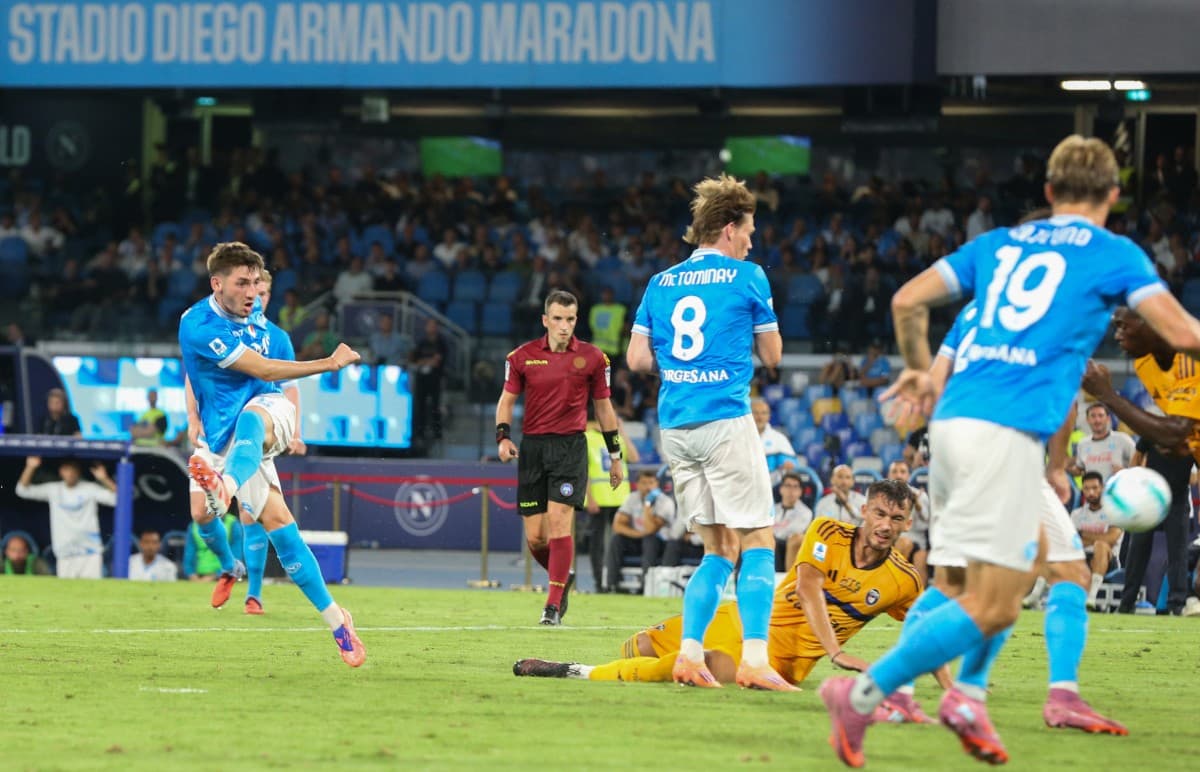
Just behind him, Scott McTominay has emerged as a major goal threat from midfield, with 9 goals and 3 assists in 31 appearances. He is not a penalty taker – he has missed his only attempt this season – but his late runs into the box and aerial power make him a constant danger, especially against a side that often defends deep and struggles to track runners.
For Pisa, there is no equivalent standout scorer in the data, which mirrors their meagre tally of 25 goals. Their threat is more collective and sporadic: long balls, second phases, and set‑pieces. With 5 clean sheets across all phases, they have occasionally shown they can shut games down, but the margin for error against Napoli’s front line will be extremely small.
Discipline, tempo and game state
Card data suggests that Pisa’s intensity often spikes late on, not always in a positive way. A high proportion of their yellow cards arrive between 76–90 minutes, and they have multiple reds across different phases of matches. If they are chasing the game, a repeat sending‑off is a real risk.
Napoli, meanwhile, pick up many of their yellows between 61–75 minutes, often the phase when they are pushing to tilt games in their favour. They have two red cards in the 76–90 range, so maintaining control and avoiding frustration in what could be a scrappy away fixture will be important.
The verdict
All available data points towards a Napoli win. They are superior in league position, form, goals scored, goals conceded, and away record. Pisa’s attack is the weakest in the division, their defence among the most porous, and they are missing several players through suspension and injury.
Pisa’s best‑case scenario is to keep the game tight for as long as possible, lean on their strong penalty conversion if a chance arises, and hope Napoli’s recent inconsistency and absentees blunt their edge. But over 90 minutes, Napoli’s structure, individual quality – particularly from Rasmus Højlund and Scott McTominay – and defensive solidity should tell.
Expect Napoli to control territory and possession, create the clearer chances, and, barring an extraordinary collapse, leave the Arena Garibaldi with three points that keep them firmly on course for Champions League football.