The Untold Story of Jose Mourinho and Manchester United
There is a moment in Manchester United’s modern history that never made it to the pitch. It happened in private rooms in Madrid and London, over handshakes, assurances and, in the end, tears.
The club thought they had Jose Mourinho.
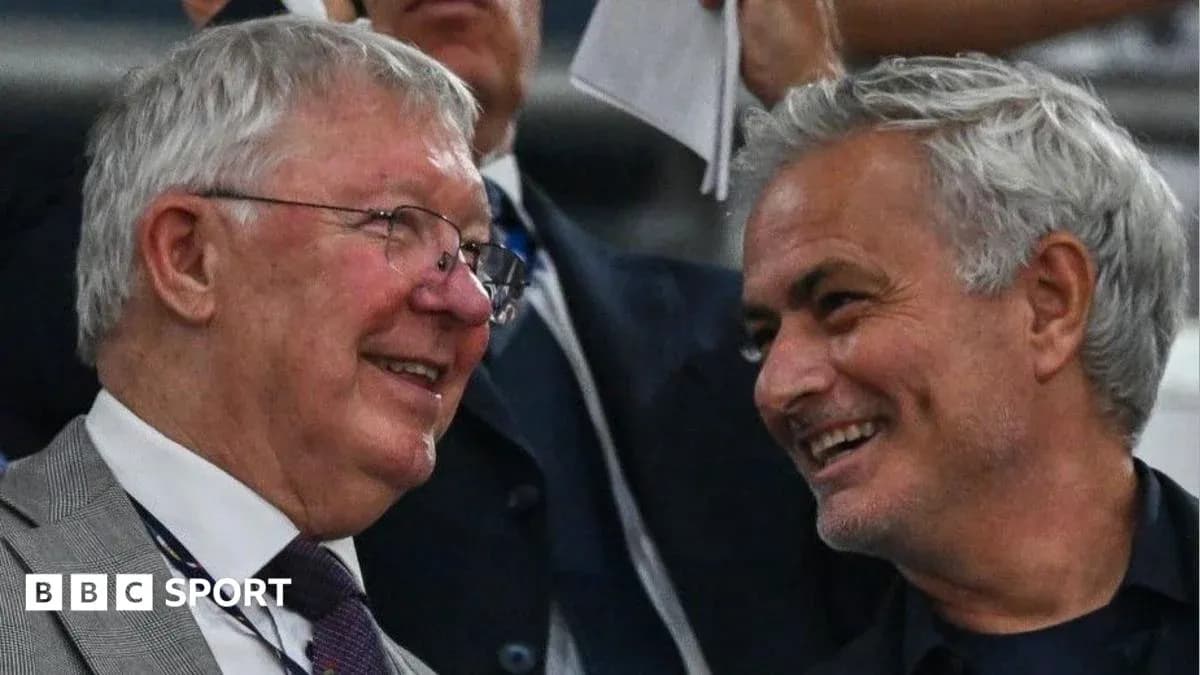
The story, long whispered around Old Trafford, is laid bare in a new Netflix documentary on Mourinho’s career. For United, it was the ultimate “sliding doors” moment – the day the man many inside the club believed was built to replace Sir Alex Ferguson walked away.
The deal that was done – until it wasn’t
By 2013, Ferguson had decided. He would step down at the end of the 2012-13 season. Quietly, United moved to secure the one manager they felt had the stature, the ego and the steel to take on the impossible job.
Talks with Mourinho had been running for weeks. Meetings in Madrid, meetings in London. Ferguson, who liked Mourinho and admired his edge, stunned him with the news: he was going to retire.
The conversations moved quickly from possibility to detail. Terms. Structure. Control. A source close to the process describes the eventual U-turn as happening in “days”, but only after weeks of groundwork. At one point, there was an agreement. Mourinho was coming.
Then, suddenly, he wasn’t.
Ferguson recalls the moment in the documentary with a clarity that still stings. “One night, he phoned me and he was crying and he says: ‘Alex, I can't take it. I've given my word to Chelsea and I'm not going to break my word’.”
The call ended more than a negotiation. It closed off a path United thought would shape the next decade.
Family, Abramovich and a promise to return
Mourinho put his decision down to family. He had a home in London. When he was first sacked by Chelsea in 2007, he had promised his family they would return. The capital suited them. Life there worked.
He also retained a positive relationship with Chelsea’s owner Roman Abramovich. That mattered. Chelsea were ready to bring him back for a second spell, and Mourinho had already committed.
Inside United, not everyone fully buys the family explanation. They accept the London base, the ties to Abramovich, the personal logic. But the sense lingers that something more than geography pulled him away.
For a brief period, though, United genuinely believed they had their man. Senior figures still talk about that as a turning point, a fork in the road from which the club has never quite found the right lane.
Replacing a one-man empire
Ferguson’s exit in 2013 was seismic enough. The departure of chief executive David Gill in the same summer compounded the shock. United were not just losing a manager and an executive; they were losing the two men who had defined the club’s football and business identity.
Ferguson had been a one-off, in control of almost every aspect of the football operation. Training, transfers, standards, discipline – it all ran through him. Those inside Old Trafford knew that model could not simply be replicated. A new structure had to be built while the team remained competitive.
The feeling at the time was that Mourinho, with his broad shoulders and unshakeable self-belief, could have carried that weight. He would not have shrunk from succeeding Ferguson. He would have walked through the front door convinced he could do better.
When he chose Chelsea, that plan collapsed. Pep Guardiola was already committed to Bayern Munich. United pivoted to David Moyes.
From “The Chosen One” to the wrong one
Moyes, then at Everton, appealed to the club’s sense of continuity. He shared some of Ferguson’s traits: work ethic, discipline, a long-term eye. But he lacked Mourinho’s track record at the very top. He had never operated in the rarefied air United lived in under Ferguson.
Still, United rolled out the banner: “The Chosen One.” It became a symbol of a choice that never quite fit. Moyes hesitated in the transfer market. Deals drifted. A club used to acting with authority suddenly looked unsure.
The Thiago Alcantara saga has become a case study. An agreed move from Barcelona was there to be done, sources insist. Under Mourinho, they believe, it would have been completed. Instead, Thiago slipped away.
The Marouane Fellaini episode told its own story. United ended up paying £27.5m on deadline day, after missing a lower release clause earlier in the window. The feeling around the club is blunt: under Mourinho, Fellaini simply would not have been signed.
Mourinho had even provided United with his thoughts on potential signings, including Daniele de Rossi. The club never got to test that plan. The future they had drawn up with him vanished with one phone call.
Mourinho arrives – but at a different United
He did eventually walk into Old Trafford, three years later. In 2016, Mourinho replaced Louis van Gaal, who was sacked 48 hours after lifting the FA Cup against Crystal Palace.
On paper, United had finally landed the man they wanted. In reality, everything had shifted.
The dressing room Mourinho inherited was not Ferguson’s. Of the 18 players who started 10 or more Premier League games in the 2012-13 title-winning season, only six – David de Gea, Phil Jones, Wayne Rooney, Chris Smalling, Michael Carrick and Antonio Valencia – reached that mark in Mourinho’s first campaign.
The squad had turned over. The aura had dimmed. The club he joined in 2016 was still huge, still powerful, but it no longer carried the same certainty of itself.
Mourinho had changed too. He had returned to Chelsea and won another Premier League title, but his second spell ended in December 2015 with the club 16th, one point above the relegation zone. He left Stamford Bridge under a cloud, his relationship with some players fractured, his methods questioned.
Success, chaos and a lingering “what if”
Mourinho’s United reign remains one of the most divisive chapters of the post-Ferguson era. On one hand, the honours list is undeniable. He delivered the Europa League and the EFL Cup in his first season. He twice qualified for the Champions League. He dragged United to 81 points in 2017-18 – still their highest total in the Premier League since Ferguson left.
He has even called that second-place finish, 19 points behind Manchester City, one of the best achievements of his career. In the cold light of numbers, it is hard to argue with the improvement from what came before and, tellingly, what followed.
But the trophies came with turbulence. Mourinho clashed with players, most notably record signing Paul Pogba. He openly criticised the club’s hierarchy for what he saw as a lack of backing in the transfer market, particularly around Anthony Martial, whom he wanted to sell.
The sense of chaos that surrounded his departure fed the narrative that he had not delivered what was promised. For some, he left United in a worse state than he found them. For others, he was the only manager since Ferguson to reimpose a sense of elite standards, even if it burned out quickly.
The manager who should have followed Ferguson?
Inside the club, a view has hardened with time: Mourinho would have been far more effective had he walked straight into Ferguson’s office in 2013.
The argument is simple. That final title-winning squad had overperformed under Ferguson. No-one was going to extract more from them than he did. The drop to seventh under Moyes was dramatic and, to many, inexplicable.
Even the players have struggled to pinpoint exactly why the fall was so steep. Confidence, messaging, recruitment – all played a part. But there is a strong belief that Mourinho’s presence, his intensity, his confrontational edge, would have kept standards higher and minds sharper.
Those who worked at United during that period are convinced he would have attacked the transfer market with conviction. The dithering that cost Thiago, the muddle that led to the Fellaini deal, the uncertainty over targets – they struggle to picture Mourinho tolerating any of it.
They also believe he would have squeezed more from the experienced core he would have inherited. The idea of that group, still fresh from a title, being pushed daily by Mourinho’s demands remains one of the great hypotheticals of the Premier League era.
Tears, regret and a club still searching
In the documentary, Ferguson tells the story of Mourinho’s phone call with a mixture of precision and lingering hurt. The image is stark: one of the game’s most ruthless winners in tears, explaining he could not break his word to Chelsea.
For Ferguson, it was a personal blow. For United, it was something deeper. A carefully built succession plan evaporated. The club stepped into a new era without the man they believed was best equipped to guide them through it.
More than a decade on, with multiple managers tried and discarded, structures reshaped and rebuilt, the question hangs over Old Trafford like a banner of its own.
What would Manchester United look like now if Jose Mourinho had walked through that door in 2013, not 2016?