Netherlands vs Japan: Group F Match Report
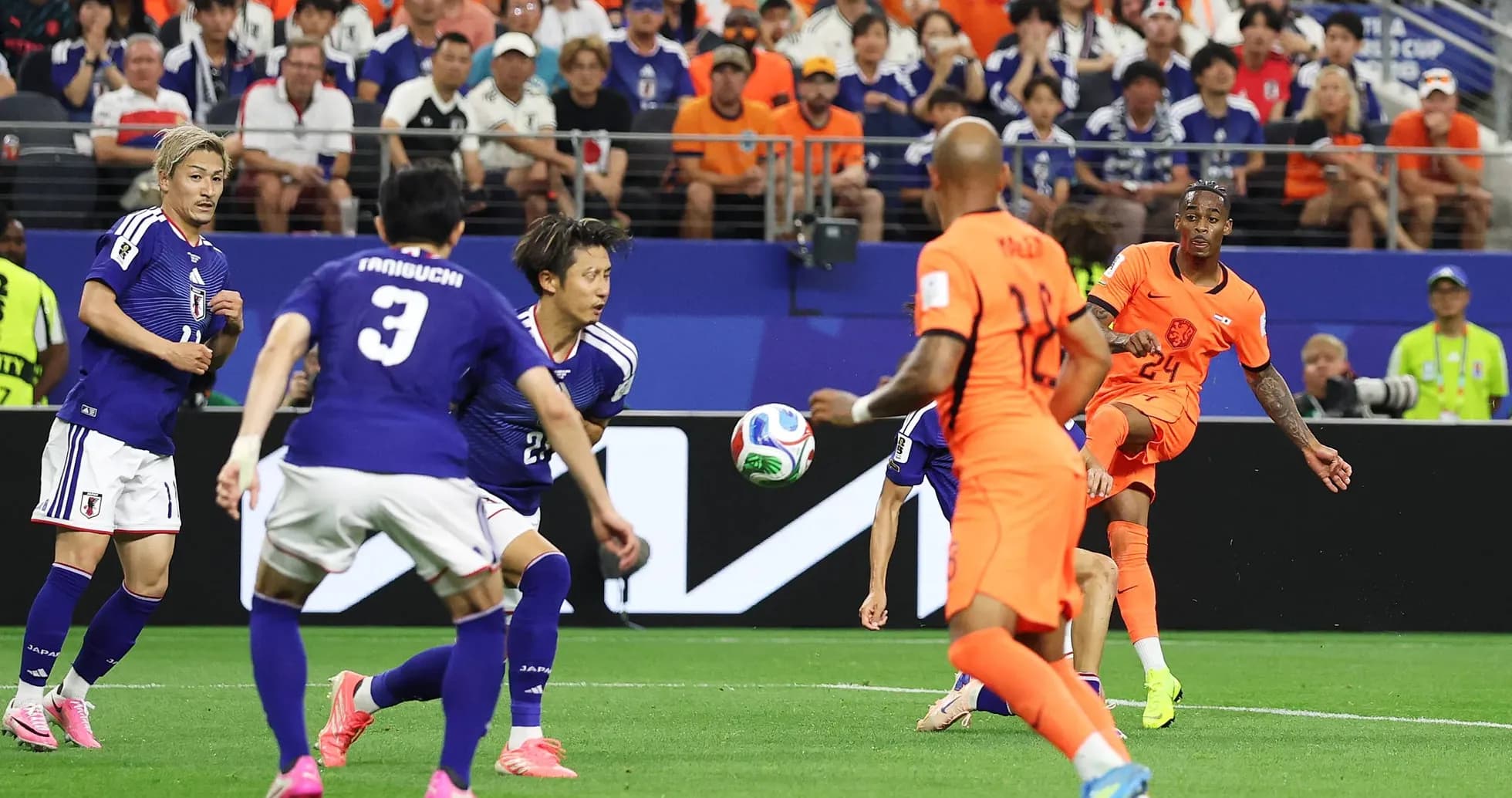
Netherlands 2-2 Japan at AT&T Stadium opened Group F with a finely balanced draw that reflected both sides’ control in different phases. The Dutch twice led but were pegged back late, leaving Ronald Koeman’s team on 2 points from 2 matches and still on course for the Round of 32 zone, while Japan also move to 2 points and stay marginally ahead on goal difference at the top of the group’s early standings.
Match Report
The game exploded into life after a cagey first half. In the 51st minute Netherlands struck first: Netherlands goal — V. van Dijk (assisted by R. Gravenberch). The captain attacked a well-delivered ball from Gravenberch to give the Dutch a 1-0 lead.
Japan responded quickly. In the 57th minute Japan goal — K. Nakamura (assisted by T. Kubo). Kubo slipped Nakamura into space on the left, and the midfielder’s finish levelled the match at 1-1.
On 61 minutes, the first booking arrived: 61' C. Summerville (Netherlands) — yellow card (Tripping), reflecting the increased intensity as Netherlands tried to regain control in transition.
Just three minutes later, Netherlands restored their advantage. In the 64th minute Netherlands goal — C. Summerville (assisted by R. Gravenberch). Summerville cut in from the flank to finish after another incisive pass from Gravenberch, making it 2-1 to the Dutch.
Japan turned to their bench first. In the 66th minute J. Ito replaced D. Maeda (Japan), adding fresh pace to the front line.
Koeman responded with a triple attacking refresh in the 70th minute. First, M. Depay replaced D. Malen (Netherlands), offering a different profile at centre-forward. In the same minute, T. Koopmeiners replaced C. Summerville (Netherlands), adding more control in midfield after Summerville’s high-energy shift. Also in the 70th minute, Q. Timber replaced T. Reijnders (Netherlands), further reinforcing the central areas.
Japan then made a triple change of their own on 75 minutes to chase the equaliser. At 75', T. Tomiyasu replaced T. Watanabe (Japan), bringing fresh legs into the back line. Simultaneously, K. Ogawa replaced T. Kubo (Japan), adding a more direct presence in attack, and Y. Sugawara replaced R. Doan (Japan), reshaping the right side.
Netherlands made another adjustment in the 81st minute: N. Ake replaced R. Gravenberch (Netherlands), a move that tilted the balance slightly more towards protecting the lead after Gravenberch’s two assists.
Two minutes later came another Dutch caution: 83' M. Depay (Netherlands) — yellow card (Roughing), as Japan’s increased pressure drew more aggressive defending.
Japan’s final attacking roll of the dice came in the 84th minute, when K. Shiogai replaced A. Ueda (Japan), adding yet another forward option in the closing stages.
Netherlands made their last substitution in the 85th minute: B. Brobbey replaced C. Gakpo (Netherlands), keeping fresh running on the left side of the front three.
Japan’s late pressure finally told in the 88th minute. Japan goal — D. Kamada (assisted by K. Ogawa). Ogawa, introduced from the bench, found Kamada arriving from midfield, and the composed finish made it 2-2.
In stoppage time, frustration showed again from the Dutch back line: 90+1' M. van de Ven (Netherlands) — yellow card (Holding), as he halted a Japanese break to preserve the point.
Fixture Statistics & Tactical Audit
- xG: Netherlands 0.79 vs Japan 0.54
- Possession: Netherlands 60% vs Japan 40%
- Shots on Target: Netherlands 6 vs Japan 3
- Goalkeeper Saves: Netherlands 1 vs Japan 4
- Blocked Shots: Netherlands 1 vs Japan 1
The underlying numbers suggest Netherlands were marginally more dangerous in terms of chance quality (0.79 xG vs 0.54) and clearly more dominant in territory and control (60% possession, 525 passes at 88% accuracy). However, Japan’s compact 3-4-2-1 limited Dutch shooting volume to 10 attempts, all from inside the box, and forced the Netherlands to rely heavily on set plays and half-spaces rather than clear one-on-ones. Japan’s efficiency in front of goal, converting two of three shots on target, offset the Dutch territorial dominance, while Zion Suzuki’s four saves mirrored Netherlands’ six efforts on goal and underpinned the visitors’ ability to stay in the game and strike late. Overall, the 2-2 scoreline aligns with the balance of chances: Netherlands edged the metrics, but not by enough to feel aggrieved by the draw.
Standings Update & Seasonal Impact
With this 2-2 draw, Netherlands move from 1 to 2 points, with their goals for tally rising from 2 to 4 and goals against from 2 to 4, keeping their goal difference at 0. They remain in 2nd place in Group F’s Round of 32 qualification zone, still well positioned but with little margin for error given how tight the group looks.
Japan also climb from 1 to 2 points, with goals for increasing from 2 to 4 and goals against from 2 to 4, likewise maintaining a goal difference of 0. They stay 1st in Group F on tie-breakers, preserving their status in the Round of 32 bracket and ensuring that a win in their final group match would almost certainly secure top spot.
Lineups & Personnel
Netherlands Starting XI
- GK: Bart Verbruggen
- DF: Denzel Dumfries, Jan Paul van Hecke, Virgil van Dijk, Micky van de Ven
- MF: Ryan Gravenberch, Frenkie de Jong, Tijjani Reijnders
- FW: Crysencio Summerville, Donyell Malen, Cody Gakpo
Japan Starting XI
- GK: Zion Suzuki
- DF: Tsuyoshi Watanabe, Shogo Taniguchi, Hiroki Itō
- MF: Ritsu Doan, Kaishu Sano, Daichi Kamada, Keito Nakamura
- FW: Takefusa Kubo, Daizen Maeda, Ayase Ueda
Post-Match Verdict
Netherlands produced a controlled but not ruthless performance, dominating possession and passing accuracy (60% possession, 88% pass completion) yet generating relatively modest xG (0.79) from their 10 shots. Their main attacking success came from Gravenberch’s creativity between the lines, directly assisting both goals, but the drop in threat after his substitution in the 81st minute coincided with Japan’s late surge. Defensively, conceding two goals from only three shots on target points to a vulnerability in managing Japan’s runners from midfield rather than sustained pressure.
Japan’s display was compact and opportunistic, with a lower xG (0.54) but high finishing efficiency, turning limited shooting volume (10 shots, 3 on target) into two goals. Their substitutions were tactically effective: Ogawa and Kamada combined for the late equaliser, and Tomiyasu and Sugawara helped push the defensive line higher without losing structure. With Suzuki making four saves against Netherlands’ six shots on target, Japan’s resilience at the back matched their clinical edge in attack. Across 90 minutes, the draw reflects a contest where Netherlands controlled the ball but Japan controlled the decisive moments.