Ivory Coast vs Ecuador: World Cup Match Analysis
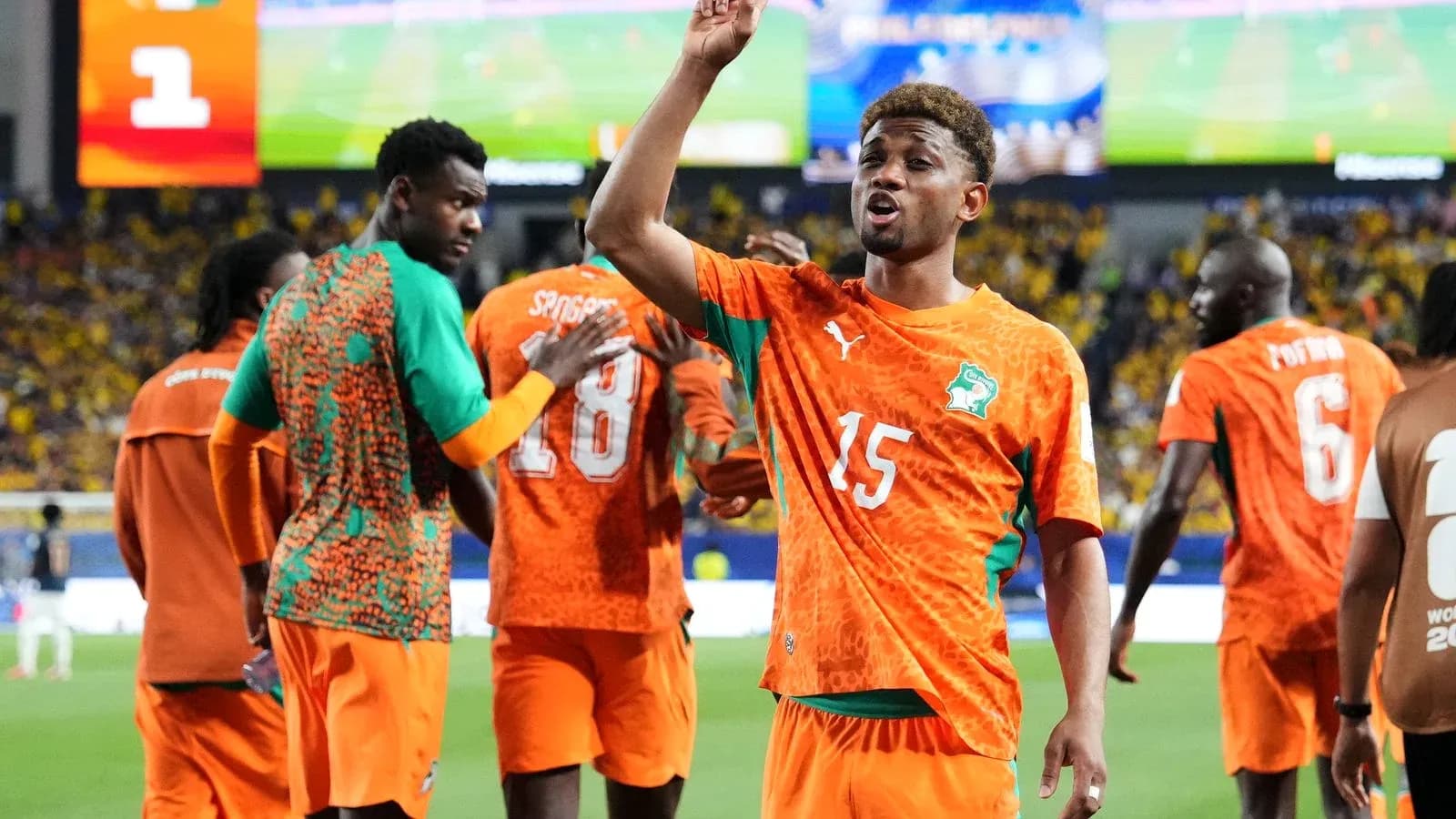
Lincoln Financial Field in Philadelphia hosted a meeting of contrasts: an Ivory Coast side riding the emotional and tactical momentum of an African champion, and an Ecuador team trying to transplant its snarling South American identity onto the World Cup stage. By the final whistle, Ivory Coast had carved out a 1–0 victory, a result that already reshapes Group E’s geometry.
The Big Picture – Group Stakes and Structural Identities
Following this result, Ivory Coast sit 2nd in Group E on 3 points, with a goal difference of +1 after scoring 1 and conceding 0 in total this campaign. Ecuador trail in 3rd with 0 points and a goal difference of -1, having failed to score and conceding 1 overall. Both sides have played 1 match in total, but their trajectories feel very different.
Ivory Coast’s season statistics underline how this game fits their emerging World Cup DNA. In total this campaign, they have played 1 match, won 1, drawn 0 and lost 0. At home they have also played 1, winning it 1–0. The numbers are sparse but clean: 1 goal for and 0 against overall, an average of 1.0 goals scored and 0.0 conceded per match in total. It is a profile of early efficiency rather than volume.
Ecuador’s data sketches the opposite mood. On their travels they have played 1 match, losing it 1–0. Overall they have 0 wins, 0 draws and 1 defeat, with 0 goals scored and 1 conceded, an average of 0.0 goals for and 1.0 against in total. The “L” in their form column is not just a letter; it is a warning about bluntness in the final third and the cost of narrow margins at this level.
Both coaches mirrored each other structurally, rolling out 4‑4‑2s. Emerse Fae’s Ivory Coast used the shape as a platform for controlled aggression; Sebastian Beccacece’s Ecuador leaned on it for compactness and transitional threat. The symmetry on paper disguised very different intentions.
Tactical Voids – Discipline, Risk and the Edges of Control
With no official injury or absentee list provided, both managers appeared to have deep benches at their disposal. Instead, the real absences came in moments of control and discipline.
Ivory Coast’s card profile this tournament is sharply front‑loaded. All of their yellow cards have arrived before half-time: 1 between 16–30 minutes (33.33% of their yellows) and 2 between 31–45 minutes (66.67%). It paints a picture of a side that starts with ferocity, sometimes spilling into rashness as they try to impose themselves early. Seko Fofana is emblematic here: in his 77 minutes, he committed 1 foul and collected a yellow, a reminder that his high-energy style always flirts with the boundary line.
Ecuador’s disciplinary curve is different but just as telling. Their only yellow so far has come in the 61–75 minute window, a full 100.00% of their yellows concentrated in that phase. It suggests a team that begins under control but is forced into more desperate interventions as the game stretches and the scoreboard or fatigue starts to bite.
The individual card leaders amplify this theme. Fofana’s yellow for Ivory Coast and J. Porozo’s caution for Ecuador are not random events; they are manifestations of each team’s stress points. Porozo, who played 28 minutes, committed 2 fouls and left with a yellow, epitomising an Ecuador back line that can be dragged into uncomfortable, last-ditch defending when the block is broken.
Key Matchups – Hunter vs Shield, Engine Room vs Enforcer
Hunter vs Shield for Ivory Coast is now personified by A. Diallo. Off the bench, he has become their sharpest cutting edge. Across his 34 minutes, Diallo scored 1 goal from 2 shots, both on target, and posted a rating of 8.2. His dribbling numbers are electric: 6 attempts, 5 successful, turning tight spaces into corridors of opportunity. With 17 passes at 82% accuracy and 1 key pass, he is not just a finisher but a line‑breaker between the lines.
Against him stands an Ecuador defence that, in total, has conceded 1 goal in 1 match, all on their travels. On paper, that is a respectable record – 1.0 goals against on average in total – but the context matters. They have yet to keep a clean sheet, and their biggest defeat so far is precisely this 1–0 scoreline. The “shield” is solid but not impermeable, and once Diallo was introduced, the structure creaked.
In the Engine Room, Fae built his control around a double axis: F. Kessie and S. Fofana, flanked by Y. Diomande and B. Toure. Fofana’s statistical line is particularly revealing. In his 77 minutes, he attempted 36 passes with 88% accuracy and created 1 key pass. He did the dirty work too: 1 blocked shot, 2 interceptions, and constant occupation of central lanes. Even with 3 duels contested and none won, his positioning and ball circulation allowed Ivory Coast to keep Ecuador mostly at arm’s length.
Opposite him, M. Caicedo anchored Ecuador’s midfield in the 4‑4‑2, supported by P. Vite and the wide energy of J. Yeboah and A. Minda. This unit’s task was twofold: cage Ivory Coast’s central progression and feed G. Plata and E. Valencia in transition. The problem was that without sustained possession or a functioning final pass, Ecuador’s forwards were starved. The statistics underline it brutally: Ecuador have failed to score in total this campaign, with 1 match on their travels ending in a blank and “failedToScore” reading 1 overall.
Statistical Prognosis – What This Match Tells Us About the Road Ahead
Even without explicit xG figures, the underlying numbers and patterns point to a clear prognosis.
Ivory Coast are building a tournament profile as a low‑margin, high‑control side. In total, they have a perfect record: 1 win from 1, a clean sheet, and no penalties taken or missed. Their clean sheet count – 1 at home, 1 in total – shows a defensive platform that is already reliable. The early yellow-card surge is a tactical risk, but so far it has been the cost of establishing territorial dominance.
Ecuador, by contrast, have entered the tournament with a narrow defeat that exposes their main fault line: chance creation. One match, 0 goals for, 1 against, 0 clean sheets, and a “failedToScore” of 1 in total speak to a side that can organise itself without the ball but has yet to translate structure into threat. The late yellow-card spike between 61–75 minutes hints at a team that is forced into reactive defending once the game slips away from their preferred script.
Following this result, the tactical story is clear. Ivory Coast’s 4‑4‑2, anchored by Fofana’s engine and lit up by Diallo’s incision, looks built for knockout‑style football: compact, patient, and capable of delivering decisive moments. Ecuador’s 4‑4‑2 still needs recalibration in the final third; the defensive shield is competent, but until the hunters up front start to bite, their margins will remain too thin to survive at World Cup level.