Iran and New Zealand Draw 2-2: Match Analysis
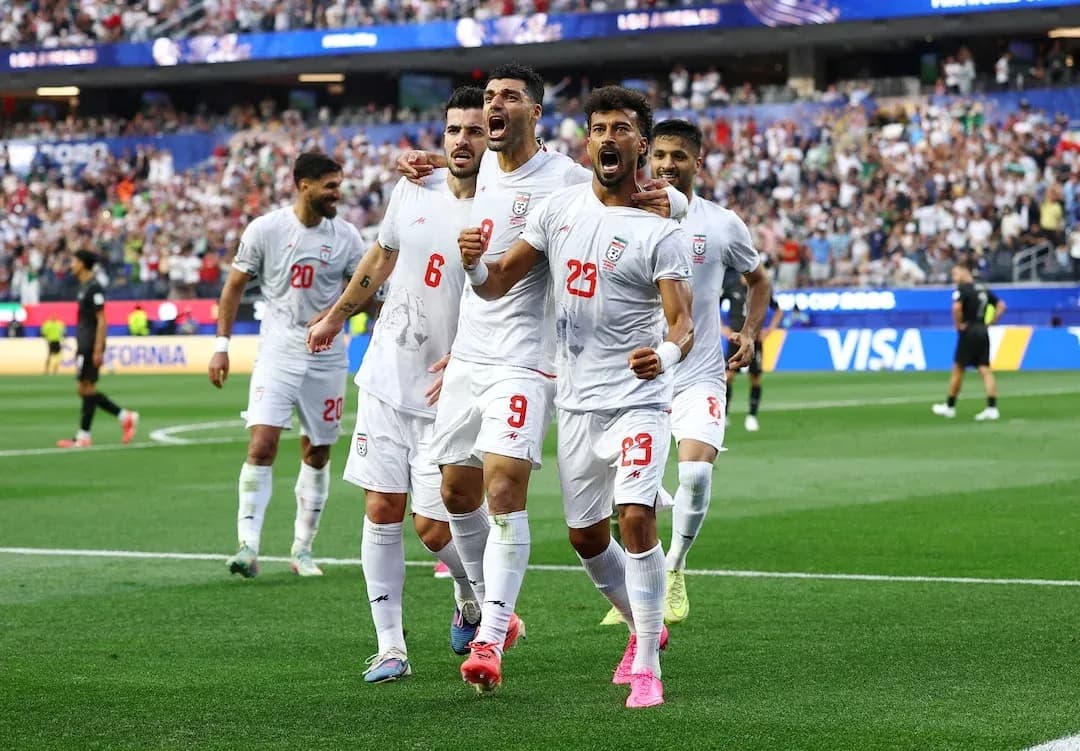
Iran and New Zealand shared a 2-2 draw at SoFi Stadium in a match that neatly reflected its statistical balance. Iran, set up in Amir Ghalenoei’s 4-4-2, leaned on verticality, full-back aggression and direct forward play. New Zealand, in D. Bazeley’s 4-2-3-1, sought control through a compact double pivot and a clear target in Chris Wood. The numbers underline a finely poised contest: New Zealand edged possession 52% to 48% and were more efficient in front of goal, while Iran generated more overall volume and territorial pressure, especially from wide areas.
Iran’s 4-4-2 was built around front-foot defending and wide overloads. With 17 total shots to New Zealand’s 14 and a 1.5 xG to 1.24 edge, Iran consistently engineered shooting situations, particularly inside the box (10 shots inside the area, matching New Zealand’s 10). The back four of Ramin Rezaeian, Shoja Khalilzadeh, Ali Nemati and Milad Mohammadi played relatively high, compressing the pitch and allowing the wide midfielders Mohammad Mohebi and Aria Yousefi to push on. This created a recurring pattern: full-back plus winger combinations on the flanks, with early service towards Shahriar Moghanlou and Mehdi Taremi.
Rezaeian’s influence was emblematic of Iran’s approach. Nominally a right-back, he attacked like an auxiliary winger, first equalising at 32' and later assisting Mohebi’s 64' strike. Those two moments captured Iran’s best attacking structure: quick switches to the right, overlapping runs, and a willingness to commit numbers into the box. The cost was exposure in transition. New Zealand’s opening goal at 7', finished by Elijah Just from a Chris Wood assist, came from exploiting the space behind Iran’s advanced full-backs, a pattern repeated on Just’s second at 54'.
Out of possession, Iran were aggressive but controlled, committing only 10 fouls and receiving a single yellow card. The midfield pairing of Saeid Ezatolahi and Saman Ghoddos tried to screen central lanes, but New Zealand repeatedly found joy by playing early into Wood and then bouncing the ball wide to Just and Sarpreet Singh. Iran’s defensive line had to deal with 8 shots on goal, and Alireza Beiranvand (Iran) was busy, making 6 saves. The negative goals prevented figure (-0.2) suggests he slightly underperformed the post-shot quality faced, reinforcing how dangerous New Zealand’s best chances were.
With the ball, Iran’s passing was functional rather than dominant: 405 total passes, 312 accurate at 77%. They accepted spells without possession, focusing on direct progression once they recovered the ball. Long diagonals to the flanks and quick combinations through Ghoddos between the lines aimed to destabilise New Zealand’s 4-2-3-1 block. The 4 corner kicks to New Zealand’s 1 underline Iran’s territorial pressure, especially after falling behind for the second time.
New Zealand’s 4-2-3-1 had a clear spine: Max Crocombe in goal, a back four anchored by Michael Boxall and Finn Surman, Joe Bell and Marko Stamenic as the double pivot, and Wood as the reference point up front. Their 446 passes with 377 accurate (85%) show a more secure circulation, using Bell and Stamenic to recycle possession and drag Iran’s midfield out of shape. Once Iran’s lines stretched, New Zealand looked early for Wood’s feet or head, then attacked the second ball with Just, Callum McCowatt and Singh.
The clinical edge of New Zealand’s attack is evident in the shot profile: 14 total shots but 8 on goal, compared to Iran’s 17 and 4. They turned a similar number of box entries into higher-quality on-target efforts, aligning with their 1.24 xG. Just’s brace, both assisted by Wood, showcased a rehearsed pattern: Wood dropping or pulling centre-backs away, wide midfielder attacking the half-space channel. That movement repeatedly asked difficult questions of Iran’s centre-backs and full-backs about who should track the runner.
Defensively, New Zealand’s block was disciplined. They conceded more total shots but limited clear, uncontested looks, forcing 5 of Iran’s attempts to be blocked and pushing several efforts outside the box (7 shots from range for Iran). Crocombe (New Zealand) was called into action less often, making 2 saves, and the goals prevented figure (-0.2) indicates that, like Beiranvand, he conceded slightly more than the post-shot models would expect. Still, the collective structure in front of him—compact central zones and controlled pressing triggers—meant Iran had to work hard for their chances.
Substitutions subtly shifted the tactical picture. At 46', Mahdi Ghayedi (IN) came on for Aria Yousefi (OUT), giving Iran a more direct, dribbling threat from wide areas and adding unpredictability between the lines. At 53', Ali Alipour (IN) replaced Shahriar Moghanlou (OUT), injecting fresh running in behind and slightly increasing Iran’s verticality. The introduction of Ehsan Hajsafi (IN) for Saman Ghoddos (OUT) at 65' added experience and left-footed balance, with Hajsafi able to step into midfield or cover wide, though he later received the match’s only card at 89' for “Tripping”.
For New Zealand, the triple substitution wave between 68' and 90+2' was about energy management and preserving structure. Benjamin Old (IN) for Liberato Cacace (OUT) at 68' and Ryan Thomas (IN) for McCowatt (OUT) at the same minute refreshed the wide and central midfield zones, ensuring the pressing and counter-attacking threat remained. Later, Callan Elliot (IN) for Tim Payne (OUT) at 78' and the 90+2' changes—Jesse Randall (IN) for Singh (OUT) and Tyler Bindon (IN) for Stamenic (OUT)—were conservative, shoring up defensive legs and aerial presence to see out the draw.
Discipline was a minor but telling subplot. Only one card was issued: 89' Ehsan Hajsafi (Iran) — Tripping. That low card count, combined with just 10 fouls by Iran and 8 by New Zealand, framed a game where tactical fouling was rare and both teams trusted their structures more than cynical interventions.
Statistically, the 2-2 outcome is well supported by the underlying data. Iran’s slight xG advantage (1.5 to 1.24), higher shot volume and corner count reflect their territorial pushes and wing-based attacks. New Zealand’s superior possession, passing accuracy (85% to 77%) and higher proportion of shots on goal underline a more controlled, efficient approach. Both goalkeepers—Beiranvand (Iran) with 6 saves and Crocombe (New Zealand) with 2—were directly involved in preserving the draw, even if each marginally underperformed their expected shot-stopping.
In tactical terms, Iran will see a platform to build on: their wide combinations and full-back involvement created consistent danger, though the space left behind needs addressing. New Zealand, meanwhile, can be encouraged by the clarity of their 4-2-3-1 mechanisms, especially the Wood–Just connection and the stability provided by Bell and Stamenic. On the balance of structure, execution and numbers, a 2-2 at SoFi Stadium felt like a fair reflection of two contrasting but equally effective game plans.