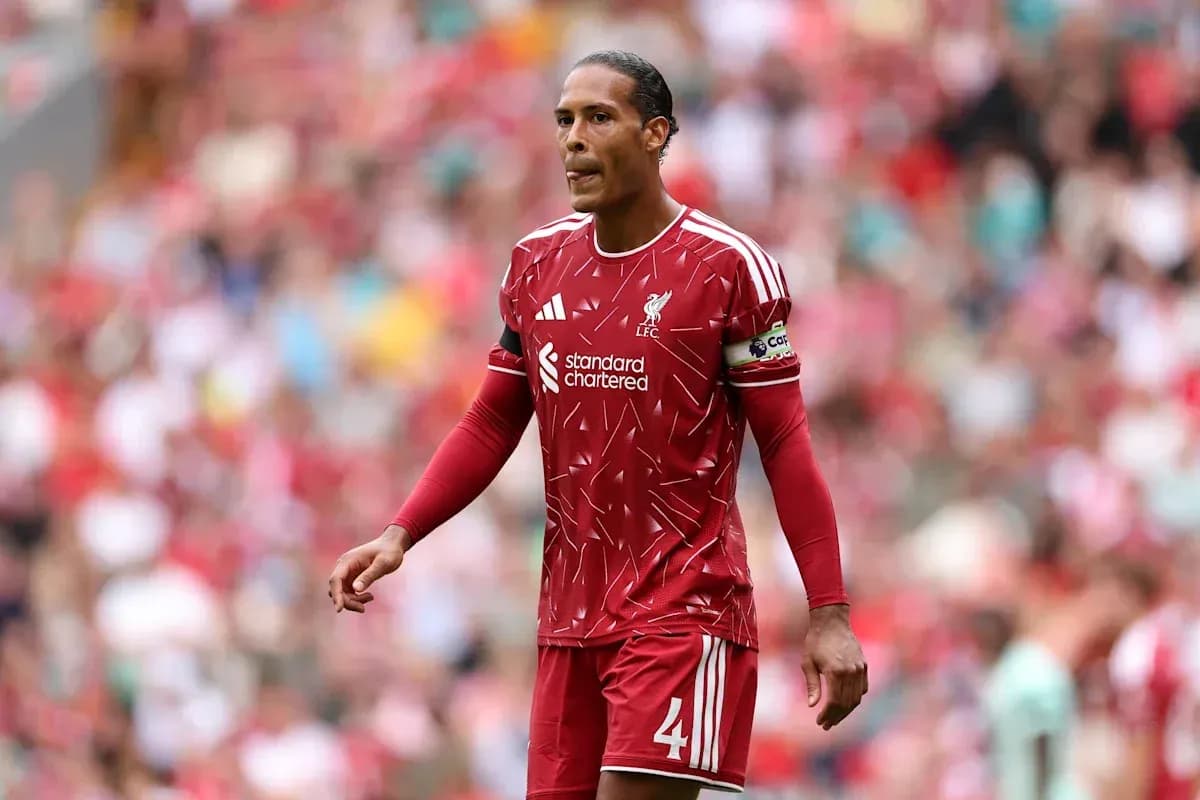
Virgil van Dijk on Liverpool's Transition Season
Virgil van Dijk has lived through enough Liverpool cycles to recognise one when he sees it. Titles, near-misses, rebuilds – he has stood at the heart of them all. This one feels different.
A new manager in Andoni Iraola. A squad stripped of two pillars in Mo Salah and Andy Robertson. A fanbase still carrying the echo of a Premier League title won only two years ago under Arne Slot, but also the sting of a poor campaign that cost Slot his job.
“It definitely feels like a bit of a transition, for sure,” van Dijk admitted, leaning into the reality rather than dodging it. This is not a club pretending nothing has changed. “It’s down to everyone associated with Liverpool to make sure that we’re building something that will be successful for the years to come.”
That line matters. Years to come. Liverpool are not dressing this up as a quick patch-up. Iraola walks into a dressing room that has lost its record goalscorer of the modern era and one of its most consistent full-backs, and must still compete on four fronts. The scale of the task is obvious.
Van Dijk isn’t shying away from that either.
“This year we want to be successful,” he said, “but there’s a lot of work to be done still, and we all know how difficult it is to be playing in the Premier League, League Cup, FA Cup, Champions League, so we need everyone at their best.”
That’s the tightrope Liverpool now walk. Compete immediately, rebuild on the fly, and do it under a manager learning the club in real time. Transition, yes. But not a free hit.
If there is a symbol of continuity, it remains the captain at centre-back. Van Dijk is 35 now, an age that invites questions in a league that sprints rather than strolls. He was asked the obvious one: can he still go every week?
“Yes. What, are you going to say I’m 35 years old and I can’t do it?” came the sharp reply.
The answer carried a flicker of defiance, the kind that has underpinned his career. He knows the scrutiny that comes with age, especially in a team trying to reset at speed. He also knows what it takes to stay at the top.
“At the end of the day you have to look after yourself, I won’t say I’m lucky, but you have to do everything in your power, and that’s the bare minimum for me, because I feel the responsibility to be ready each and every game.
“Every three days I’m doing everything in my power at home, at the training ground, to be ready to play a game. So, for me, I feel good. I’m also a late bloomer, so maybe… It is what it is, I feel fine, and I want to be part of a successful Liverpool team.”
The phrase “late bloomer” is telling. Van Dijk has always played with the air of someone intent on squeezing every last drop out of his peak, and he clearly believes that peak has not vanished. Not yet.
His focus, though, keeps coming back to the wider picture. To the shirt. To the people who fill the stands and trail the club across continents.
“I want to make all the fans proud all over the world that support us wherever we go, and that’s by winning games, that’s by showing what it means to wear that shirt every time, and that’s for me the bare minimum anyway, so I will keep going.”
Transition seasons can drift. They can become excuses. Van Dijk is drawing a line against that. Liverpool may be changing manager, changing personnel, changing era. The expectation, in his mind, has not moved an inch.