Canada’s Historic World Cup Win Marred by Koné’s Injury
Canada finally had its World Cup moment. Vancouver should have been a night of unfiltered celebration, a 6-0 dismantling of Qatar and a statement that the hosts belong on this stage.
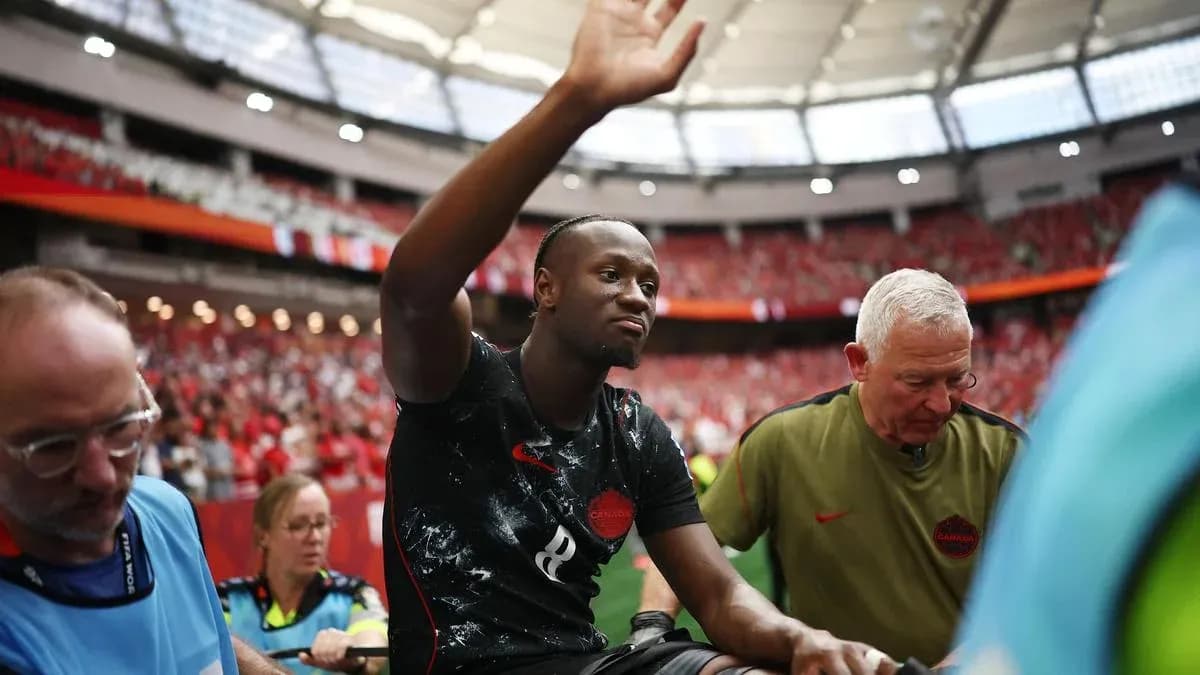
Instead, the image that will linger is Ismaël Koné on the turf, his teammates forming a protective ring around him, and the sound Jesse Marsch says you could hear from the bench: bones snapping.
A historic win, a brutal turning point
The Group B game was already tilting heavily in Canada’s favour when it lurched into something far darker in the second half.
Koné, just 24 and one of the centrepieces of this new Canadian generation, took a tackle from behind by Qatar midfielder Assim Madibo. The contact sent him crashing to the ground. Koné immediately grimaced, his body language telling the story before anyone saw the damage.
Stephen Eustáquio sprinted over. Others followed, waving frantically to the sideline. Medical staff rushed on as players turned away, some unable to look.
“I saw his leg. I saw that something wasn't right,” the captain said later. He had been one of the first to reach Koné. He didn’t need a replay.
Referee punishment was swift. Madibo saw red for the challenge, leaving Qatar down to nine men after Homam Ahmed’s first-half dismissal. But the card felt almost irrelevant compared to what lay on the grass.
Koné’s lower left leg, in photos from the incident, appeared visibly broken. The details of the injury have not yet been disclosed, but the reaction on the field told its own story.
Silence in Vancouver
As Koné received treatment, his teammates formed a circle around him, shielding him from cameras and the crowd. The stadium, which had been bouncing minutes earlier, fell into a stunned hush.
Marsch later revealed the full extent of the moment’s brutality.
He said the tackle and injury happened right in front of the Canadian bench, close enough that you could hear the “bones snap.” Koné was quickly stretchered off and taken straight to a local hospital, where he was preparing for surgery, surrounded by family.
“Everybody was crushed when it happened, but we had to find a way to stay focused, we knew that Ismaël wanted us to finish the job," Marsch said. "There's a lot of thoughts that go through our heads right now, we're all thinking about him, but we're all very proud of what we are.”
Marsch added that Madibo had personally apologized to Koné, a small gesture on a night that had already done its damage.
Saliba’s tribute and David’s anger
Football rarely pauses. It just folds the emotion into the next phase of the game.
Less than 10 minutes after Koné left the field, his replacement, Nathan Saliba, wrote his own line into the story. He arrived from the bench and promptly scored Canada’s fourth goal, driving the hosts even further out of sight in a 6-0 rout.
Saliba’s celebration said everything. He lifted Koné’s jersey high, an immediate, raw tribute to the teammate who should have been sharing the pitch, not lying in a hospital bed.
Up front, Jonathan David did what he does best, finishing the night with a hat trick. But even he couldn’t keep the focus solely on the scoreboard.
He questioned the very logic of the tackle that changed the tone of Canada’s night.
“If there's a play where you cannot win the ball, there's no point,” David said. “It's just to hurt people.”
His words cut through the usual post-match platitudes. This wasn’t framed as an unfortunate coming-together. For Canada’s star striker, the challenge crossed a line.
Pride, pain, and a missing X factor
On paper, the story is simple: Canada 6, Qatar 0. A first-ever World Cup victory, delivered in emphatic fashion, powered by a home crowd and a team finally stepping into the global spotlight.
In reality, the night felt far more complicated.
Eustáquio spoke for a dressing room trying to process both triumph and loss in the same breath.
“We're going to miss (Koné),” the captain admitted. “He has that X factor that our team really needs.”
That X factor was supposed to shine across this tournament, not be cut short on a stretcher. Koné’s injury casts a long shadow over Canada’s campaign, turning what should have been a pure celebration into something more fragile, more human.
The win will go into the record books. The scoreline will be remembered. But for Canada, the real question now hangs over a hospital room in Vancouver: how do you move forward at a World Cup when the heart of your midfield has been taken away in an instant?