Canada vs Bosnia & Herzegovina: Tactical Analysis of the 1-1 Draw
Canada’s 1-1 draw with Bosnia & Herzegovina at BMO Field was defined by contrasting interpretations of the same 4-4-2 base: Canada using it as an aggressive, possession-heavy platform, Bosnia & Herzegovina as a compact, counter-oriented shell. The statistical profile – 61% possession, 13-8 shots, 9-4 corners and a 1.25 to 0.98 xG edge in Canada’s favour – underlines how Jesse Marsch’s side controlled territory and tempo, while Sergej Barbarez’s team prioritised vertical efficiency and defensive density.
Structurally, Canada’s 4-4-2 was very ball-dominant. With Maxime Crépeau in goal, a back four of Alistair Johnston, Luc De Fougerolles, Derek Cornelius and Richie Laryea, and a midfield line of Tajon Buchanan, Ismael Koné, Stephen Eustaquio and Liam Millar behind Jonathan David and Tani Oluwaseyi, Canada built with clear width and high full-backs. The 415 total passes, 310 accurate (75%), show a team comfortable circulating the ball, especially through Eustaquio and Koné as central hubs. Ten of their 13 shots came from inside the box, reflecting how the wide midfielders and overlapping full-backs consistently managed to penetrate Bosnia & Herzegovina’s last line rather than settling for speculative efforts.
Bosnia & Herzegovina mirrored the formation on paper – Nikola Vasilj in goal, a back four of Amar Dedić, Nikola Katić, Tarik Muharemović and Sead Kolašinac, with Esmir Bajraktarević, Benjamin Tahirović, Ivan Bašić and Amar Memić behind Ermedin Demirović and Jovo Lukić – but functionally their 4-4-2 was much deeper. Their 270 passes, 172 accurate (64%), and only 39% possession reflect a clear concession of the ball. The front two were tasked more with screening passes into Canada’s double pivot and springing counters than with sustained pressing. Despite only eight total shots, five came inside the box, indicating that when Bosnia & Herzegovina did progress, they reached genuinely dangerous zones.
First Half
The first half showcased Bosnia & Herzegovina’s early tactical success. Their compact mid-block forced Canada into lateral circulation, and the visitors’ directness paid off with Jovo Lukić’s opener, assisted by Sead Kolašinac. That sequence reflected Barbarez’s plan: win the ball, attack quickly down the flank, and exploit the space behind Canada’s advanced full-backs. Canada’s 4-4-2, with both wide midfielders high, left transition channels that Bosnia & Herzegovina targeted, especially on Kolašinac’s side.
Discipline and physicality were another key layer. Bosnia & Herzegovina committed 20 fouls to Canada’s 10 and collected three yellow cards (Demirović, Lukić, Katić) against Canada’s two (Johnston, De Fougerolles). This imbalance underlines how much defending Bosnia & Herzegovina had to do, especially as Canada increased the tempo after the interval. The fouls often came as they tried to disrupt Canadian combinations between the lines and slow down wide overloads.
Second Half
The turning point was Marsch’s triple change at 61 minutes: Promise David (IN) came on for Jonathan David (OUT), Ali Ahmed (IN) came on for Tajon Buchanan (OUT), and Jacob Shaffelburg (IN) came on for Liam Millar (OUT). This injection of fresh legs and more direct runners on the flanks sharpened Canada’s attacking patterns. Promise David, in particular, altered the dynamic by attacking depth more aggressively and linking with wide players, and he later provided the assist for Cyle Larin’s equaliser.
Bosnia & Herzegovina responded with their own reshaping at 62 minutes, bringing on Samed Baždar (IN) for Jovo Lukić (OUT) and Armin Gigović (IN) for Ivan Bašić (OUT). This nudged their shape toward a slightly more conservative posture, with fresh central energy to protect the box. Further changes at 74 minutes – Kerim Alajbegović (IN) for Amar Memić (OUT) and Ivan Šunjić (IN) for Esmir Bajraktarević (OUT) – reinforced the defensive tilt, adding work rate and defensive discipline in midfield and wide areas. The late introduction of Dženis Burnić (IN) for Sead Kolašinac (OUT) at 84 minutes was another defensive-minded adjustment, prioritising legs and compactness over overlapping threat.
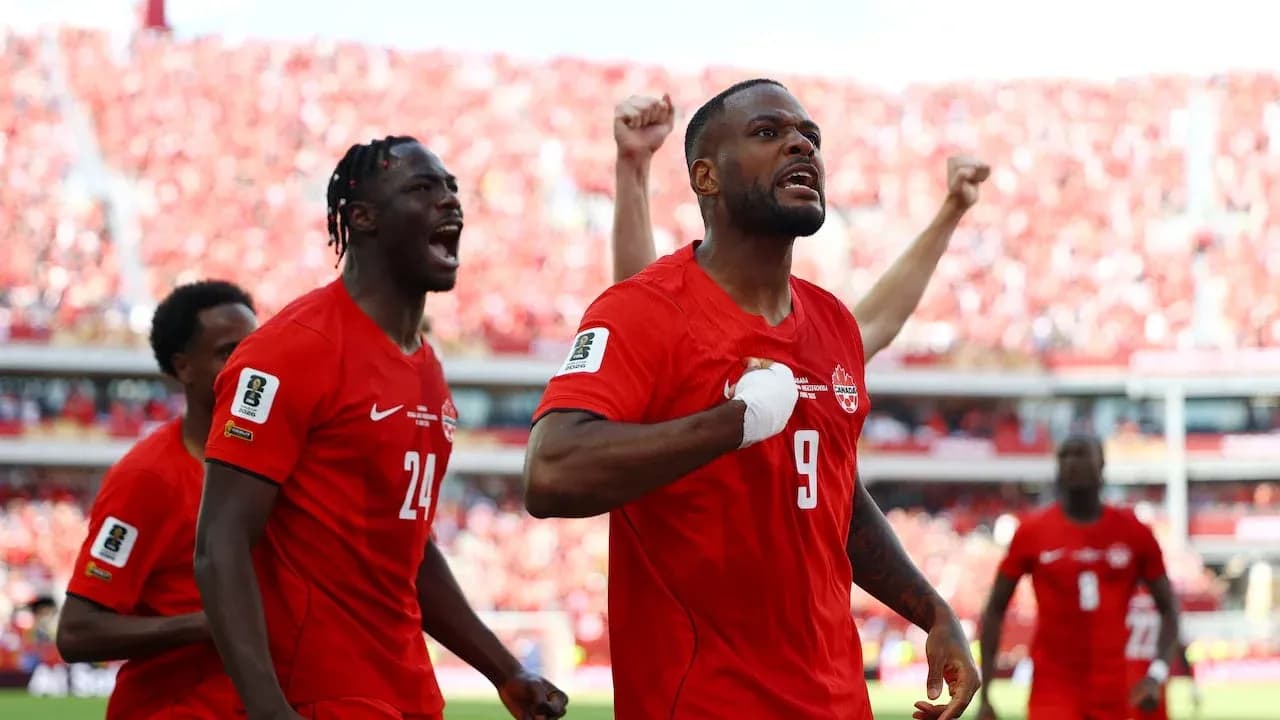
Canada’s equaliser at 78 minutes, finished by Cyle Larin from a Promise David assist, was a tactical validation of Marsch’s substitutions. Larin (IN) had entered for Tani Oluwaseyi (OUT) at 76 minutes, giving Canada a penalty-box specialist to attack the stream of crosses and cut-backs their wide dominance was generating. The move that led to the goal encapsulated the second-half pattern: sustained Canadian possession, wide progression, and a high-volume presence in the box, eventually breaking down a tiring Bosnia & Herzegovina block.
From a defensive standpoint, both goalkeepers had relatively modest but distinct workloads. Maxime Crépeau (Canada) made 2 saves against 3 shots on goal, while Nikola Vasilj (Bosnia & Herzegovina) made 1 save against 4 shots on goal. The goals prevented metric at -0.26 for both teams indicates that each goalkeeper conceded slightly more than the xG of the shots they faced, suggesting neither produced a standout overperformance in shot-stopping terms. Canada’s four blocked shots to Bosnia & Herzegovina’s one further highlight how Canada defended higher and more aggressively, often cutting out attempts before they reached Crépeau.
The late introduction of Jonathan Osorio (IN) for Stephen Eustaquio (OUT) at 90 minutes was a final attempt by Canada to add another forward-thinking midfielder to chase a winner, but the structure of the game by then was set: Bosnia & Herzegovina entrenched near their box, Canada probing but unable to turn territorial control into a decisive second goal.
Statistically, the draw sits slightly below what Canada’s chance creation might have merited. Their 1.25 xG, heavy box occupation, and 9-4 corner advantage suggest a performance that, on another day, could produce more than one goal. Bosnia & Herzegovina’s 0.98 xG from limited possession reflects a relatively efficient counter-attacking display, especially in the first half. The 1-1 outcome therefore reflects a tactical balance: Canada’s structural dominance and improved second-half adjustments offset by Bosnia & Herzegovina’s compactness, physical edge, and early exploitation of transitional spaces.