AC Milan vs Atalanta: Tactical Clash in Serie A Thriller
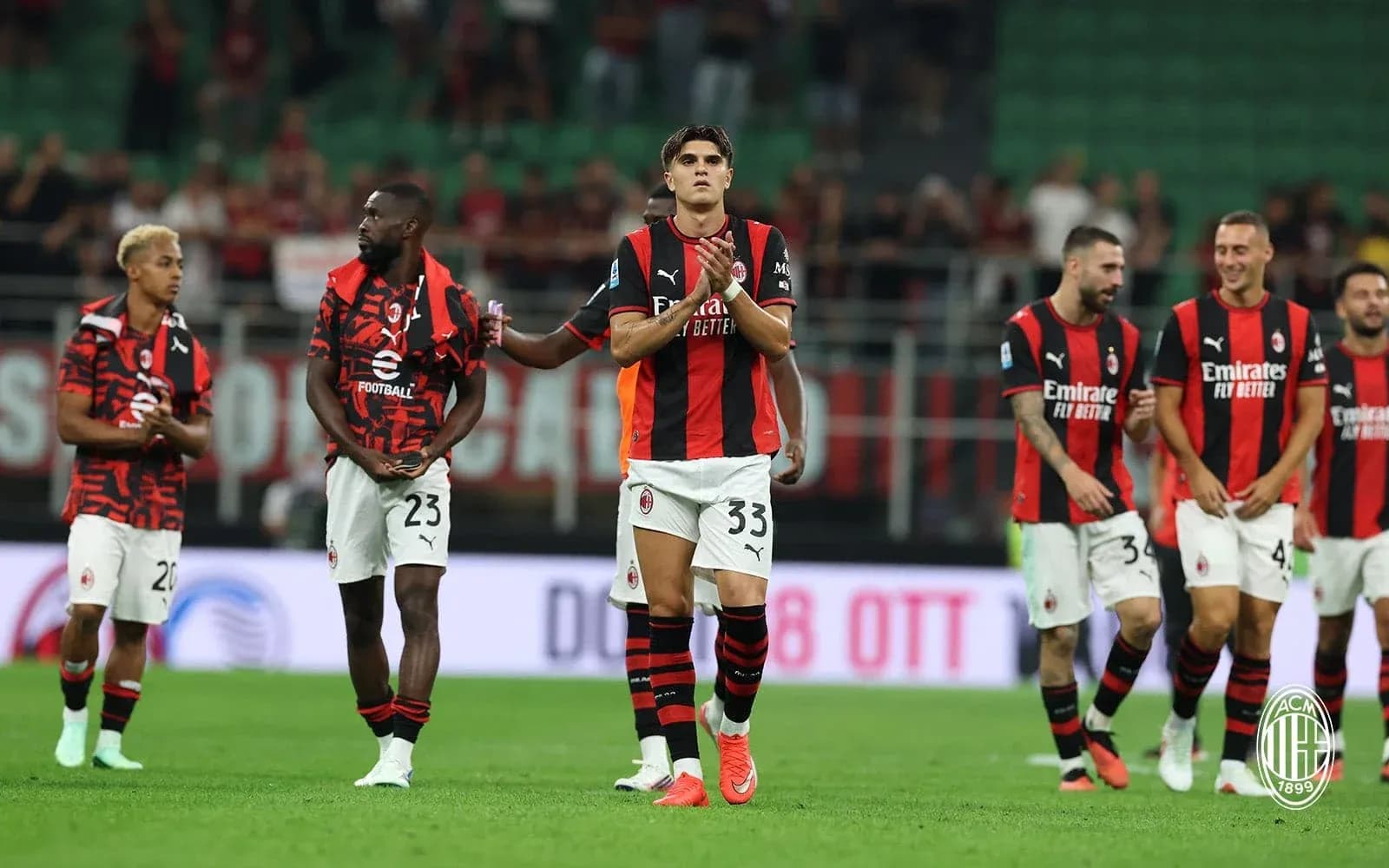
Under the grey May sky at San Siro, AC Milan and Atalanta produced a five‑goal thriller that felt less like a routine league fixture and more like a stress test of their tactical identities. In a Serie A season where both sides have chased Europe with contrasting rhythms, this 3-2 away win for Atalanta compressed their stories into 90 breathless minutes.
Heading into this game, Milan sat 4th on 67 points with a goal difference of 18, their overall record of 19 wins, 10 draws and 7 defeats built on a sturdy defensive base: only 32 goals conceded in 36 matches. At home, they had been solid rather than spectacular, scoring 24 and conceding 19 at Stadio Giuseppe Meazza. Atalanta arrived in 7th on 58 points, with a goal difference of 16 and an almost mirrored statistical profile: 50 goals for, 34 against overall, and a perfectly balanced attacking output of 25 goals both at home and on their travels.
I. The Big Picture – Structures and Seasonal DNA
The formations told their own story. Massimiliano Allegri stayed loyal to Milan’s season-defining 3-5-2, the shape he has used in 32 league matches. M. Maignan anchored a back three of K. De Winter, M. Gabbia and S. Pavlovic. Ahead of them, a broad midfield band of A. Saelemaekers, R. Loftus-Cheek, S. Ricci, A. Rabiot and D. Bartesaghi tried to stretch Atalanta horizontally, while S. Gimenez and Rafael Leão formed a fluid front two.
Raffaele Palladino mirrored the three-at-the-back concept but with a sharper attacking tilt in his preferred 3-4-2-1, used 32 times this season. M. Carnesecchi sat behind a defensive trio of G. Scalvini, I. Hien and S. Kolasinac. The wing-backs D. Zappacosta and N. Zalewski flanked the double pivot of M. De Roon and Ederson, with C. De Ketelaere and G. Raspadori floating behind the spearhead N. Krstovic.
Both teams came in with almost identical attacking averages overall: 1.4 goals per game for Milan and 1.4 for Atalanta. Defensively, Milan’s edge was clear: they had conceded 0.9 goals per game overall, compared to Atalanta’s 0.9 but with a notable away average of 1.1 goals against. This was always likely to be a contest between Milan’s structure and Atalanta’s layered attacking rotations.
II. Tactical Voids – Absences and Discipline
The team sheets were marked by high-profile absentees. For Milan, L. Modric (broken cheekbone), C. Pulisic (muscle injury) and F. Tomori (suspended after a red card) were all missing. The absence of Modric removed a deep-lying conductor, forcing more creative responsibility onto Ricci and Rabiot. Without Pulisic, Allegri lost one of his most incisive ball carriers and a player who had contributed 8 league goals and 3 assists, albeit with the blemish of one missed penalty this season. Tomori’s suspension pushed Gabbia into a central leadership role in the back three.
Atalanta were without L. Bernasconi and B. Djimsiti, the latter a significant loss in terms of defensive experience and aerial presence. That absence made Scalvini and Hien’s performance even more critical against Milan’s mobile front pair.
Disciplinary patterns added another layer of risk. Milan’s yellow-card profile shows a pronounced late-game spike: 25.42% of their bookings have come between 76-90 minutes, part of a broader trend of emotional games that also includes three red cards spread across 16-30, 46-60 and 91-105 minutes. Atalanta, meanwhile, are prone to early and late extremes with reds: 50.00% of their dismissals in 0-15 minutes and 50.00% in 76-90. In a match that stayed on a knife-edge until the end, both sides had to walk that disciplinary tightrope.
III. Key Matchups – Hunter vs Shield, Engine Room Battles
The headline duel was always going to be “Hunter vs Shield”: N. Krstovic against Milan’s defence. Krstovic arrived as one of Serie A’s most productive forwards, with 10 goals and 5 assists in 32 appearances, underpinned by 74 shots and 33 on target. His game is built on relentless duels – 258 contested, 113 won – and clever movement. Up against a Milan side conceding only 0.9 goals per game overall and 1.1 at home, his ability to pin Gabbia or pull De Winter into wide channels was central to Atalanta’s attacking plan. In this 3-4-2-1, Krstovic’s role as the reference point allowed De Ketelaere and Raspadori to attack the half-spaces, testing Milan’s communication in their back three.
On the other side, Rafael Leão was Milan’s own “Hunter”, even if operating from a slightly withdrawn role in a front two. With 9 goals and 3 assists in 28 league appearances, plus 45 shots and 24 on target, he remains Milan’s most dangerous individual. His dribbling volume – 55 attempts, 25 successful – and 20 key passes framed him as the one player most capable of unpicking Atalanta’s back line, particularly attacking the outside shoulder of Scalvini or driving into the gap behind Zappacosta.
The “Engine Room” battle pitted Milan’s central trio of Loftus-Cheek, Ricci and Rabiot against De Roon and Ederson. Milan’s season-long tilt towards control is reflected in 15 clean sheets overall and a relatively low 7 matches failing to score. They prefer to build patiently through the middle, with Ricci as the metronome and Rabiot shuttling vertically. Atalanta’s double pivot, by contrast, is about disruption and quick verticality: win, play forward, and let De Ketelaere dictate.
De Ketelaere’s creative numbers this season are elite: 5 assists, 60 key passes and 100 dribble attempts with 49 successes. He is Atalanta’s primary “lock-picker”, the player Palladino trusts to find the seam between Milan’s midfield and defence. His duel with Rabiot and Ricci – whether he could receive between the lines or be forced backwards – was always going to tilt the tactical balance.
IV. Statistical Prognosis and Tactical Verdict
From a statistical lens, this fixture always had goals in it. Both sides averaged 1.4 goals for per game overall; Atalanta’s away defence, conceding 1.1 on their travels, looked more vulnerable than Milan’s home record of 1.1 goals against. Milan’s 7 home clean sheets suggested they could clamp down, but Atalanta’s 6 away clean sheets hinted at a side comfortable in hostile environments.
Milan’s penalty record – 6 from 6 this season – underlined their ruthlessness when chances come from the spot, while Atalanta’s perfect 3 from 3 added to their sense of composure in big moments. There was no margin here for lapses in the box.
The final 3-2 scoreline to Atalanta fits the statistical and tactical contours rather than defying them. Two well-matched attacks, both with 50 league goals, found ways to stress defences that, while generally solid, have shown just enough fragility away (Atalanta) and at home (Milan) to allow for volatility. Atalanta’s layered front three, anchored by Krstovic and orchestrated by De Ketelaere, ultimately exploited the spaces that Milan’s back three and stretched midfield could not fully close.
Following this result, the narrative is clear: Milan remain a side whose structural solidity and 3-5-2 identity give them a high floor but, without Modric, Pulisic and Tomori, a slightly lower ceiling in high-intensity shootouts. Atalanta, meanwhile, reaffirm themselves as one of Serie A’s most tactically mature away teams, capable of bending a game to their attacking strengths and surviving the chaos their own ambition inevitably creates.