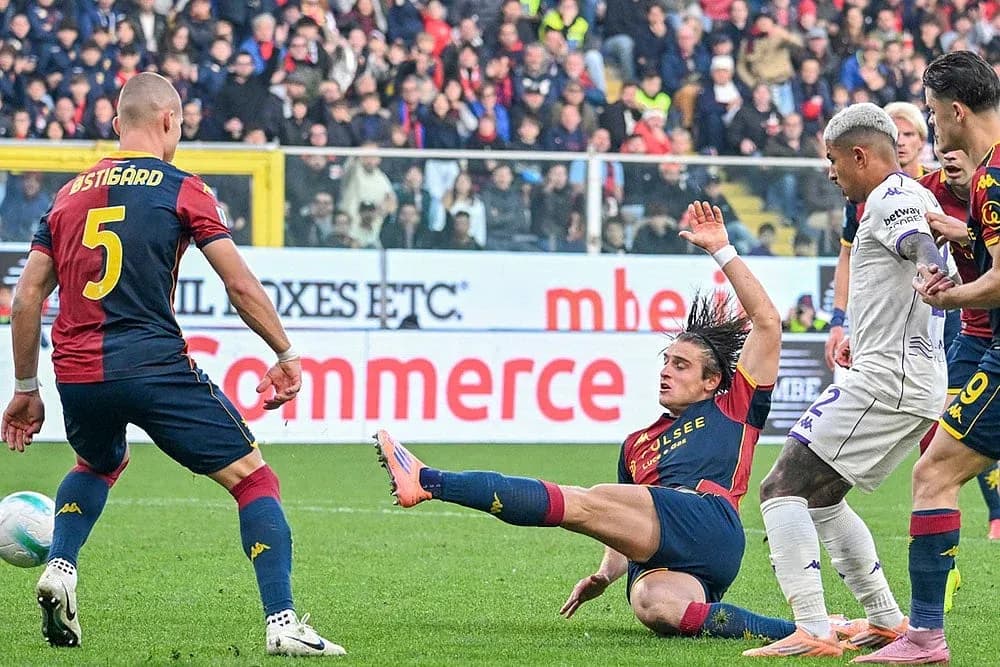
Fiorentina and Genoa Battle to a Goalless Draw in Serie A
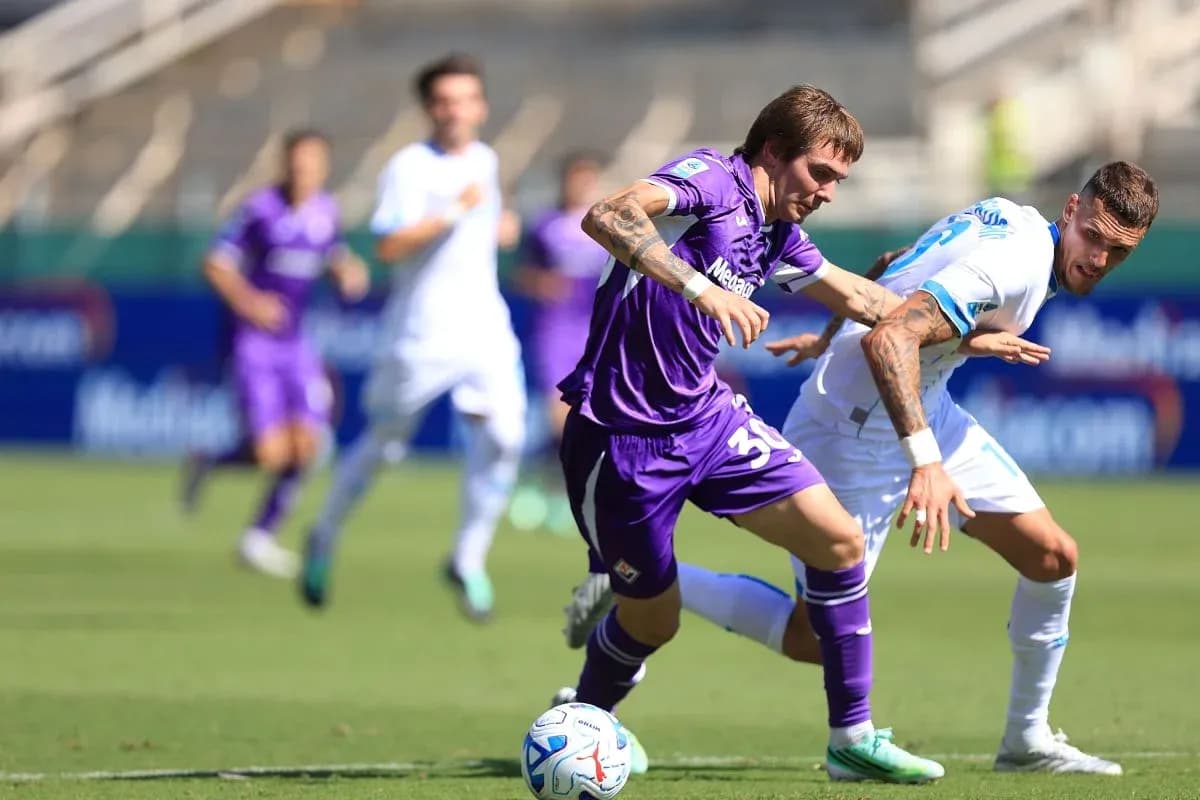
Stadio Artemio Franchi felt like a stage waiting for a twist that never quite arrived. Fiorentina and Genoa, separated by a slim three‑point gap and sitting 15th and 14th respectively heading into this game, produced a 0‑0 that said as much about their seasons as any scoreline could. It was Round 36 of Serie A, a meeting of two sides whose 2025 campaign has been defined by tight margins, structural caution and the constant hum of relegation anxiety rather than the roar of European ambition.
Overall, Fiorentina came into the fixture with 38 points, a goal difference of -11 (38 scored, 49 conceded) across 36 matches. At home they had been almost mathematically balanced: 18 played, 4 wins, 8 draws, 6 defeats, with 20 goals for and 20 against, averaging 1.1 goals both scored and conceded at Stadio Artemio Franchi. Genoa, slightly better off on 41 points and a goal difference of -8 (40 for, 48 against), carried an away profile that mirrored their season’s pragmatism: on their travels they had 4 wins, 7 draws and 7 defeats, with 19 goals scored and 24 conceded, an away average of 1.1 goals for and 1.3 against.
Into that statistical equilibrium stepped two coaches with clear blueprints. Paolo Vanoli lined Fiorentina up in a 4‑3‑3, a structure that has been his most used shape this season, and it showed in how naturally the side occupied their zones. David de Gea was the anchor in goal, shielded by a back four of Dodo, Marin Pongračić, Luca Ranieri and Robin Gosens. In front of them, Rolando Mandragora, Nicolò Fagioli and Cher Ndour formed a midfield triangle designed to control rhythm rather than constantly punch forward. The front line – Fabiano Parisi wide, Riccardo Braschi central and Manor Solomon cutting in from the flank – suggested a team leaning on movement and interchanging roles more than a classic target man.
Across from them, Daniele De Rossi doubled down on Genoa’s season-long identity with a 3‑4‑2‑1. Justin Bijlow stood behind a trio of centre‑backs: Alessandro Marcandalli to the right, Leo Østigård central and Nils Zatterström to the left. The wing‑back band of M. E. Ellertsson and Aarón Martín flanked a central pair of Amorim and Morten Frendrup, with J. Ekhator and Vitinha supporting lone striker Lorenzo Colombo. It was a shape built for compression: five in the last line when defending, quick outlets down the flanks when the ball was turned over.
The tactical voids were significant on both sides. Fiorentina were without their leading scorer M. Kean, absent through a calf injury, stripping Vanoli of the one player in his squad who had managed 8 league goals overall and given them a vertical threat in behind. Without Kean’s penalty‑box presence and his 75 shots overall, Fiorentina’s front three became more about circulation than incision.
Genoa’s absences were even more structurally disruptive. T. Baldanzi, Junior Messias and B. Norton‑Cuffy were all missing, as were M. Cornet and S. Otoa. Baldanzi’s absence removed a creative link between midfield and attack, while Messias’ muscle injury deprived De Rossi of a dribbler who can unbalance a block from the half‑spaces. Norton‑Cuffy’s thigh injury limited the wing‑back rotation, placing a heavier physical and creative load on Aarón Martín and Ellertsson to provide width and delivery.
Disciplinary trends hovered over the contest even if the match itself did not explode into chaos. Fiorentina’s season card map shows a clear late‑game spike: 25.00% of their yellow cards have arrived between 76‑90 minutes, with both of their red cards overall also coming in that same 76‑90 window. Genoa, by contrast, have spread their yellows more evenly but carry a curious red‑card profile: one in the opening 0‑15 minutes, one between 46‑60, and another in 91‑105, each accounting for 33.33% of their total reds. It framed a narrative in which Fiorentina tend to fray late under pressure, while Genoa’s occasional dismissals often come in transitional or restart phases of the match.
Within that context, the “Hunter vs Shield” duel was blunted by the team sheets. Fiorentina’s most prolific finisher, Kean, watched from the stands. Genoa’s primary creative outlet in wide areas, Aarón Martín, did start, bringing into play his 5 assists overall and 60 key passes across the season. His duel with Dodo and Braschi down Fiorentina’s right was a constant tactical undercurrent: could Genoa’s best crosser and set‑piece taker find Colombo against a back line anchored by Pongračić and Ranieri?
Pongračić, who has accumulated 11 yellow cards overall and blocked 23 shots this season, again embodied Fiorentina’s defensive edge. His profile – 233 duels overall with 113 won, and 34 interceptions – tells the story of a defender who steps out aggressively to meet danger. Ranieri, with 8 yellows overall and 11 blocked shots, mirrored that front‑foot approach on the left. Together they formed a central pairing more comfortable defending space than sitting deep, which suited Genoa’s preference for counter‑attacking patterns rather than sustained possession.
The “Engine Room” battle was equally compelling on paper. For Genoa, Ruslan Malinovskyi – one of Serie A’s most carded midfielders with 10 yellows overall – started on the bench but loomed as a potential second‑half enforcer and playmaker. His season numbers, 6 goals and 3 assists overall with 37 key passes, mark him as Genoa’s long‑range threat and set‑piece architect. Opposite him, Mandragora and Fagioli were tasked with both screening transitions and feeding Solomon and Parisi between the lines. Cher Ndour’s inclusion as the third midfielder gave Fiorentina a more physically imposing central unit, capable of contesting second balls against Frendrup and Amorim.
From a statistical prognosis standpoint, the goalless outcome fits the underlying data almost too neatly. Heading into this game, Fiorentina had failed to score in 11 of their 36 league matches overall, while Genoa had failed to score in 14 overall. Both teams, however, had also collected 9 clean sheets each overall, with Fiorentina’s defensive record at home – 20 conceded in 18, an average of 1.1 – almost identical to Genoa’s away defensive average of 1.3 goals conceded. Neither side had missed a penalty all season: Fiorentina had converted all 6 of their spot‑kicks overall, Genoa all 5 overall, but in a match that produced no goals, that ruthlessness from 12 yards remained theoretical.
What emerged instead was a stalemate defined by structure and risk management. Fiorentina’s 4‑3‑3 provided width and passing angles but lacked a true penalty‑area focal point in Kean’s absence, forcing Solomon and Parisi to drift inside into traffic. Genoa’s 3‑4‑2‑1 compressed the central lanes and trusted Aarón Martín and Ellertsson to carry them upfield, but without Baldanzi and Messias there was a shortage of final‑third invention behind Colombo.
Following this result, the table barely shifts, but the tactical story is clear. Fiorentina and Genoa are sides whose seasonal DNA – modest attacking averages, negative goal differences, a shared reliance on defensive structure – naturally gravitates toward games like this. On another day, a set piece from Aarón Martín or a late surge from Malinovskyi might have broken the deadlock. Here, though, the numbers and the narrative aligned: two mid‑table teams, finely balanced, cancelling each other out in Florence.