LAFC II vs Real Monarchs: A Measuring Stick Clash
Under the lights at Titan Stadium, Los Angeles FC II and Real Monarchs met in a clash that felt more like a measuring stick than a simple group-stage fixture in MLS Next Pro. Heading into this game, both sides carried volatile profiles: high-scoring, defensively fragile, and with league tables that suggested promise but also exposed fault lines.
For LAFC II, the standings painted a curious picture. In the Pacific Division, they sat 3rd with 16 points from 10 matches, their overall goal difference at -2 from 18 goals for and 20 against. In the broader Eastern Conference context, that same record translated to 6th place, a team squarely in the promotion conversation but still searching for balance. At home, they had been sharp: 4 matches, 3 wins, 1 defeat, with 7 goals scored and only 4 conceded. Their season statistics added a twist: overall, they had actually scored 19 goals and conceded 22, averaging 1.9 goals for and 2.2 against per game. The DNA was clear: expansive, brave, but exposed.
Real Monarchs arrived as an equally paradoxical opponent. In the Pacific Division they were 5th with 10 points from 8 games, also on a -2 goal difference, with 13 goals scored and 15 conceded overall. In the Eastern Conference table, that same record dropped them to 10th, a reminder that their four early wins had been followed by a brutal “LLLLW” form line. On their travels, they had played 3 times, winning 1 and losing 2, with 6 goals scored and 5 conceded. Their season averages mirrored LAFC II in attack—1.9 goals for per match—but with a slightly tighter defence at 1.9 goals against.
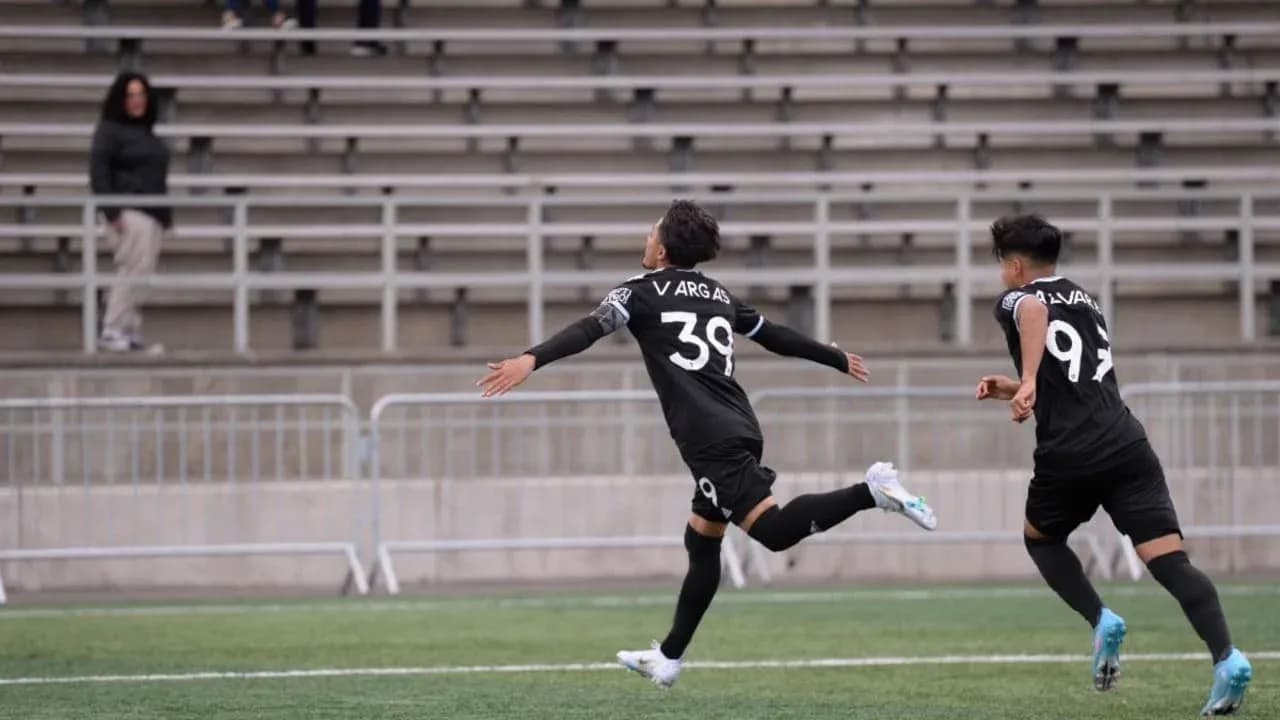
The fixture itself, finishing 3–1 in favour of LAFC II (2–1 at half-time), felt like a crystallisation of those trends rather than a surprise. LAFC II leaned into their attacking instincts, while Real Monarchs’ structural frailties resurfaced just when they needed resilience.
I. The Big Picture: How the Profiles Met on the Night
From the opening whistle, the match carried the tempo of two sides more comfortable going forward than sitting in. LAFC II’s lineup underscored that intent. With C. Carter anchoring the side, a spine formed around J. Santiago, K. Nielsen, and E. Diaz at the back, and a creative cluster of S. Nava, M. Evans, J. Machuca, and M. Aiyenero supporting the front line. At the tip, T. Mihalic’s presence offered a focal point for vertical passes and quick combinations.
Real Monarchs, under Mark Lowry, set up with M. Kerkvliet as the defensive anchor and a back line that included G. Villa, J. J. Arias, and G. Calderon. Ahead of them, the likes of F. Ewald, Lineker Rodrigues, and I. Amparo were tasked with linking transitions, while A. Riquelme and V. Parker offered outlets higher up.
Heading into this game, LAFC II’s biggest attacking home output had been a 3–1 win; they matched that benchmark again here, reaffirming their ability to hit a three-goal ceiling at Titan Stadium. Real Monarchs, whose standout away win was a 0–5 demolition, never found that ruthless transition rhythm; instead, they resembled the side that had lost 3–1 away in their heaviest road defeat.
II. Tactical Voids and Discipline: Where the Edges Frayed
There were no explicit absentees listed, so both coaches effectively worked with their available core. The tactical voids, then, were less about personnel and more about structure and discipline.
LAFC II’s season card profile hinted at a side that lives on the edge. Their yellow cards cluster most heavily between 46–60 minutes, with 27.78% of their cautions arriving just after half-time, and they have a 100.00% red-card incidence in that same 46–60 window. This suggests a team that emerges from the break with aggression that can spill into recklessness. In a match where they led 2–1 at the interval, game management in that period would have been critical: protecting the lead without inviting chaos.
Real Monarchs, meanwhile, show their own disciplinary spikes. Only 5.26% of their yellows arrive in the opening 15 minutes, but from 46–60 they jump to 26.32%, and from 76–90 they still carry a hefty 21.05%. They also have a 100.00% red-card concentration in the 31–45 range. That pattern speaks to emotional swings: frustration before half-time, fatigue and chasing the game late on. In a contest where they trailed at the break and then saw the gap widen, those tendencies would have made a controlled comeback even harder.
III. Key Matchups: Hunter vs Shield, and the Engine Room
Without individual scoring charts, the “hunter” for LAFC II is best understood as a collective. Overall, they average 1.9 goals per game, but at home they sit at 1.8, a consistent, repeatable threat. Against that, Real Monarchs’ defensive “shield” on their travels concedes 1.7 goals per match. On paper, that duel promised a finely balanced struggle: LAFC II’s home firepower against a road defence that, while not elite, had been more compact than their home record.
The 3–1 full-time scoreline shows that LAFC II’s attacking mechanisms overwhelmed that shield. Players like S. Nava and M. Evans, operating between the lines, likely found pockets around Real Monarchs’ central block, pulling markers out of shape and creating shooting or combination lanes for Mihalic and Aiyenero. The presence of E. Ponciano and J. Terry added ballast, allowing full-backs such as J. Santiago and K. Nielsen to step into higher zones and compress the pitch.
In midfield, the “engine room” battle pitted LAFC II’s carriers and connectors—Machuca, Nava, Evans—against Real Monarchs’ central trio of F. Ewald, Lineker Rodrigues, and I. Amparo. Heading into this game, Real Monarchs had failed to score in 3 of their 8 league matches, including 2 at home and 1 away, which suggested that when their midfield is overrun, the supply line to Parker and Riquelme dries up quickly. In this fixture, chasing a deficit away from home, that engine room was forced to cover more ground, and LAFC II capitalised by keeping the ball in advanced zones and forcing Monarchs to defend facing their own goal.
IV. Statistical Prognosis and Tactical Verdict
From a statistical lens, this match always leaned towards volatility rather than control. LAFC II had yet to keep a clean sheet all season—0 in 10 matches—while Real Monarchs had only 1 clean sheet overall. Both sides averaged 1.9 goals scored per game, and both conceded at least 1.9 on average. That cocktail almost guarantees a game shaped by attacking surges rather than defensive lockdowns.
A notional xG model built from these profiles would have forecast a match with multiple high-quality chances on both ends, but with LAFC II’s home advantage and more explosive home attacking average (1.8 goals for, 1.0 against at the venue before this game), the edge always tilted towards the hosts. Real Monarchs’ away record—6 goals for and 5 against in 3 matches—suggested they would find a goal, but their inability to sustain defensive concentration over 90 minutes made a clean escape unlikely.
Following this result, LAFC II reinforced their identity: a high-tempo, front-foot side whose attacking framework, powered by a deep bench including options like S. Kaplan, E. Rodriguez, and T. Babineau, can overwhelm visiting defences. Real Monarchs, despite the talent of Kerkvliet, Villa, and Calderon at the back and the creative promise of Lineker Rodrigues and Riquelme, remain a team caught between two selves: the ruthless away side that once won 0–5, and the brittle unit that now too often concedes in clusters.
Tactically, this 3–1 serves as a warning shot to the rest of the conference: LAFC II at Titan Stadium are not just entertaining—they are increasingly efficient at turning their attacking chaos into controlled, winning margins.