Real Madrid vs Oviedo: La Liga Clash on May 14, 2026
Estadio Santiago Bernabéu sets the stage on 14 May 2026 for a La Liga meeting that carries very different stakes for the two clubs. Real Madrid, second in the table with 77 points, are still driving to secure the best possible finish and maintain Champions League momentum. Oviedo, rooted to the bottom in 20th on 29 points, arrive in Madrid fighting for survival and in urgent need of an unlikely result.
Context and form
In the league, Real Madrid’s position is built on one of the division’s most dominant records. They have 24 wins from 35 matches, with only 6 defeats and a goal difference of +37 (70 scored, 33 conceded). Their recent league form reads “LWDWD”, a slight wobble by their own standards but still a run that keeps them firmly in the title conversation.
At the Bernabéu, Madrid have been formidable: 14 wins, 1 draw and just 2 losses from 17 home matches, scoring 39 and conceding only 14. That is an average of 2.3 goals scored and 0.8 conceded per home game across all phases, underlining the scale of the task facing the visitors.
Oviedo’s season has been the mirror opposite. In the league they have just 6 wins from 35, with 18 defeats and a goal difference of -28 (26 for, 54 against). Their form line “DLLDW” hints at slight recent resistance but not enough to pull them clear of the relegation zone. Away from home they have lost 11 of 17, winning only 2 and drawing 4, with 17 goals scored and 37 conceded – an average of 1.0 scored and 2.2 conceded per away match across all phases.
Tactical outlook: Real Madrid
Across all phases this season, Real Madrid have shown tactical flexibility. Their most-used shape is a 4-4-2 (16 matches), supplemented by 4-2-3-1 (9 matches) and 4-3-3 (6 matches). That mix suggests a side comfortable alternating between a double-striker system and a lone centre-forward supported by a strong line of attacking midfielders.
The numbers support a high-control, front-foot approach. Madrid average 2.0 goals per game overall and have kept 12 clean sheets. They have failed to score in only 4 of 35 league fixtures, and their biggest home win (5-1) and biggest away win (1-4) indicate they can overwhelm opponents both through sustained pressure and transition.
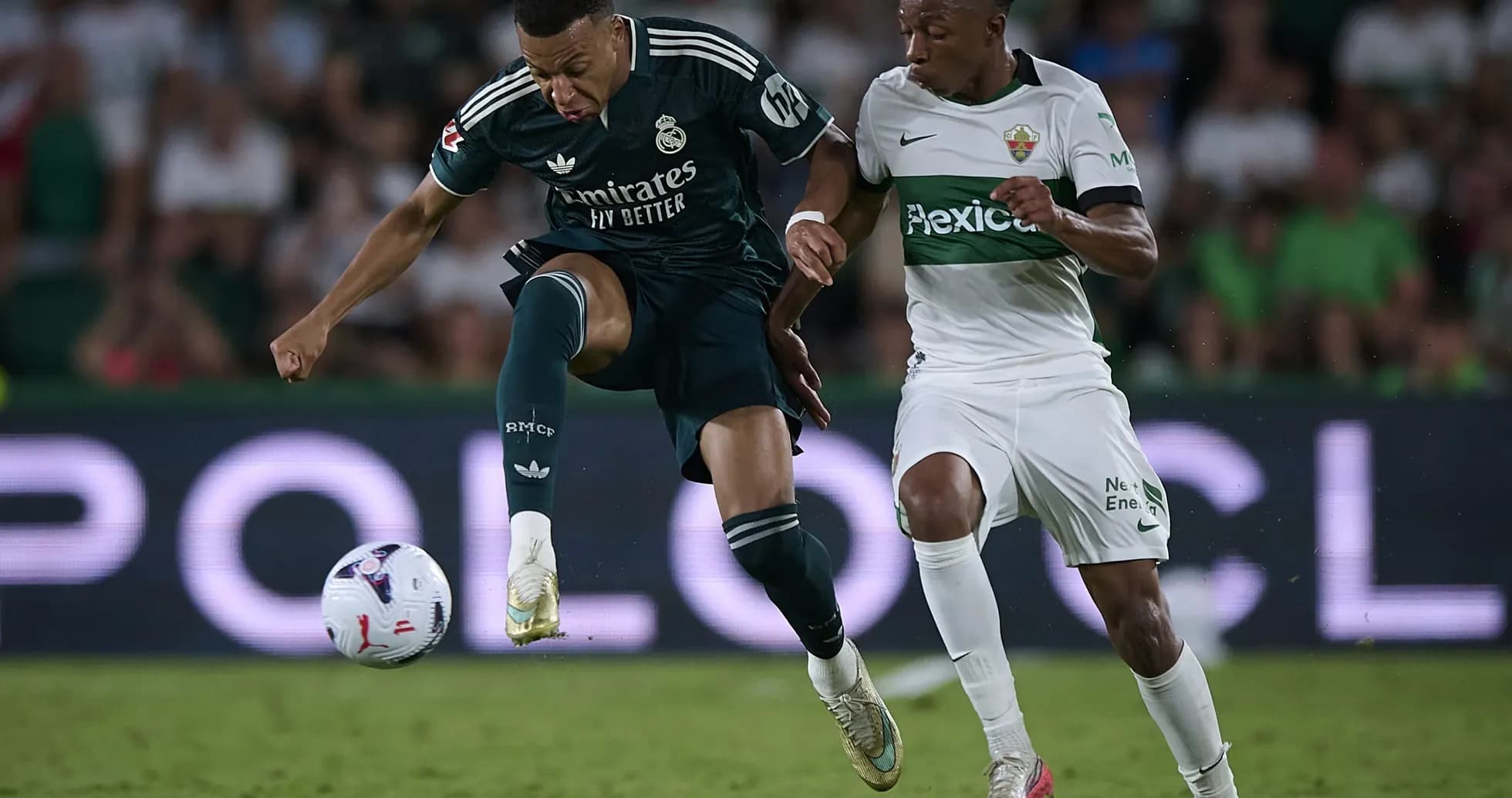
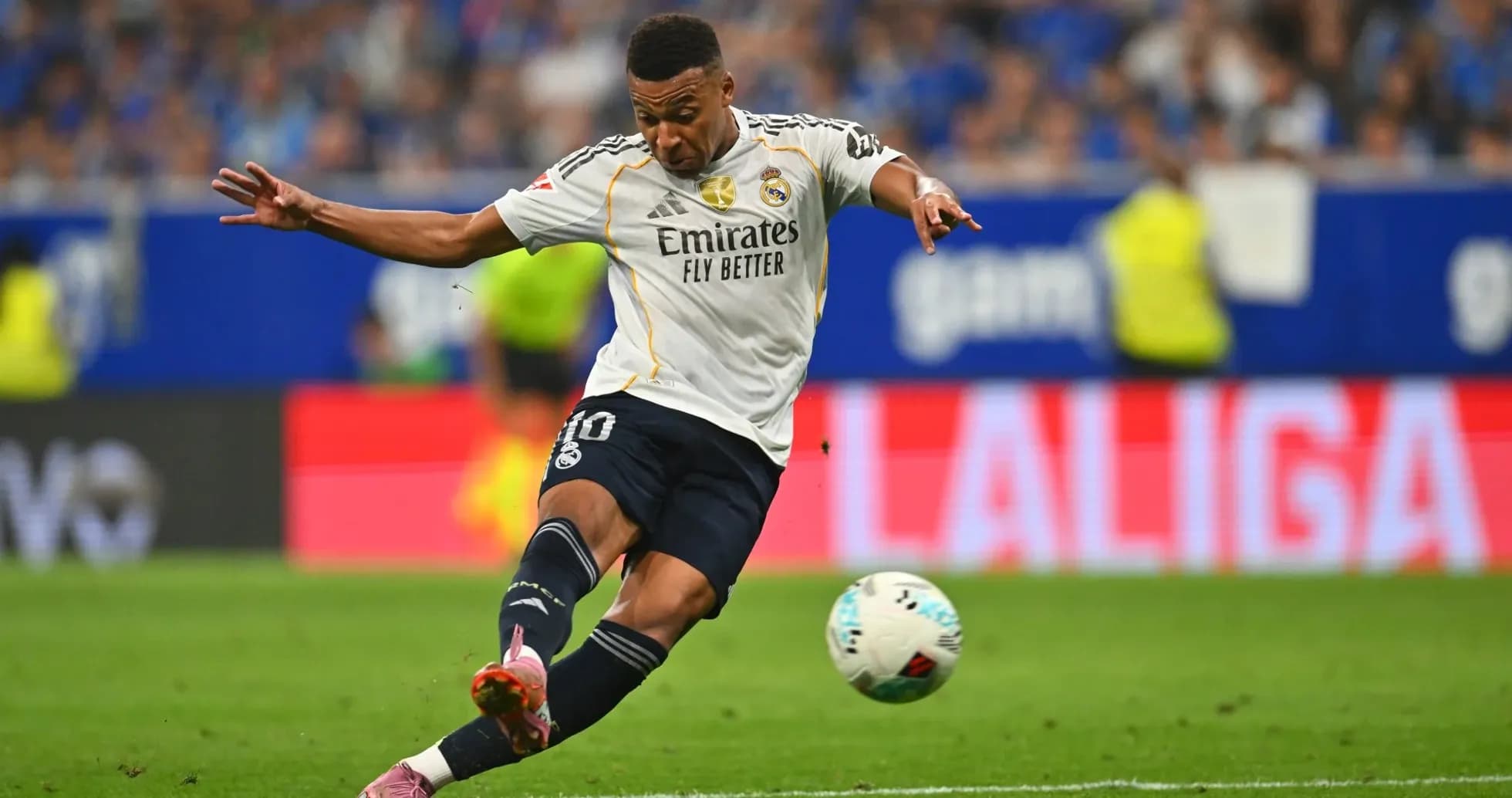
Kylian Mbappé is the headline figure. In the league he has 24 goals and 4 assists in 28 appearances, with 100 shots (61 on target) and a 7.6 rating. His volume of dribbles (140 attempts, 76 successful) and 63 key passes underline his dual threat: he stretches back lines vertically but also links play and creates. Madrid’s penalty stats show 12 scored from 12 team penalties; Mbappé individually has 8 penalties scored and 1 missed, so while he is prolific from the spot, his record is not flawless.
On the opposite flank or in a hybrid wide-forward role, Vinícius Júnior brings relentless ball-carrying and chaos. He has 15 goals and 5 assists in 34 appearances, with 72 shots (45 on target) and 66 key passes. His dribbling numbers (189 attempts, 86 successful) and 80 fouls drawn make him a constant tactical problem for defences that sit deep and narrow, as Oviedo are likely to do.
In possession, a 4-4-2 could morph into a 4-2-4 or 4-2-3-1, with both Mbappé and Vinícius pinning full-backs and centre-backs, opening half-spaces for late midfield runs. Madrid’s relatively low goals-against figures (0.9 per game across all phases) suggest that even when they commit numbers forward, their rest defence is usually well-structured.
Injuries, however, complicate the selection picture. Confirmed absentees include Eder Militao and Ferland Mendy (both muscle injuries), Fede Valverde (head injury), Rodrygo (knee), and Arda Güler (muscle), while Dani Ceballos is out by coach’s decision. Dani Carvajal (toe), D. Huijsen (illness) and Mbappé himself (muscle) are all listed as questionable.
The likely consequence is a reshuffled back line and possible minutes management for Mbappé, even if he is passed fit. Without Militao and Mendy, Madrid may lean on alternative centre-back and left-back options, potentially encouraging Oviedo to target crosses and set pieces. The midfield will also need to adapt without Valverde’s energy and balance, perhaps pushing Madrid towards a more possession-heavy, less box-to-box approach.
Tactical outlook: Oviedo
Oviedo’s season-long statistical profile points towards a reactive, containment-focused side, especially away from home. Their most common formation is 4-2-3-1 (24 matches), with occasional use of 4-3-3 and 4-4-2. The 4-2-3-1, with a double pivot, is well-suited to forming a low-to-mid block at the Bernabéu, trying to congest central areas and force Madrid wide.
Across all phases, Oviedo average just 0.7 goals per game (26 in 35) and have failed to score in 18 matches. That lack of cutting edge is offset somewhat by a surprisingly high clean-sheet count: 10 overall, including 9 at home. Away, however, they have only 1 clean sheet, and their biggest away defeat (4-0) hints at vulnerability when the game opens up.
Defensively, Oviedo’s card distribution suggests a team that increasingly resorts to fouls as matches progress. They accumulate a high proportion of yellow cards between minutes 31-75 and a notable number of reds late in games. That is relevant against Madrid’s dribblers: repeated emergency defending against Vinícius and Mbappé could lead to disciplinary issues and space from set pieces.
Team news is another concern. B. Domingues is out with a knee injury, while J. Lopez and K. Sibo are suspended after red cards. E. Bailly and L. Dendoncker are both questionable through injury. Losing Lopez and Sibo reduces defensive depth and flexibility, particularly in midfield screening and full-back rotation. If Bailly and Dendoncker do not make it, Oviedo’s ability to maintain a compact, physically robust block for 90 minutes will be seriously tested.
Given their away record (2 wins, 4 draws, 11 losses; 17 scored, 37 conceded), Oviedo are likely to sit very deep, compress the central lane, and try to break sporadically. The problem is that their own attacking numbers do not suggest they can consistently threaten on the counter, especially if they struggle to escape Madrid’s press.
Head-to-head
The recent competitive history between the sides in La Liga is limited in the data provided but emphatic in Madrid’s favour. The only listed meeting is the 0-3 result at Estadio Nuevo Carlos Tartiere on 24 August 2025, where Oviedo were the hosts and Real Madrid the away side. Real Madrid won 0-3 in regular time.
With that as the only competitive head-to-head in the dataset, the record stands at:
- Real Madrid wins: 1
- Oviedo wins: 0
- Draws: 0
Key battles and game script
The central tactical battle is straightforward: Real Madrid’s attacking firepower and structure against Oviedo’s low block and survival instinct.
- Wide areas: Vinícius against Oviedo’s right flank looks decisive. His volume of dribbles and fouls drawn could pin Oviedo back and generate both open-play chances and set pieces.
- Central channels: If Mbappé is fit to start or feature significantly, his movement between the lines and in behind will stretch Oviedo’s centre-backs and double pivot. If he is restricted, Madrid may rely more on combination play and late midfield arrivals rather than constant depth runs.
- Set pieces: With Militao and Mendy missing, Madrid lose some aerial presence at both ends, potentially narrowing the margin on defensive set plays. Oviedo’s best route to an upset might be through dead-ball situations, especially if they can exploit any unfamiliar Madrid back-line combinations.
Madrid’s 12 clean sheets and Oviedo’s 18 blanks across all phases both point towards a pattern where the visitors struggle to create high-quality chances. If Madrid score early, Oviedo’s need to chase could expose their fragile away defence further.
The verdict
All available data tilts heavily towards Real Madrid. They are vastly superior in league position, goal difference, home form and attacking metrics, and they have already beaten Oviedo 0-3 away in this La Liga campaign.
Injuries and questionable status for key figures like Mbappé, Valverde and several defenders add some uncertainty, and Oviedo’s desperation at the bottom of the table can fuel a backs-against-the-wall performance. However, Oviedo’s away record, goal-scoring struggles, and absences of their own make a sustained resistance over 90 minutes at the Bernabéu difficult to envisage.
Logically, the most likely scenario is a Real Madrid win, with the hosts creating enough volume of chances to overcome any rotation or fitness concerns and further entrench their position near the top of La Liga, while Oviedo’s relegation fears deepen.