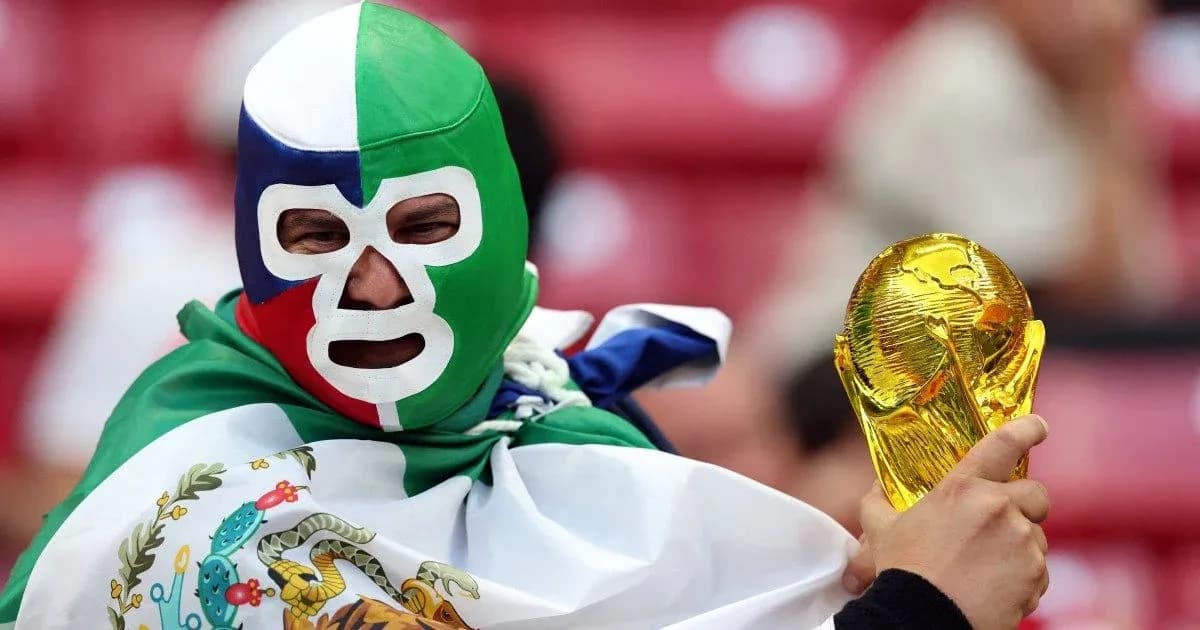
World Cup Thursday: Mexico vs South Korea and Key Matchups
The World Cup rolls into Thursday with four group games and a growing sense that this tournament is already running hot. Mexico face South Korea in the marquee clash, but the drama stretches from Atlanta to Guadalajara, from the Golden Boot race to Africa’s historic surge.
Thursday’s fixtures
The day opens in the United States and ends deep into the night in Mexico:
- Czechia vs South Africa – Atlanta Stadium, Atlanta – noon (16:00 GMT)
- Switzerland vs Bosnia and Herzegovina – Los Angeles Stadium, Los Angeles – noon (19:00 GMT)
- Canada vs Qatar – Vancouver Stadium, Vancouver – 3pm (22:00 GMT)
- Mexico vs South Korea – Guadalajara Stadium, Guadalajara – 7pm (01:00 GMT Friday)
Four games, four very different storylines. One common theme: no one wants to lose ground this early.
Mexico vs South Korea: History on Mexico’s side
Mexico and South Korea arrive with confidence and points already on the board. Both won their opening games, both have one eye on the knockout rounds. The margins now get smaller.
History leans heavily in Mexico’s favour. El Tri have beaten South Korea in both of their previous World Cup meetings, including that tense 2-1 win at Russia 2018. The numbers back that dominance up again.
Opta’s supercomputer ran 25,000 simulations of this Group A showdown. Mexico came out on top in 49.1 percent of them. South Korea won just 24.3 percent, while 26.6 percent ended level. On paper, it’s Mexico’s game to control. On the pitch, it’s a test of nerve and discipline.
Czechia vs South Africa: Clash of styles, clash of histories
Czechia and South Africa barely know each other on the international stage. They’ve met only once before, and that unfamiliarity gives this match an edge.
South Africa have built a quiet reputation as awkward opponents for European sides at World Cups. They famously beat France 2-1 on home soil in 2010 and have lost just one of their last four World Cup games against European teams.
Czechia’s record against African opposition tells a different story. Their only previous World Cup meeting with a team from the continent ended in a 2-0 defeat to Ghana. Even so, the data models back the Europeans.
Opta’s projections hand Czechia a 54.9 percent chance of victory. South Africa sit at 21.8 percent, with the draw lurking at 23.3 percent. The numbers say Czechia. South Africa’s history says: underestimate us at your peril.
Switzerland vs Bosnia and Herzegovina: First World Cup meeting, old reminders
Switzerland and Bosnia and Herzegovina share no World Cup history. Just one friendly, in Zurich in 2016, when Bosnia walked away with a 2-0 win thanks to Edin Dzeko and Miralem Pjanic.
That result lingers in the background, a reminder that Bosnia have caused them problems before. The present, though, looks different.
This time, Switzerland are the clear favourites. Opta’s 25,000 simulations show the Swiss winning 61.6 percent of the time. Bosnia prevail in only 17 percent of scenarios, with a draw in 21.4 percent. For Switzerland, this is the sort of group match they are expected to manage and win. For Bosnia, it’s a chance to rip up the script again.
Canada vs Qatar: Hosts backed by history
Canada step into a fixture that history says should suit them. Whenever a World Cup host has faced an Asian federation side, the hosts have always won.
Mexico beat Iraq in 1986. France swept past Saudi Arabia in 1998. Russia dismantled Saudi Arabia in 2018. Three meetings, three home victories.
Opta’s numbers suggest that pattern will hold. Canada win 72.9 percent of the simulations. A draw appears in 16.5 percent. Qatar are given just a 10.6 percent chance of an upset. The hosts have the crowd, the precedent and the data behind them. Qatar arrive with little to lose and everything to gain.
Golden Boot race: Messi sets the pace
The tournament’s first round has barely closed, yet the Golden Boot race already looks ferocious.
Lionel Messi sits out in front with three goals after a hat-trick in Argentina’s opening win over Algeria. He has company close behind, a chasing pack of seven players on two goals:
- Kylian Mbappe (France)
- Erling Haaland (Norway)
- Folarin Balogun (USA)
- Kai Havertz (Germany)
- Yasin Ayari (Sweden)
- Elijah Just (New Zealand)
- Harry Kane (England)
The names tell their own story: established superstars, rising forwards, and a few surprises. The pressure on every shot grows from here.
DR Congo’s historic night
Some moments stretch beyond the scoreline. DR Congo’s 1-1 draw with Portugal did exactly that.
Yoane Wissa scored the DRC’s first-ever World Cup goal, a thumping header in Houston that cancelled out Joao Neves’s early strike. The opponents were ranked fifth in the world by FIFA. The stakes were huge. The Leopards were playing their first World Cup match in 52 years.
The equaliser earned them their first World Cup point and unleashed celebrations among Congolese fans in the stadium and across the globe. For a team returning to the stage after half a century, it felt like a statement: they are not just here to make up the numbers.
Colombia’s smooth start
Colombia opened their campaign with authority, beating debutants Uzbekistan 3-1 at Mexico City Stadium.
Luis Diaz ran the show. He set up Daniel Munoz for the opener, then struck Colombia’s second after the break. Uzbekistan briefly stunned them through Abbosbek Fayzullaev, but the South Americans wrestled back control and closed the game out.
The win gives Colombia early control in Group K and a platform as they attempt to return to the knockout rounds after missing the 2022 World Cup in Qatar. The performance suggested they intend to stay for a while this time.
Shock results: Cape Verde, DR Congo and Iran shake the tree
Every World Cup needs its early jolts. This one already has a few.
Cape Verde’s 0-0 draw with Spain stands out. On their World Cup debut, the Blue Sharks held one of the tournament favourites and took a historic point from their first match on this stage.
DR Congo’s draw with Portugal sits in the same bracket, a result that rippled through the tournament. Iran’s 2-2 draw with New Zealand also turned heads, not because of the scoreline alone, but because Iran were widely tipped to win their Group G opener. Instead, New Zealand refused to fold.
The big names have been warned: reputations are not winning games on their own.
Teams reflecting a changing world
Look closely at the squads and you see another story running alongside the football: diversity, identity and shared purpose.
England, France, Spain and Sweden all field teams that blend different ethnic, cultural and religious backgrounds. Several sides include both Christian and Muslim players. Spain’s teenage star Lamine Yamal and Sweden midfielder Yasin Ayari are part of a growing group of Muslim footballers shining on the biggest stage.
For some observers, these teams show what cooperation across backgrounds can look like when the stakes are high and the spotlight is unforgiving. Players celebrate, say their prayers in different ways, then embrace as teammates. The message is simple: you win as a unit or you don’t win at all.
Ronaldo’s sixth World Cup begins with frustration
Cristiano Ronaldo has stepped into rare air. At 41, he has joined Lionel Messi as one of only two players to appear at six World Cups.
The landmark, though, came with frustration. Against DR Congo, Ronaldo had chances, especially after the break, but could not find the net. On a day when Messi, Mbappe, Haaland and Kane all scored in their opening games, his blank felt even heavier.
Portugal’s 1-1 draw in their Group K opener leaves them chasing a response in their next match. Ronaldo has built a career on answering questions about his decline. Another one has just been asked.
Hydration breaks under the microscope
One of the World Cup’s new features is already under fire. FIFA’s hydration breaks, introduced to help players cope with the summer heat in the US, Canada and Mexico, have split opinion.
Critics argue the stoppages break rhythm and can flip momentum. Curacao’s match against Germany became the prime example. Curacao scored in Houston before a hydration break, only to concede twice before half-time in what ended as a 7-1 defeat.
Alan Shearer said the pause “killed their momentum”. Roy Keane likened the breaks to timeouts, the sort of interruption football has long resisted. FIFA insists the priority is player welfare, but opponents see tactical huddles and extra advertising opportunities creeping in.
The debate will not cool quickly, especially if more goals arrive in the minutes after those enforced pauses.
Africa’s record presence – and its hurdles
Away from the touchline, another landmark shapes this World Cup: a record six sub-Saharan African teams are here, more than ever before.
South Africa’s Bafana Bafana were the first to play, losing 2-0 to Mexico in the opener. Behind them stand some of the continent’s established powers. Ghana’s Black Stars, quarterfinalists in 2010, return alongside Senegal, who matched that achievement in 2002 and are back again. Ivory Coast, twice Africa Cup of Nations winners in recent years, are at their first World Cup since 2014.
Then there are the new-old stories: DR Congo and Cape Verde. The Leopards are back for the first time since 1974, when the country was known as Zaire. Many of their players were born in Europe, a pattern mirrored in Cape Verde’s squad. The Blue Sharks have already written themselves into the tournament’s history with that draw against Spain.
The road here has not been smooth. Some teams, officials and fans have battled travel and visa complications. At one stage, many supporters with African passports were told they would need to post $15,000 bonds to enter the United States. The policy was later dropped, but too late for some to rearrange plans.
One symbol from Africa’s last home World Cup has also vanished. The vuvuzela, the plastic horn whose constant buzz defined South Africa 2010, is banned this time. The soundtrack has changed, but the stakes have not.
Across the US and Canada, an African-born diaspora of more than three million people stands ready to back these six teams. With that kind of support in the stands and stories already unfolding on the pitch, the question now is not whether Africa will leave a mark on this World Cup, but how deep that mark will run.