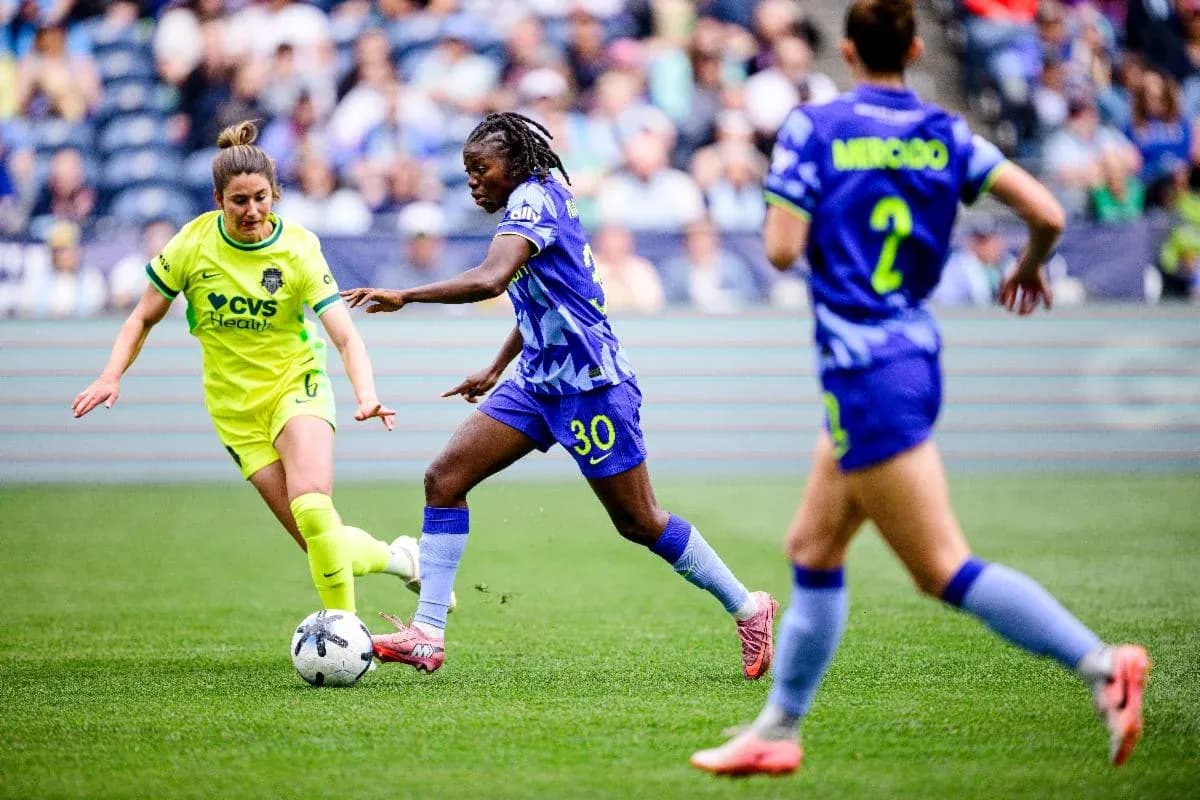
Washington Spirit Defeats Seattle Reign FC in NWSL Clash
Audi Field under the Washington lights hosted a meeting between two clubs heading in opposite directions on the NWSL Women table, and the 2–1 scoreline to Washington Spirit W felt like a distilled version of their seasons so far. The Spirit, sitting 4th with 21 points and a goal difference of 9 (18 scored, 9 conceded), came into this one as a side increasingly sure of its identity. Seattle Reign FC W, 10th with 14 points and a goal difference of -3 (10 scored, 13 conceded), arrived as a team still searching for balance.
Both managers trusted the same base structure: a 4-2-3-1 mirrored across the pitch. Adrian Gonzalez’s Spirit used it as a platform for fluid attacking rotations; Laura Harvey’s Reign leaned on it for stability and compactness. The first half’s 1–1 draw hinted at the tactical arm-wrestle, but over 90 minutes Washington’s season-long strengths—control, variety in attack, and defensive discipline—tilted the contest their way.
Washington's Seasonal DNA
Washington’s seasonal DNA is clear. Heading into this game, they had played 11 league matches, winning 6, drawing 3, and losing just 2. In total this campaign they averaged 1.6 goals for and only 0.8 against per match, a profile of a playoff-calibre side. At home, the numbers sharpen further: 3 wins from 5, with 8 goals scored and only 3 conceded, an average of 1.6 for and 0.6 against at Audi Field. This is a team that knows how to control their own turf.
Seattle's Record
Seattle’s record painted a different picture. Heading into this game, they had 4 wins, 2 draws, and 5 defeats from 11, with just 10 goals scored in total and 13 conceded—averaging 0.9 goals for and 1.2 against. On their travels, they had been competitive but limited: 2 wins, 1 draw, 2 defeats, with 5 goals for and 6 against, an away average of 1.0 scored and 1.2 conceded. It is a profile of a side that can hang in games but struggles to land decisive attacking blows.
Midfield Dynamics
From the opening whistle, the contrast in confidence showed in the way the midfields behaved. Gonzalez’s double pivot of Hal Hershfelt and Rebeca Bernal gave the Spirit a calm, metronomic base. Hershfelt’s positioning in the left half-space and Bernal’s disciplined screening in front of the centre-backs—Elisabeth Tse and Tara McKeown—allowed the more advanced trio to roam aggressively.
Ahead of them, the “three” behind the striker was pure Washington identity. Rosemonde Kouassi on one flank, Trinity Rodman on the other, and Leicy Santos as the central creator formed a line of constant movement. Santos, who headed into this fixture as Washington’s leading scorer in the league with 4 goals and 2 assists from 11 appearances, played exactly like the numbers suggest: a midfielder who lives on the half-turn. Her 446 passes this season at a 78% accuracy rate underline how central she is to progression; here, she repeatedly found pockets between Seattle’s midfield and defensive lines, forcing Angharad James-Turner and Ainsley McCammon into reactive defending.
Rodman, with 3 goals and 3 assists in total this campaign, was the chaos agent. Her 26 shots and 29 dribbles across the season point to a player who insists on front-foot involvement. Against Seattle’s right side—Sofia Huerta and Phoebe McClernon—she pressed aggressively out of possession and attacked the channels in transition. Her willingness to track back also dovetailed with Lucia Di Guglielmo at right-back, allowing Washington to squeeze the pitch and keep Seattle’s wide players penned in.
Kouassi, meanwhile, was the connective tissue. With 3 assists in the league and an impressive 23 key passes, she is less a pure winger and more a roving playmaker from the flank. Her 136 duels and 67 won speak to a relentless edge, and that bite showed in the way she contested second balls around the Reign double pivot. Every time Seattle tried to push out, Kouassi was there to turn a clearance into another wave of pressure.
Up top, Sofia Cantore—3 goals and 1 assist heading into this fixture—offered the penalty-box presence and subtle link play. Her season numbers (14 shots, 6 key passes) aren’t explosive, but they hint at efficiency. In this match, her movement across the front line dragged Seattle’s centre-backs, Jordyn Bugg and McClernon, into uncomfortable areas, opening seams for late runs from Santos and Rodman.
Seattle's Tactical Setup
Seattle’s 4-2-3-1 had logic on paper. Claudia Dickey in goal, a back four of Huerta, McClernon, Bugg, and Madison Curry, with James-Turner and McCammon sitting in front. The line of three—Holly Ward, Sally Marie Menti, and Maddie Dahlien—supported lone forward Maddie Mercado. But the Reign’s season-long attacking numbers told the story: in total this campaign they failed to score in 6 of 11 matches, and their top-line average of 0.9 goals per game reflected a lack of consistent cutting edge.
Mercado’s task as a lone forward was brutal: isolate Spirit centre-backs, chase long diagonals, and try to hold the ball while support arrived. With Washington conceding only 9 goals in total across 11 games and keeping 5 clean sheets, that was always a tall order. Tse and McKeown were rarely stretched vertically, and Bernal’s screening meant that Seattle’s attempts to play through Menti and Ward were often suffocated before they became true chances.
Disciplinary Trends
Disciplinary trends added another layer. Washington’s yellow-card distribution is spread, but with noticeable spikes: 22.22% of their yellows come between 0–15 minutes and another 22.22% between 46–60 and 76–90. It hints at a team that starts aggressively, then reasserts physical control just after each restart and again in the closing stages. Seattle, by contrast, show a late-game disciplinary edge: 21.43% of their yellows between 46–60, another 21.43% from 76–90, and a further 21.43% in 91–105. That late surge in bookings mirrors a side often chasing games, forced into riskier challenges as time ticks away.
In this match, the first half’s 1–1 scoreline reflected Seattle’s capacity to hang around. But as the second half wore on, Washington’s superior structure and attacking variety told. With no penalties missed by either side in the league this season—Washington have not had one; Seattle are 1 from 1—there was no lottery moment to bail the visitors out. Instead, the game settled into a familiar Expected Goals pattern: a home side averaging 1.6 goals per match and conceding 0.8 gradually stacking quality chances against a visitor averaging just 0.9 for and 1.2 against.
Tactical Verdict
Following this result, the tactical verdict is clear. Washington’s 4-2-3-1, powered by the creative triangle of Santos, Rodman, and Kouassi, is built to generate steady, repeatable xG while protecting a back line that rarely concedes high-quality looks. Seattle’s version of the same shape, though disciplined, lacks the same vertical punch and suffers from an attack that too often runs into cul-de-sacs.
On this night at Audi Field, the 2–1 scoreline felt less like a one-off and more like a snapshot of where these squads stand: the Spirit as a rising playoff force with a coherent attacking identity, the Reign as a hard-working but blunt side still searching for the extra layer of invention that would turn their structure into points.