Chicago Red Stars W vs San Diego Wave W: A Clash of Season's Ends
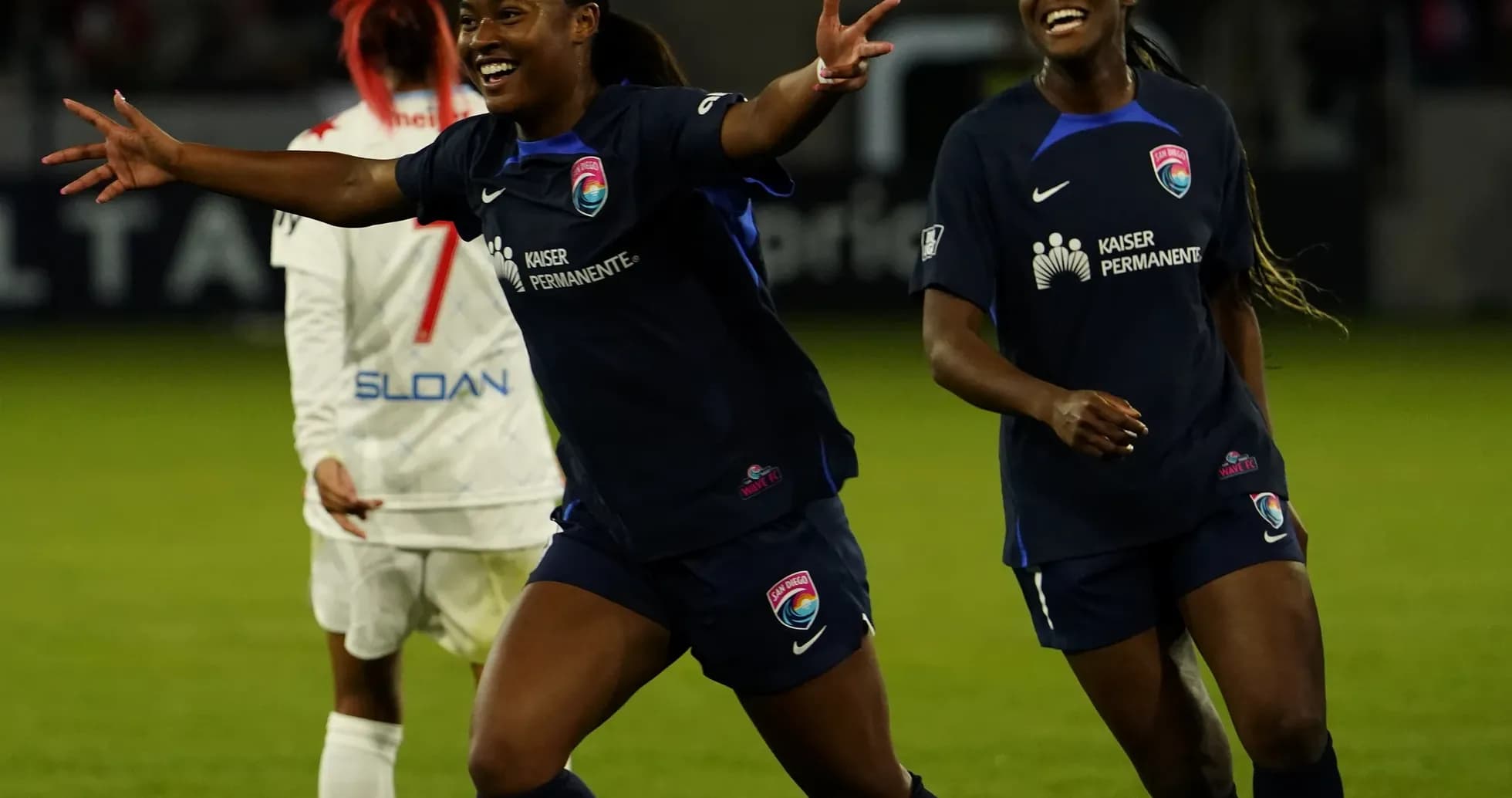
Under a grey Chicago sky at Northwestern Medicine Field at Martin Stadium, the league’s bottom side met its summit. Chicago Red Stars W, 15th in the NWSL Women table, hosted leaders San Diego Wave W in a Group Stage clash that felt like a measuring stick for both projects. By full time, the scoreboard read 0–2, a result that neatly mirrored the broader arc of each team’s season.
Heading into this game, the numbers framed a stark contrast. Overall, Chicago had taken just 9 points from 12 matches, with a goal difference of -19 built from 5 goals scored and 24 conceded. At home, they averaged only 0.7 goals for and 1.7 against, a side more familiar with suffering than imposing. San Diego arrived as the league’s benchmark: 25 points from 13 games, a positive goal difference of 6 (19 scored, 13 conceded overall), and a ruthless away profile of 5 wins in 7 on their travels, scoring 12 and conceding 8.
I. The Big Picture – Structures and Seasonal DNA
Martin Sjogren rolled the dice with a 4-1-4-1, a shape that tried to reconcile Chicago’s need for protection with their desire to unleash pace in transition. K. Atkinson started in goal, shielded by a back four of J. Bike, K. Hendrich, S. Staab and N. Gomes. Ahead of them, M. Lopez Millan sat as the single pivot, with a high-energy line of four – M. Swanson, B. A. Pinto, J. Grosso and R. Gareis – tasked with compressing space and springing the lone forward, J. Huitema.
It was a structure born of necessity. Overall, Chicago had failed to score in 9 of their 12 league games, including 4 of 6 at home, and had leaned heavily on compact blocks and counter-attacks. Their season’s tactical identity is one of survival: low margins, limited creativity, and a reliance on individual moments rather than sustained pressure.
San Diego, by contrast, arrived with the swagger of a side that knows exactly who it is. Jonas Eidevall’s 4-2-3-1 has been the league’s most coherent attacking framework. D. Haracic anchored a back line of A. D. Van Zanten, K. Wesley, K. McNabb and P. Morroni. The double pivot of K. Dali and K. Ascanio offered control and progression, while the attacking trio of M. Barcenas, L. E. Godfrey and Dudinha operated behind the spearhead Ludmila.
This is a team built around layered threats. Overall, they average 1.5 goals per game, rising to 1.7 on their travels, and they can hurt opponents through structured possession or quick vertical surges. Their defensive record – 13 goals conceded in 13 matches, just 1.0 per game overall – underpins a title-challenger profile.
II. Tactical Voids and Discipline
There were no listed absences in the data, which meant both coaches had the luxury of continuity. For Chicago, that continuity is double-edged: the defensive frailty that sees them concede 2.0 goals per game overall, and 2.3 on their travels, has not been solved by simple rotation or shape changes. At home, the back line has still allowed 10 goals in 6 matches, and the 4-1-4-1 here was an attempt to give Hendrich and Staab an extra layer of protection.
San Diego’s stability is a strength, but it comes with an edge. P. Morroni leads the league’s yellow card charts with 5 bookings in 12 appearances, a defender who plays on the front foot and steps into duels aggressively. Behind her, K. Dali has collected 2 yellows and, crucially, has already missed a penalty this season; her record from the spot cannot be described as perfect. As a team, San Diego’s yellow card distribution shows a tendency to pick up cautions from 16-30 minutes (23.08%) and then spread the risk fairly evenly across the rest of the match, a sign of persistent, if controlled, aggression.
Chicago’s disciplinary profile is more scattered. Their yellow cards peak between 31-45 minutes with 33.33% of their bookings, and 25.00% arrive from 46-60 minutes, hinting at a side that struggles to manage emotions around half-time. That volatility matters when chasing games against a team as clinical as San Diego.
III. Key Matchups – Hunter vs Shield, Engine Room
The headline duel was always going to be San Diego’s attacking trident against Chicago’s fragile defensive structure. Dudinha, already on 5 goals and 4 assists in 13 appearances, is the league’s most complete wide attacker: 44 dribble attempts with 26 successes, 19 shots with 10 on target, and 20 key passes. Her movement from the left half-space into central pockets asked constant questions of Bike and Hendrich, and her ability to combine with Godfrey and Ludmila turned Chicago’s back four into a reactive line.
Godfrey, with 4 goals and 3 assists, is the second prong of that threat. Her 237 completed passes at 80% accuracy, plus 18 key passes, underline a midfielder who can both break lines and arrive in the box. Against a Chicago side that has conceded 10 at home, her timing between the lines was a direct test of Lopez Millan’s positional discipline.
In the engine room, Dali versus Chicago’s central trio was the game’s control panel. With 705 passes at 85% accuracy and 33 key passes, Dali is San Diego’s metronome and chief chance creator from deep. Chicago’s 4-1-4-1 tasked Pinto and Grosso with jumping to press her while Lopez Millan protected the back line. When that press arrived late, Dali’s distribution allowed San Diego to pin the Red Stars back and keep them from exploiting Swanson and Gareis in transition.
Defensively, Morroni’s duel with Swanson was a fascinating sub-plot. Morroni’s 32 tackles and 2 blocked shots this season mark her out as a proactive defender who steps high to intercept. Her 18 fouls committed and 5 yellows, however, always carry the risk of conceding dangerous free-kicks if wingers can isolate her one-on-one.
IV. Statistical Prognosis and Tactical Verdict
Following this result, the 0–2 scoreline feels less like a one-off and more like a continuation of existing trends. Chicago’s season-long issues in front of goal – 0.4 goals per game overall, with 0.7 at home – again left them chasing a game they rarely looked equipped to overturn. Their defensive record, 24 conceded overall, was tested by a San Diego attack that typically produces 1.7 goals on their travels, and the visitors hit that level of output here.
In xG terms, even without the raw model numbers, the profiles are clear. San Diego’s volume of creative talent – Dudinha’s 20 key passes, Godfrey’s 18, Dali’s 33 – suggests a side that regularly generates multiple high-quality chances. Chicago, by contrast, are a low-volume, low-conversion attack that too often fails to reach even modest xG totals.
The tactical preview this match confirmed is stark. San Diego Wave W look every inch a playoff-bound contender: structured in possession, layered in attack, and underpinned by a defence that, while occasionally aggressive in its card profile, concedes just 1.1 goals per game on their travels. Chicago Red Stars W remain a team searching for an identity that can lift them off the bottom: their 4-1-4-1 offers theoretical balance, but until they solve both their chronic scoring drought and their vulnerability around half-time, they will continue to live on the margins against the league’s elite.