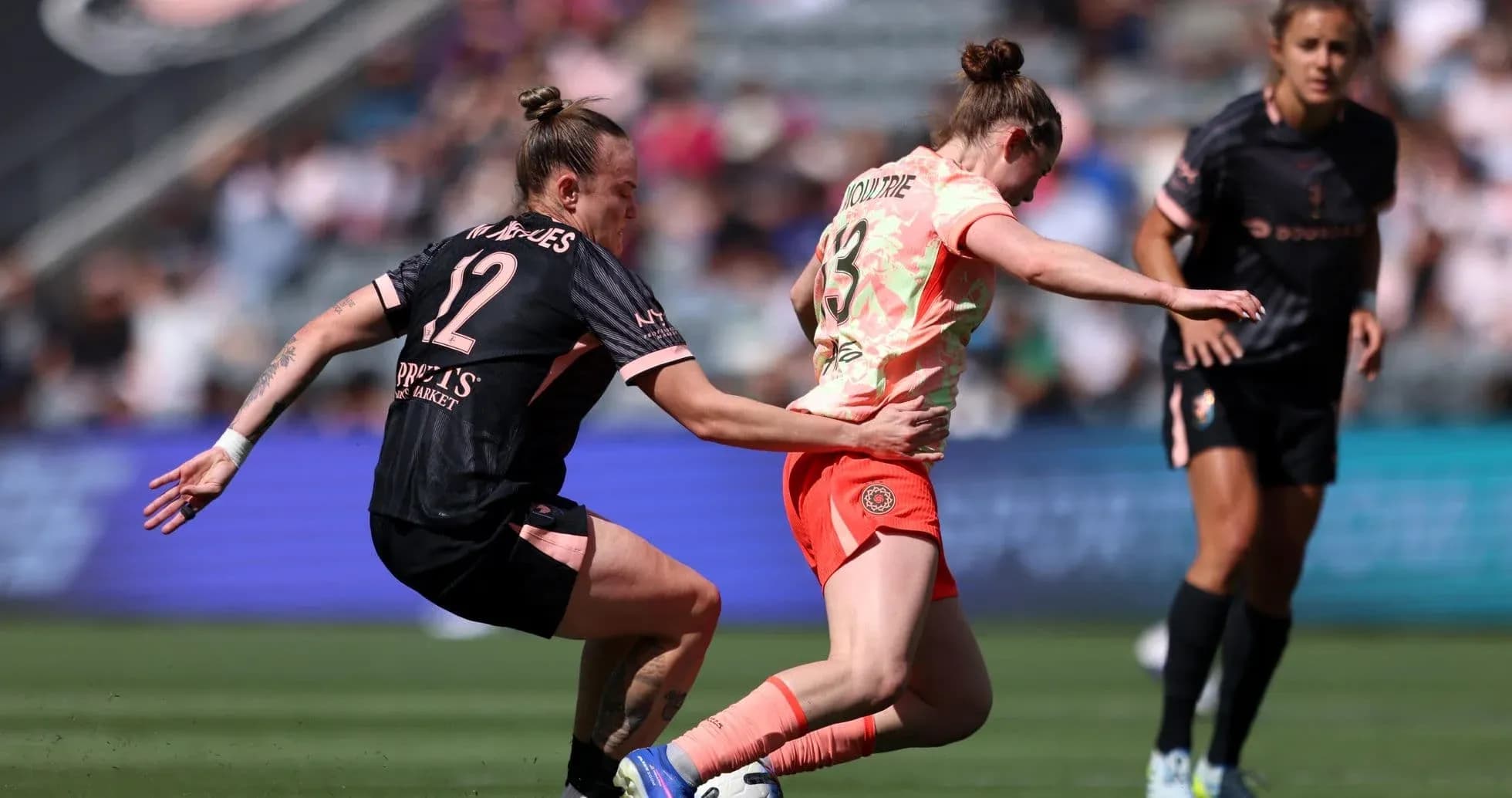
Portland Thorns W vs Utah Royals W: Tactical Insights from 2–2 Draw
On a cool evening at Providence Park, under the sharp whistle of Sergii Demianchuk, Portland Thorns W and Utah Royals W played out a 2–2 draw that felt less like a group-stage formality and more like a dress rehearsal for knockout football. Following this result, the table still shows Utah in 2nd on 24 points with a goal difference of 8, and Portland in 3rd, also on 24 points but with a goal difference of 6. Two teams with playoff ambitions, separated by the narrowest of margins, just produced a match that explained exactly why.
Both sides lined up in mirrored 4-2-3-1 shapes, but the systems were anything but identical. Portland’s version, true to their season-long identity, leaned into front-foot aggression. At home they have been close to flawless: 6 matches played, 4 wins, 2 draws, 0 defeats, with 10 goals for and only 2 conceded. On their travels, Utah brought a different kind of authority: 7 away matches, 3 wins, 3 draws, 1 defeat, 10 goals for and 6 against. One fortress, one road-hardened contender; the 2–2 scoreline felt like the only fair verdict.
Portland's Setup
Portland’s defensive platform began with M. Arnold in goal, shielded by a back four of R. Reyes, I. Obaze, S. Hiatt and M. Vignola. In front of them, the double pivot of J. Fleming and C. Bogere was designed to compress central spaces and launch quick transitions. Ahead, the creative trio of M. Muller, O. Moultrie and P. Tordin operated behind S. Wilson, who led the line.
Utah's Setup
Utah mirrored the shape but not the personality. M. McGlynn anchored the Royals from the back, with a back four of M. Moriya, K. Del Fava, K. Riehl and N. Rabano. The double pivot of N. Miura and A. Tejada Jimenez gave them control and bite, while a fluid band of three – C. Delzer, Minami Tanaka and C. Lacasse – buzzed behind the lone striker K. Palacios. On paper, it was symmetry; on grass, it was a chess match.
Tactical Analysis
The tactical voids in this fixture were less about absences and more about discipline and risk. Portland’s season-long card profile shows a team that lives on the edge, especially late: 25.00% of their yellow cards come between 61–75 minutes and another 25.00% between 76–90, with a further 16.67% in each of the 0–15 and 31–45 windows. Their red-card history is even more telling: one dismissal in the 0–15 period and another between 46–60. Players like C. Bogere, who has already collected 2 yellows and a yellow-red this season, embody that fine line between intensity and overreach.
Utah’s disciplinary curve is different but equally sharp. They stack yellow cards in the middle of games: 27.27% between 46–60 and another 27.27% between 61–75, with late pressure reflected by 13.64% of yellows and 100.00% of their reds arriving in the 76–90 window. With Ana Tejada already on 4 yellows and C. Lacasse carrying 3, the Royals’ aggression in the second half is both a weapon and a liability. In a 2–2 draw that stayed at eleven versus eleven, both coaches will feel they dodged the worst-case scenario.
Key Players
The “Hunter vs Shield” duel was written all over the team sheets. For Portland, O. Moultrie is not just a name on the scoresheet; she is the creative and finishing hub. Heading into this game she had 5 goals and 4 assists, 15 shots with 10 on target, and 24 key passes from 301 total passes at 77% accuracy. Her 20 dribble attempts, 102 duels and 23 tackles speak to a player who does not just create but competes in every phase. Alongside her, S. Smith’s 5 goals and relentless shot volume (34 attempts, 21 on target) define Portland’s attacking ceiling, even if she did not start this particular fixture.
Utah’s shield against that firepower is collective rather than individual. Overall this campaign they have conceded only 10 goals in 12 matches, an average of 0.8 goals against per game, with 3 clean sheets away from home. K. Del Fava and K. Riehl form the structural spine, while the full-backs M. Moriya and N. Rabano manage the wide overloads that Portland’s 4-2-3-1 can create. Tejada, with 21 tackles, 2 blocks and 11 interceptions, is the enforcer stepping into Moultrie’s passing lanes, but her 19 fouls committed and 4 yellows underline the risk baked into that job.
Engine Room Battle
In the “Engine Room” battle, the contrast was just as vivid. For Portland, Fleming and Bogere are tasked with turning second balls into structured attacks. Bogere’s 295 passes at 77% accuracy, 35 tackles and 12 interceptions make her the Thorns’ ball-winner-in-chief, even if her 18 fouls committed and card history suggest opponents can lure her into dangerous challenges. Fleming, more measured, stitches play to the advanced trio.
Utah’s response came through N. Miura’s control and Minami Tanaka’s dual-threat creativity. Tanaka, with 2 goals, 4 assists and 14 shots (10 on target), plus 258 passes at 72% accuracy, is the Royals’ tempo shifter between lines. Her 27 fouls drawn show how often she invites contact, buying territory and time for Utah to reset or deliver set pieces. Around her, Lacasse is the chaos agent: 4 goals, 3 assists, 14 shots (10 on target), 24 key passes and 26 tackles. She presses, creates and punishes mistakes, a forward who also tracks and tackles like a full-back.
Statistical Overview
Statistically, the 2–2 feels like the meeting point of two well-defined identities. Heading into this game, Portland’s overall goals-for average stood at 1.5 per match, with 1.7 at home, while Utah matched that 1.5 overall with 1.4 on their travels. Defensively, Portland were conceding 1.1 goals per game overall but only 0.3 at home; Utah allowed 0.8 overall and 0.9 away. The expected-goals landscape, even without raw xG numbers, suggests a contest between a home side whose attack usually just edges their defensive leaks, and an away side whose balance is marginally better.
Tactical Prognosis
Following this result, the tactical prognosis for both squads is clear. Portland’s 4-2-3-1 remains their best platform: it gets Moultrie and Tordin into central pockets, allows Reilyn Turner to change games from the bench, and leans on a home defensive record that has been outstanding. But the late-game disciplinary spikes and reliance on high-intensity duels in midfield will continue to threaten their control in tight matches.
Utah, meanwhile, leave Portland with their away aura intact. Their defensive structure travels, their attacking spine of Tanaka and Lacasse is among the league’s most balanced, and their card profile, while spiky, is at least predictable: the danger zone is the second half, especially 46–75 minutes. Manage that window better, and their blend of solidity and incision makes them a genuine title contender.
In a group stage that already feels like playoff shadowboxing, this 2–2 was less about dropped points and more about revealed truths. Portland showed that their home fortress can be breached but not conquered; Utah proved that their road resilience is real. If these two meet again when the stakes rise, the blueprint has been drawn – and both squads will know exactly where the battle lines lie.