Torino Edges Sassuolo in Tactical Battle at Stadio Olimpico Grande Torino
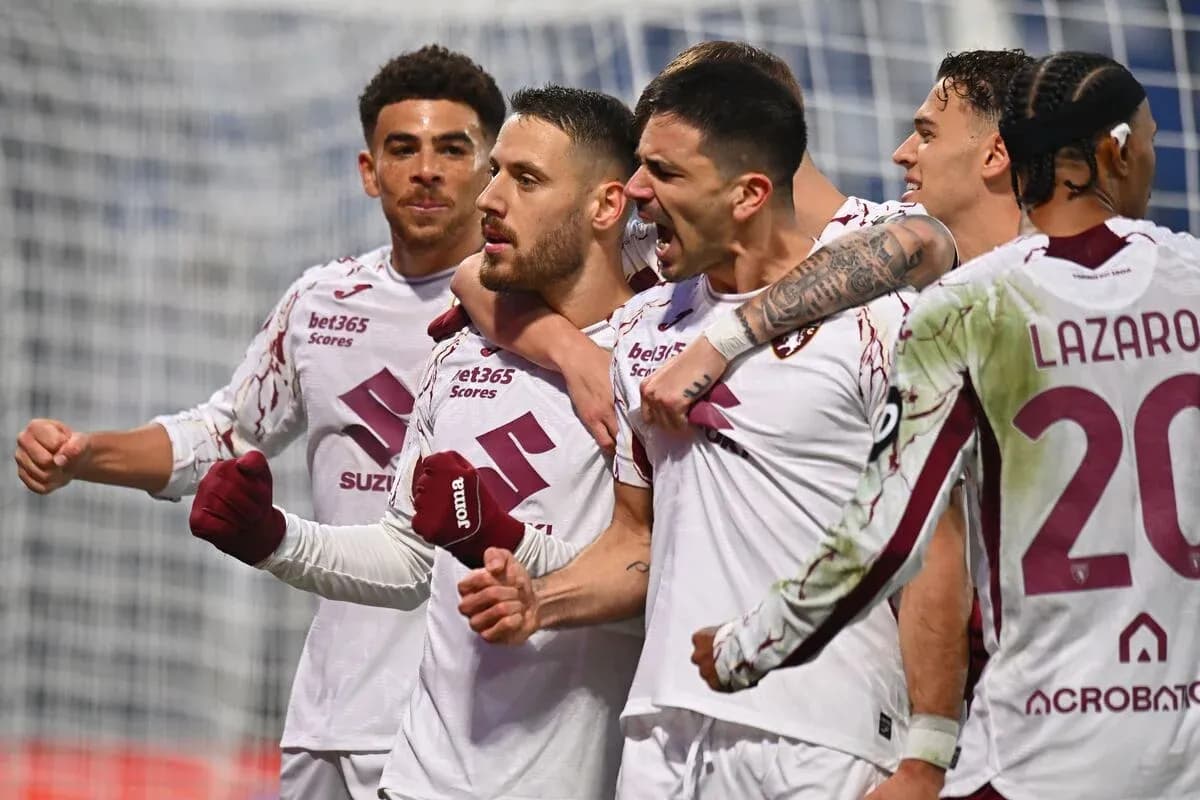
Under the lights of the Stadio Olimpico Grande Torino, this felt less like a dead‑rubber in Round 36 and more like a quiet referendum on two mid‑table identities. Torino, 12th in Serie A with 44 points and a bruised goal difference of -18 (41 scored, 59 conceded), edged a 2–1 win over 11th‑placed Sassuolo, who remain on 49 points with a far healthier -2 goal difference (44 for, 46 against). Following this result, the table still says “mid‑table,” but the performance suggested two very different emotional trajectories.
Leonardo Colucci doubled down on Torino’s season‑long back‑three DNA, rolling out a 3‑4‑2‑1 that has been used sparingly (3 times) compared to the more frequent 3‑5‑2 and 3‑4‑1‑2. Yet here, the system finally looked fully inhabited. A. Paleari anchored a back line of L. Marianucci, S. Coco and E. Ebosse, with V. Lazaro and R. Obrador stretched wide as wing‑backs and M. Prati plus G. Gineitis forming the central hinge. Ahead of them, N. Vlasic and A. Njie hovered between the lines, feeding the campaign’s talisman: G. Simeone.
Across from them, Fabio Grosso stayed loyal to Sassuolo’s structural core: the 4‑3‑3 that has started 34 of their 36 league fixtures. A. Muric stood behind a back four of W. Coulibaly, S. Walukiewicz, T. Muharemovic and J. Doig. In midfield, L. Lipani and N. Matic flanked K. Thorstvedt, while the front three of C. Volpato, A. Pinamonti and A. Laurienté carried most of the creative and scoring burden.
The absentees quietly shaped the tactical story. Torino were again without Z. Aboukhlal, F. Anjorin and A. Ismajli, all ruled out with muscle or hip issues. It forced Colucci to lean even harder on the versatility of Vlasic between the lines and on Obrador’s energy down the flank, rather than rotating in extra firepower or defensive security.
Sassuolo’s list was longer and more structurally painful: D. Boloca, F. Cande, J. Idzes and E. Pieragnolo all sidelined, with A. Fadera suspended for yellow cards. That robbed Grosso of both depth and balance. Without Boloca and Idzes, the spine lacked an extra layer of control and defensive insurance, while the absence of Pieragnolo and Cande limited full‑back rotation and attacking thrust from deep. The bench still offered names like D. Berardi, L. Moro, M. Nzola and A. Vranckx, but the starting XI felt one injury away from being exposed.
Discipline was always going to be a sub‑plot. Over the campaign, Torino’s yellow cards cluster late: 18.84% between 76–90 minutes and another 21.74% from 91–105, a clear pattern of rising aggression as games stretch. They have seen a single red card, issued between 46–60 minutes. Sassuolo, by contrast, are serial late‑game offenders: 28.75% of their yellows arrive from 76–90, with another 15.00% from 91–105. Their reds are spread across 16–30, 46–60 and 76–90, with N. Matic and A. Pinamonti both carrying one dismissal each this season. Even without minute‑by‑minute card data for this match, the profiles matched the mood: a tense, attritional second half where every duel felt like a small war.
The “Hunter vs Shield” duel was always going to be framed around G. Simeone and A. Pinamonti. Overall this campaign, Torino average 1.1 goals per game in total, with 1.4 at home, while Sassuolo concede 1.3 in total both home and away. Into that gap steps Simeone: 11 league goals, 56 shots (28 on target), and a tireless duel record (271 total, 106 won). He is not a penalty merchant either—Torino’s 5 penalties in total have all been scored by others, with Simeone yet to convert from the spot. His threat is built on movement, timing and an almost obsessive willingness to attack the near post.
Pinamonti, Sassuolo’s central spear, came in with 8 goals and 3 assists, 54 shots (27 on target) and a more connective role in build‑up. But his season has a blemish: he has won 1 penalty yet failed to score from the spot, missing his only attempt. That matters psychologically in a tight away match; the margin for error is slimmer when your side scores just 1.2 goals on their travels and concedes 1.3.
Behind them, the “Engine Room” battle was pure theatre. For Torino, M. Prati and G. Gineitis were tasked with knitting transitions and protecting a back three that, across the season, has conceded 1.5 goals per game at home and 1.6 in total. Sassuolo’s response was a double‑pivot of craft and steel: Matic, the league’s fourth‑ranked red‑card magnet, and Thorstvedt, who has quietly become one of Serie A’s most combative two‑way midfielders. Thorstvedt’s numbers tell the story: 4 goals, 4 assists, 981 passes at 81% accuracy, 43 tackles and 13 successful blocks. His 8 yellow cards underline his edge; his presence is both shield and launching pad.
Out wide, the duel between Torino’s wing‑backs and Sassuolo’s creative wide men was decisive. Laurienté arrived as one of the league’s premier creators: 6 goals, 9 assists, 52 key passes and 75 dribble attempts, 27 of them successful. His combination play with Volpato and the overlapping Doig threatened to overload Torino’s left, especially with Obrador pushed high. Yet that same aggression from Torino’s flanks pinned Sassuolo back, forcing Laurienté and Volpato into deeper starting positions than they would have liked.
From a statistical prognosis standpoint, the contours of this 2–1 felt almost pre‑written by the season data. Torino at home are volatile but potent: 25 goals scored and 27 conceded across 18 matches, a profile that points to both opportunity and risk. Sassuolo away are marginally negative: 21 scored, 23 conceded. Put simply, this was a meeting of a slightly above‑average home attack with a slightly below‑average away defence, and the result reflected that fine balance.
Torino’s clean‑sheet record—5 at home, 12 in total—suggests they are capable of control but not built on it. Sassuolo’s 8 clean sheets in total underline a team that can shut games down, yet their late‑card tendencies and reliance on high‑usage creators like Laurienté and Berardi (8 goals, 4 assists, 32 key passes, and a mixed penalty record with 2 scored, 1 missed) make them vulnerable in chaotic phases.
Following this result, the narrative is clear. Torino’s 3‑4‑2‑1, with Simeone as its ruthless focal point and Vlasic as its subtle connector, looks increasingly like a blueprint rather than an experiment. Sassuolo, for all their technical flair and the individual brilliance of Laurienté, Thorstvedt and Berardi off the bench, remain a side whose margins are dictated by discipline and small structural absences.
On the night in Turin, the numbers and the story finally aligned: a narrow home win, powered by a sharper hunter, a more cohesive engine room, and just enough defensive resilience to withstand Sassuolo’s late, card‑streaked surge.