AC Milan vs Atalanta: Tactical Breakdown of 2-3 Defeat
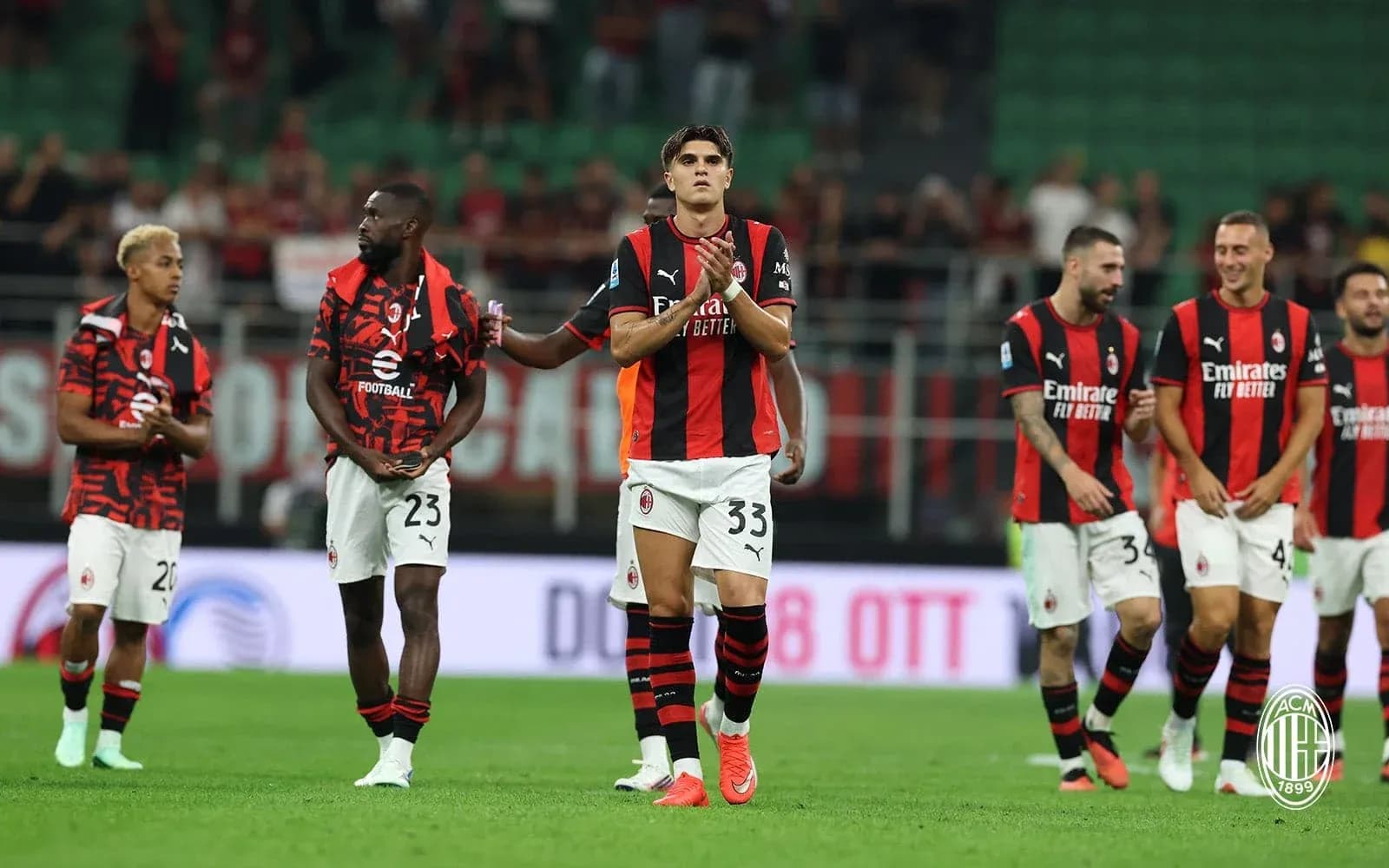
AC Milan’s 2-3 home defeat to Atalanta at Stadio Giuseppe Meazza was a tactical paradox: Allegri’s side controlled territory, possession and volume of shots, yet Palladino’s compact 3-4-2-1 and ruthless early transitions built a 0-3 platform that Milan’s late surge could not fully overturn. In a high-stakes Serie A Round 36 clash, Milan produced 57% possession, 20 total shots and 1.94 xG, but Atalanta’s clinical 1.08 xG into three goals, combined with strong penalty-box management, defined the outcome more than Milan’s structural dominance.
I. Executive Summary
The game split into two distinct tactical phases. The first hour belonged to Atalanta’s counter-punching and vertical efficiency, the final half-hour to Milan’s territorial siege. Yet the scoreboard dictated the story: Atalanta’s early 0-2 lead by half-time and the 0-3 margin at 51' forced Milan to chase with increasingly aggressive structures, leaving them reliant on late set-piece and penalty conversions rather than open-play breakthroughs.
II. Scoring Sequence & Disciplinary Log
Goals (chronological, home score first):
- 7' AC Milan 0-1 Atalanta – Ederson (Atalanta) — (no assist). A textbook central run from midfield, exploiting space in front of Milan’s back three.
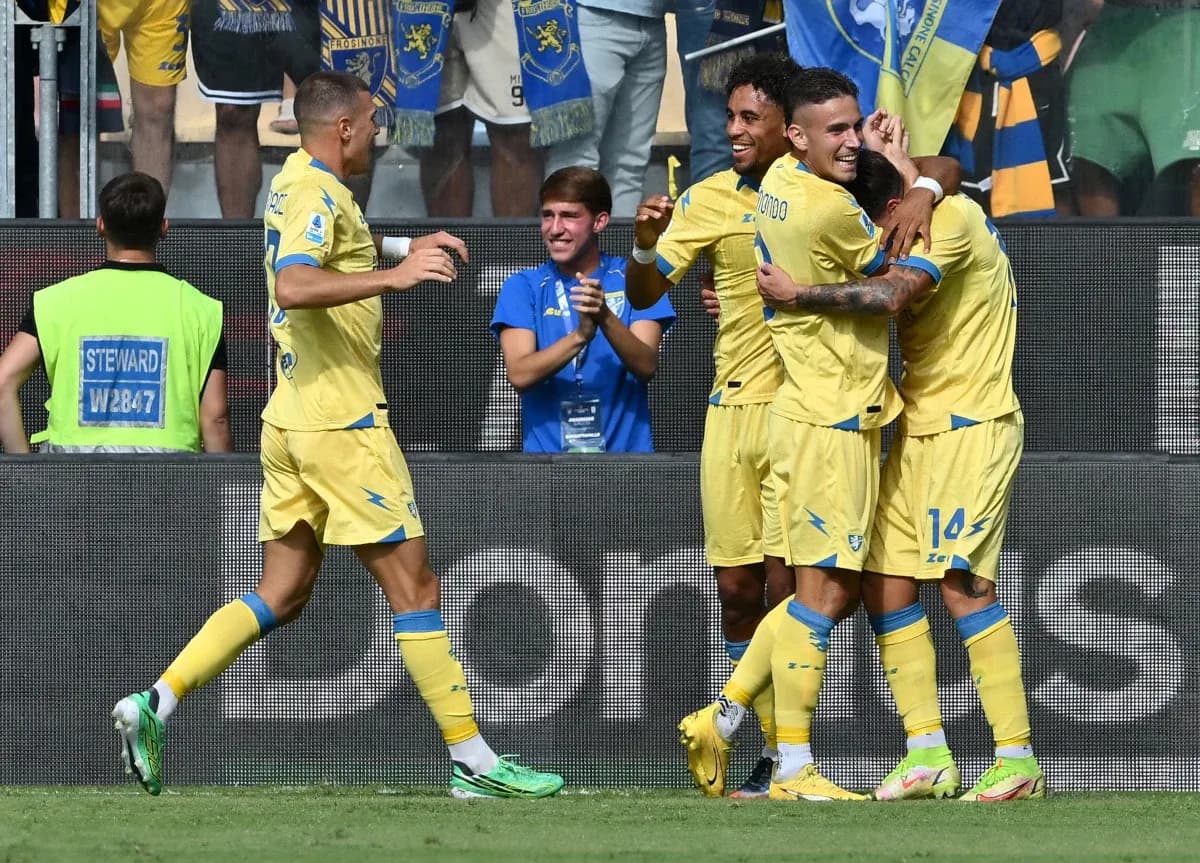
- 29' AC Milan 0-2 Atalanta – Davide Zappacosta (Atalanta) — assisted by Nikola Krstovic. Atalanta attacked Milan’s right side, with Krstovic’s involvement stretching the line before Zappacosta arrived to finish.
- 51' AC Milan 0-3 Atalanta – Giacomo Raspadori (Atalanta) — assisted by Ederson. A transition sequence where Ederson again pierced Milan’s midfield screen and released Raspadori between the lines.
- 88' AC Milan 1-3 Atalanta – Strahinja Pavlovic (AC Milan) — assisted by Samuele Ricci. A late attacking-phase set-piece/second-ball style action, with the centre-back pushing high to convert.
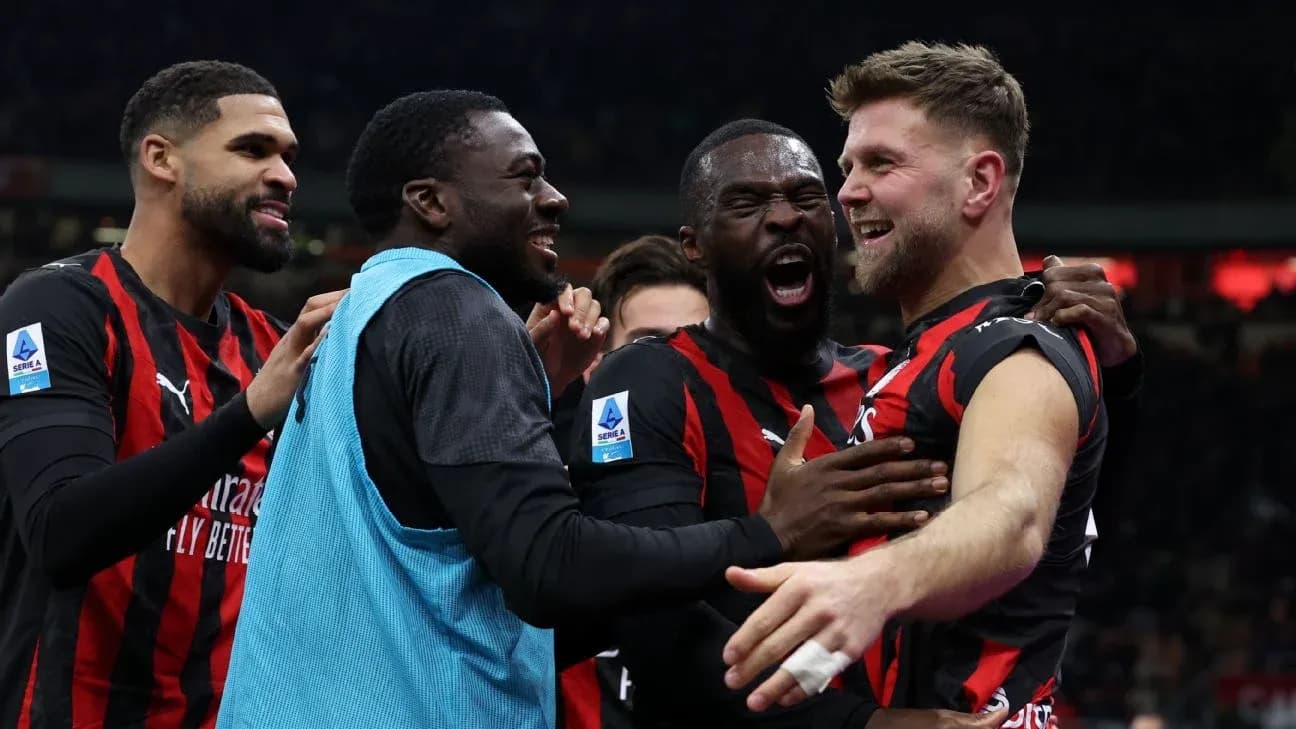
- 90' AC Milan 2-3 Atalanta – Christopher Nkunku (AC Milan) — Penalty (no assist). Nkunku converted from the spot to narrow the deficit but too late to alter the result.
Disciplinary log (chronological, with reasons verbatim):
- 34' Rafael Leão (AC Milan) — Foul
- 70' Isak Hien (Atalanta) — Argument
- 89' Adrien Rabiot (AC Milan) — Argument
- 89' Pervis Estupiñán (AC Milan) — Foul
- 90' Alexis Saelemaekers (AC Milan) — Argument
- 90+5' Nikola Krstović (Atalanta) — Time wasting
- 90+6' Raoul Bellanova (Atalanta) — Foul
Totals: AC Milan: 4 yellow cards, Atalanta: 3 yellow cards, Total: 7.
III. Tactical Breakdown & Personnel
Allegri set Milan in a 3-5-2 with Mike Maignan behind a back three of Koni De Winter, Matteo Gabbia and Strahinja Pavlovic. The wing-backs Alexis Saelemaekers and Davide Bartesaghi, with Samuele Ricci and Adrien Rabiot as central pivots plus Ruben Loftus-Cheek as the advanced midfielder, were tasked with controlling the centre and overloading Atalanta’s half-spaces. Rafael Leão and Santiago Gimenez formed a dual front, aiming to pin Atalanta’s back three and open lanes for underlapping midfield runs.
Palladino’s Atalanta mirrored with a 3-4-2-1: Giorgio Scalvini, Isak Hien and Sead Kolasinac in the back line, Davide Zappacosta and Nicola Zalewski as wing-backs, with Marten De Roon and Ederson anchoring midfield. Charles De Ketelaere and Giacomo Raspadori operated as dual 10s behind Nikola Krstovic. The structure was compact, horizontally narrow without the ball, inviting Milan’s circulation into predictable wide zones.
Atalanta’s early success hinged on two factors: the timing of their midfield jumps and the directness of their first pass after regains. Ederson repeatedly stepped past Ricci and Rabiot to attack the half-space in front of Gabbia. On 7', Milan’s rest defence was too flat; De Roon’s screening allowed Ederson to receive, turn and drive with minimal pressure, finishing before Milan’s centre-backs could compress. The 29' goal again exposed Milan’s right side: Zappacosta’s high starting position stretched Bartesaghi and Pavlovic, while Krstovic’s movement dragged the central block, opening the channel for the wing-back to finish.
With Atalanta 0-2 up at half-time despite only nine total shots all game (five on target), Milan’s structure became more aggressive after the break. The 46' substitution saw Christopher Nkunku (IN) came on for Ruben Loftus-Cheek (OUT), shifting Milan toward a more vertical, striker-heavy 3-4-1-2, with Nkunku adding between-the-lines creativity and depth runs. However, this rebalancing briefly destabilized their counter-press; at 51', Ederson again broke Milan’s midfield line and fed Raspadori, whose diagonal movement punished the space behind the stepping centre-backs for 0-3.
From 55' onwards, Palladino protected the lead via selective rotations: at 55', Raoul Bellanova (IN) came on for Davide Zappacosta (OUT), adding fresh legs and defensive discipline on the flank. Scalvini’s withdrawal at 48' for Odilon Kossounou (IN) came on for Giorgio Scalvini (OUT) preserved intensity in the back line. Later, Mario Pasalic (IN) came on for Charles De Ketelaere (OUT) at 63', reinforcing central compactness and adding a counter-attacking outlet.
Allegri’s triple change at 58' was a clear tactical gamble: Zeno Athekame (IN) came on for Koni De Winter (OUT), Niclas Füllkrug (IN) came on for Santiago Gimenez (OUT), and Youssouf Fofana (IN) came on for Rafael Leão (OUT). Milan moved toward a more direct, physically dominant attacking shape, with Füllkrug as a reference point and Nkunku playing off him. The back line was effectively re-profiled, with Pavlovic increasingly stepping into advanced zones. This culminated in the 88' goal: Pavlovic’s presence in the box, on a delivery recycled by Ricci, reflected Milan’s shift to a centre-back-as-attacker approach against Atalanta’s deep block.
The 80' change, Pervis Estupinan (IN) came on for Davide Bartesaghi (OUT), added an aggressive overlapping threat on the flank, but also coincided with his late booking for Foul, symptomatic of Milan’s high-risk pressing as they chased the game. The cluster of Milan yellows (Rabiot and Saelemaekers for Argument, Estupiñán for Foul) underscored rising frustration as Atalanta slowed tempo and disrupted rhythm, exemplified by Krstović’s Time wasting card at 90+5'.
In goal, Maignan faced five shots on target and made two saves, reflecting that Atalanta’s best chances were high-quality and well-taken rather than frequent. His goals prevented figure of 1.1 indicates he still outperformed the xG he faced, suggesting that without his interventions, the scoreline could have been heavier. At the other end, Marco Carnesecchi’s eight saves from Milan’s nine shots on target, combined with his own 1.1 goals prevented, were pivotal: he repeatedly denied Milan’s central combinations and late aerial bombardment, especially once Füllkrug was introduced.
IV. The Statistical Verdict
The statistical profile underlines the tactical story. Milan’s 57% possession and 541 passes, with 478 accurate (88%), show a side that controlled the ball and circulated effectively, but struggled to convert structural dominance into clear, early chances. Their 20 total shots, nine on target and 1.94 xG yielded only two goals, one from a penalty and one from a late centre-back finish, pointing to Atalanta’s strong penalty-area defence and Carnesecchi’s shot-stopping.
Atalanta, with 43% possession and 411 passes, 330 accurate (80%), played a more selective, vertical game. Their nine shots (five on target) and 1.08 xG converting into three goals highlight both attacking efficiency and the quality of their transition moments through Ederson and Raspadori. Defensively, Atalanta’s 17 Fouls and three yellow cards reflect a willingness to break play and disrupt Milan’s rhythm, while Milan’s eight Fouls but four yellows, many for Argument, indicate a side increasingly stretched psychologically as much as tactically. Ultimately, the numbers confirm that while Milan’s overall form in possession was strong, Atalanta’s superior defensive index in the box and clinical use of transitions decided the match.