Switzerland's Tactical Masterclass in 2-0 Win Over Algeria
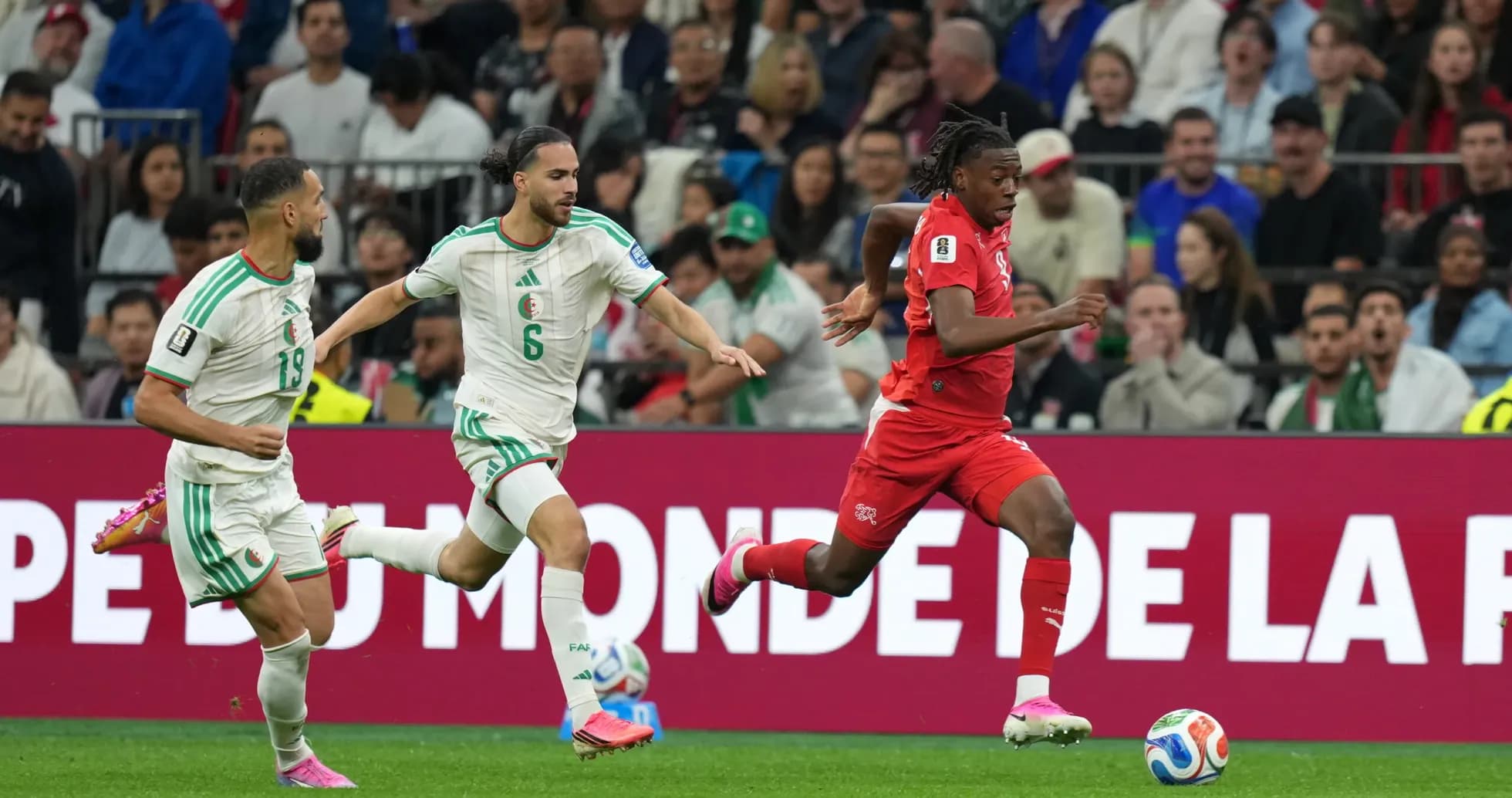
Switzerland’s 2-0 win over Algeria at BC Place in this World Cup Round of 32 tie was a controlled, structurally coherent performance built on compact spacing without the ball and direct, vertical efficiency with it. Despite conceding 55% possession and facing a higher Algerian passing volume, Murat Yakin’s side consistently turned their 45% share into higher-quality chances, reflected in a clear xG edge of 2.56 to 0.73 and an 11–8 shot advantage.
Formation and Structure
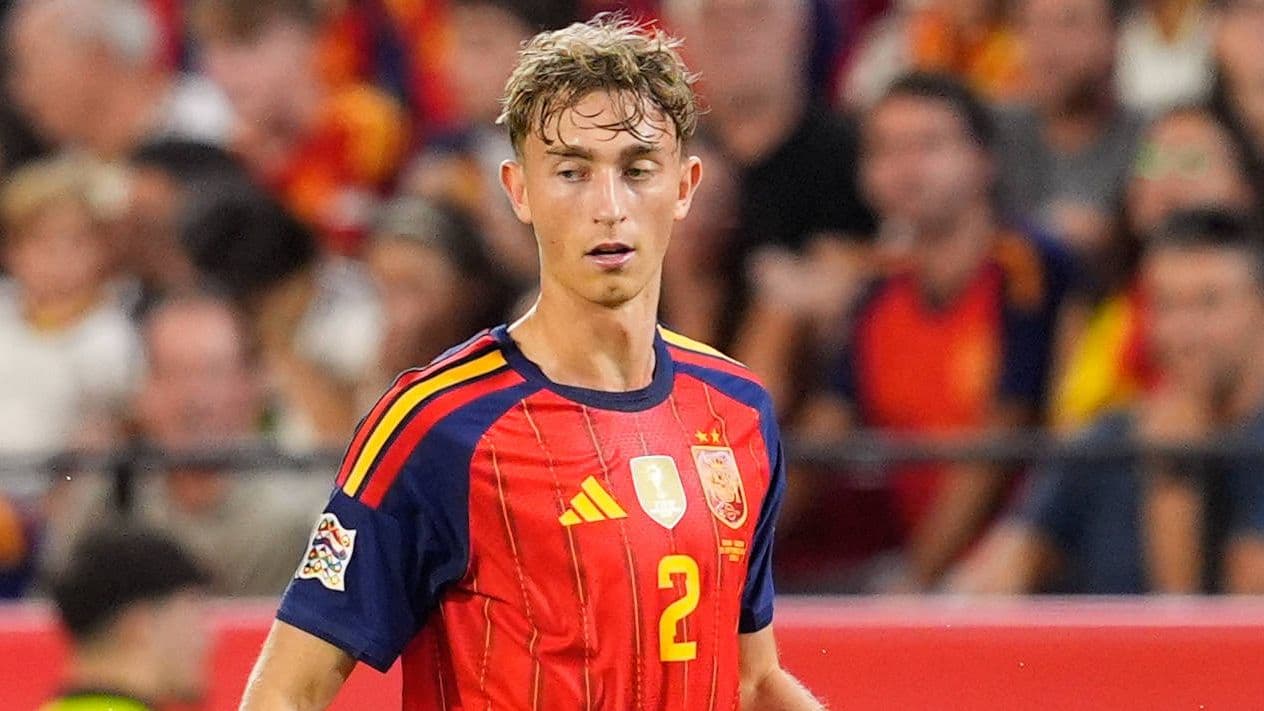
Switzerland lined up in a 4-2-3-1 that behaved like a very disciplined mid-block. Manuel Akanji and Nico Elvedi formed a narrow central pairing, with Ricardo Rodríguez and Denis Zakaria tucking in aggressively from full-back to deny central progression. In front of them, the double pivot of Granit Xhaka and Remo Freuler was pivotal: Xhaka orchestrated circulation and tempo, while Freuler acted as the main screening presence, stepping out to engage Algeria’s advanced midfielders and prevent clean receiving between the lines.
The attacking line of three behind Breel Embolo was designed for vertical threat rather than pure ball retention. Dan Ndoye and Rubén Vargas, nominally wide, repeatedly attacked the half-spaces, while Johan Manzambi operated as a mobile No. 10, linking transitions and offering the decisive pass for the early opener. That 10th-minute goal – B. Embolo finishing from J. Manzambi’s assist – encapsulated the plan: win the ball in a compact shape, progress quickly through the central lane, and exploit Algeria’s rest defence before it could set.
Defensive Strategy
Out of possession, Switzerland’s 4-2-3-1 often flattened into a 4-4-1-1, with one of Ndoye or Vargas dropping alongside Xhaka and Freuler to create a four-man midfield line. This gave them enough horizontal coverage to funnel Algeria wide, where Rafik Belghali and Rayan Aït-Nouri were encouraged to receive but then pressed in tight traps. The fact that Algeria were limited to just 5 shots inside the box (to Switzerland’s 9) despite their possession advantage underlines how effectively Switzerland protected the central corridor.
Second Goal Impact
The second goal, scored by D. Ndoye in the 46th minute, was tactically decisive. Coming immediately after the interval, it allowed Switzerland to drop their line a few metres deeper and lean into their control game. With a 2-0 cushion, the Swiss block became even more compact, prioritising vertical compression between defence and midfield. Embolo’s work without the ball was important here: he consistently screened passes into Ramiz Zerrouki and Nabil Bentaleb, forcing Algeria to circulate around the block rather than through it.
Goalkeeper Performances
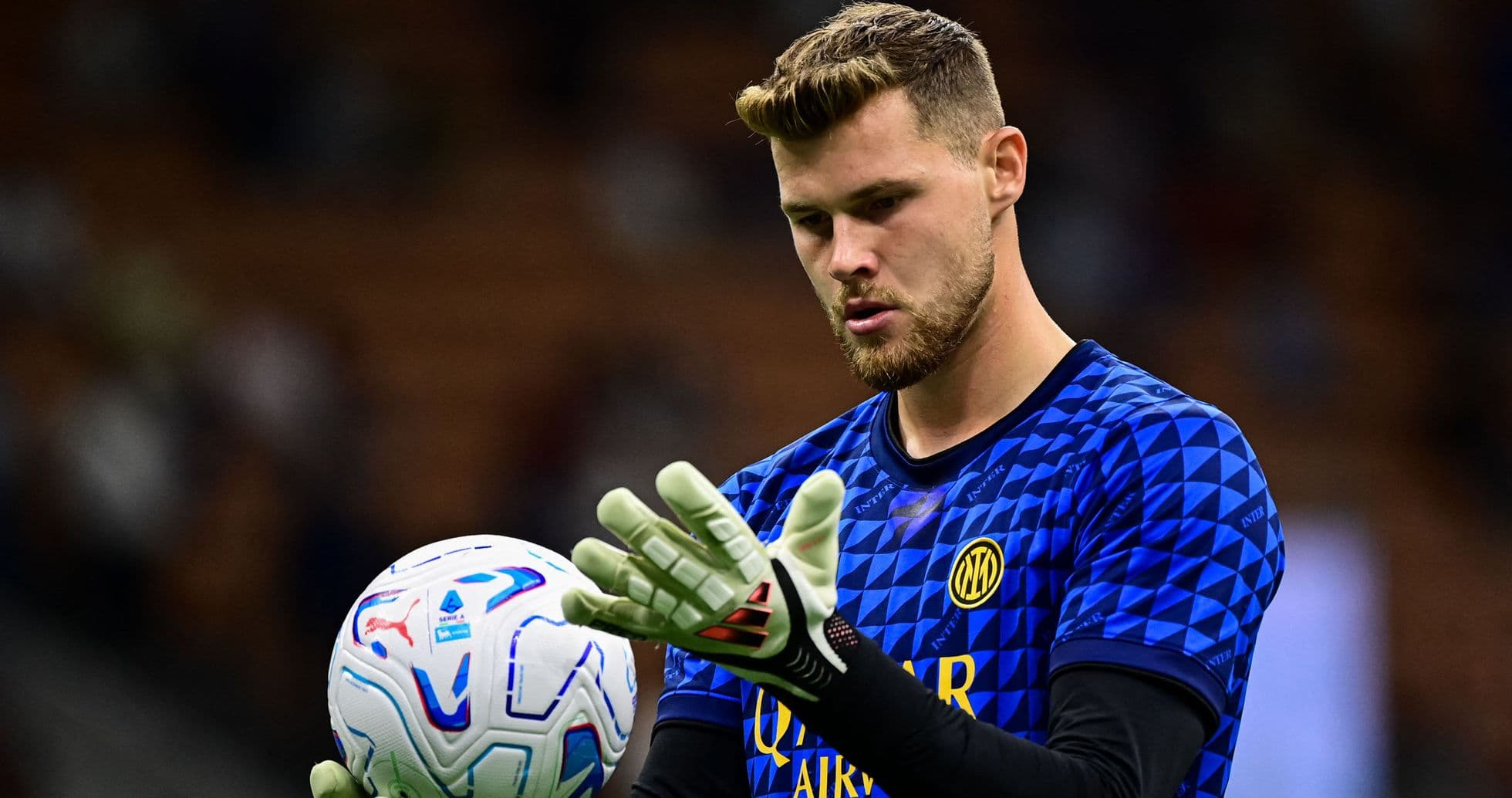
In goal, Gregor Kobel (Switzerland) was rarely exposed thanks to that structure. He faced 2 shots on target and made 2 saves, reflecting a night where his main contribution was command of area and starting positions rather than high-volume shot-stopping. At the other end, Luca Zidane (Algeria) also recorded 2 saves against 5 Swiss shots on target, but the underlying numbers tell a different story: Switzerland’s xG of 2.56 points to repeated access to high-value zones, while Algeria’s 0.73 suggests they were largely kept to speculative or pressured efforts.
Algeria's Setup
Vladimir Petkovic’s Algeria set up in a 4-3-3 with a technical midfield of Zerrouki, Bentaleb and Farès Chaïbi, supported by a front three of Riyad Mahrez, Ibrahim Maza and Houssem Aouar. On paper, this structure should have maximised their 561 passes (476 accurate, 85%) and 55% possession, but in practice the ball circulation often became sterile. Switzerland’s first and second pressing lines cut off interior lanes, forcing Algeria into wide-to-wide recycling and reducing Mahrez and Aouar to receiving with their backs to goal or in crowded zones.
Algeria’s 8 total shots, with only 2 on target and 3 blocked, show how often their attacks ended on the edges of Switzerland’s block rather than inside it. When Petkovic adjusted on 58 minutes, introducing Jaouen Hadjam (IN) for H. Aouar (OUT) and Amine Gouiri (IN) for R. Zerrouki (OUT), the intention was clear: more direct threat and an extra forward profile between the lines. Later, at 71 minutes, Anis Hadj Moussa (IN) came on for R. Mahrez (OUT) and Hicham Boudaoui (IN) for N. Bentaleb (OUT), shifting the emphasis further towards verticality and energy.
Structural Challenges
However, these changes ran into the same structural wall. By that stage, Switzerland had freshened their own attacking and defensive lines: Fabian Rieder (IN) for R. Vargas (OUT) and Noah Okafor (IN) for J. Manzambi (OUT) at 71 minutes gave Yakin renewed legs to press Algeria’s first pass after turnovers. Later, Zeki Amdouni (IN) for B. Embolo (OUT) at 83 minutes and Silvan Widmer (IN) for D. Zakaria (OUT) plus Michel Aebischer (IN) for D. Ndoye (OUT) at 87 minutes further reinforced the defensive solidity in the wide channels and maintained counter-attacking threat.
Discipline and Tactical Tone
Discipline also shaped the tactical tone. Algeria committed 12 fouls to Switzerland’s 10 and collected both yellow cards in the match, slightly constraining their ability to press aggressively in the later stages. Farès Chaïbi’s booking for “Tripping” at 36 minutes was a symptom of Switzerland’s capacity to break lines and force recovery runs. H. Boudaoui’s caution for “Roughing” at 72 minutes arrived just after his introduction, illustrating the increased desperation in Algeria’s attempts to disrupt Swiss rhythm.
Statistical Contrast
Statistically, the contrast between volume and value is stark. Algeria’s superior possession and passing metrics did not translate into penetration: 2 corner kicks and 2 shots on target are modest returns for such control of the ball. Switzerland, with fewer passes (436 total, 354 accurate, 81%), generated more incisive actions: 11 total shots, 5 on target, 9 from inside the box, and 4 corner kicks. Their 2 blocked shots also show that Algeria’s back line was often reacting in extremis inside its own area rather than defending higher up.
The negative goals prevented figures for both goalkeepers (–0.29 each) suggest that, relative to the quality of chances faced, neither Kobel (Switzerland) nor Zidane (Algeria) significantly outperformed expectation; the match was decided more by collective structures than individual heroics. Switzerland’s defensive organisation, combined with efficient exploitation of transition moments and half-space runs, turned a lower-possession game into a comfortable 2-0 progression. Algeria, for all their technical quality and territorial dominance, were systematically shepherded into low-yield zones and never found a stable mechanism to disorganise Switzerland’s compact 4-2-3-1 shell.