England Edges Mexico 3–2 in Thrilling Round of 16 Match
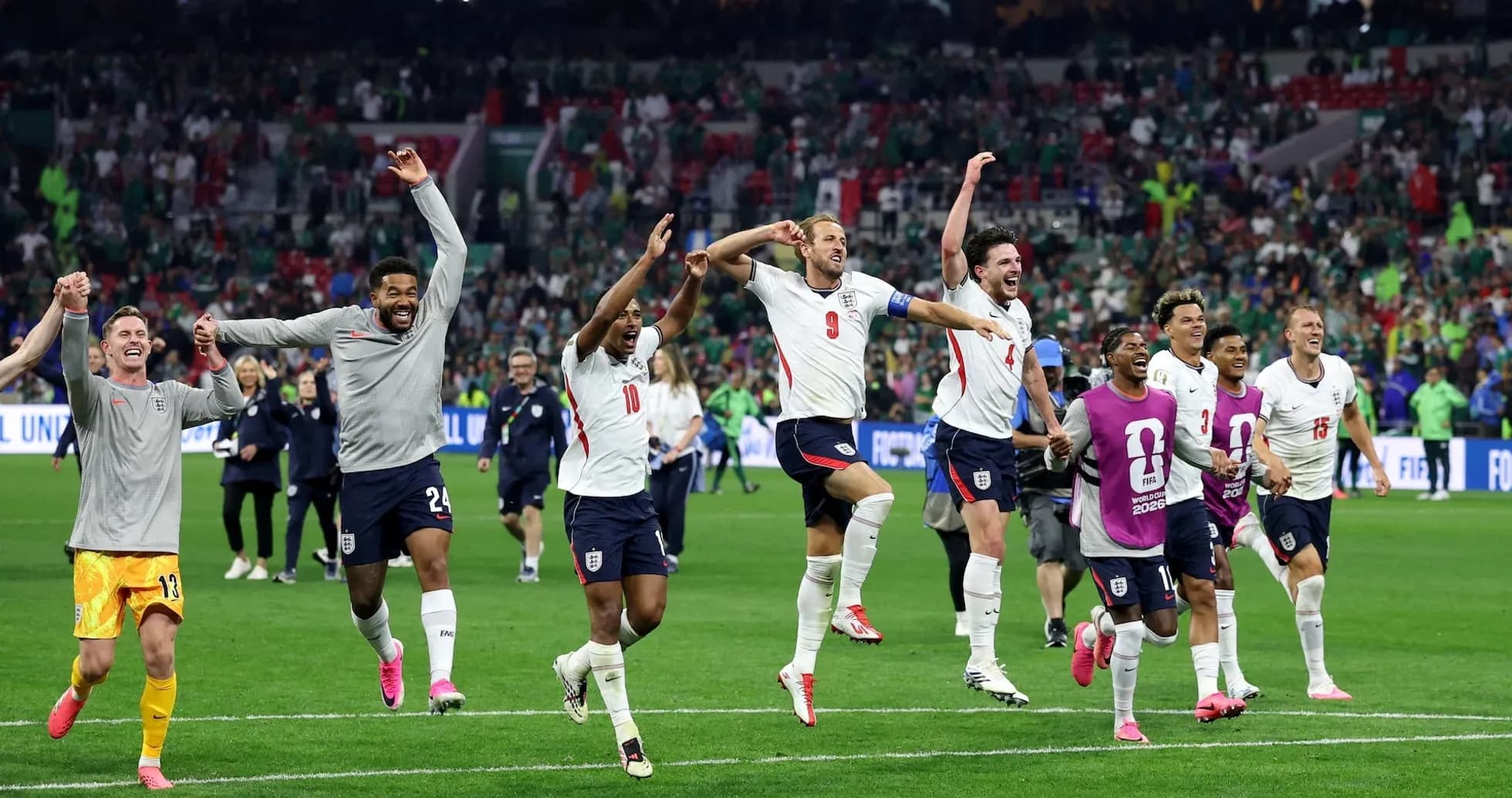
The night at Estadio Banorte ended with England edging Mexico 3–2, a Round of 16 tie that felt less like a tactical exercise and more like a stress test of each side’s footballing identity. Over 90 minutes under A. Faghani’s watch, two nations who had cruised through their groups were finally dragged into a game where their strengths and flaws were laid bare.
Mexico arrived as one of the tournament’s most ruthless machines. They had topped Group A with 9 points, a goal difference of 6 built on 6 goals scored and none conceded. Overall this World Cup, Mexico had played 5 matches, winning 4 and losing just once. At home venues in this tournament, they had played 4 times, winning 3 and losing 1, scoring 7 and conceding 3, an average of 1.8 goals for and 0.8 against. On their travels they had been perfect: 1 away match, 1 win, 3 goals scored, none conceded, averaging 3.0 goals for and 0.0 against. Their seasonal DNA was clear: front-foot, proactive, and structurally wedded to Javier Aguirre’s 4-3-3.
England’s path was less immaculate but no less imposing. They had also topped their group, finishing first in Group L with 7 points and a goal difference of 4, from 6 goals scored and 2 conceded. Across the tournament they had played 5 matches, winning 4 and drawing 1, still unbeaten. At home venues they had played 3 times, winning 2 and drawing 1, scoring 6 and conceding 3 for a 2.0 goals-for and 1.0 goals-against average. Away from home they had played 2, winning both, with 5 scored and 2 conceded, averaging 2.5 for and 1.0 against. Thomas Tuchel’s England had quietly become a side that accepted chaos but usually bent it to their advantage.
I. The Big Picture: Shapes, stars, and shifting control
On the tactical board, the contrast was sharp. Mexico’s 4-3-3 was classic Aguirre: R. Rangel behind a back four of J. Gallardo, J. Vasquez, C. Montes, and J. Sanchez; a midfield trio of L. Romo, E. Lira, and G. Mora; and a front line loaded with creativity and goals in J. Quiñones, R. Jiménez, and R. Alvarado.
England, in Tuchel’s familiar 4-2-3-1, built a different kind of structure. J. Pickford anchored a back line of N. O’Reilly, M. Guehi, E. Konsa, and J. Quansah. In front of them, D. Rice and E. Anderson formed the double pivot, with an attacking band of A. Gordon, J. Bellingham, and B. Saka feeding H. Kane.
The narrative tension was written in the numbers even before a ball was kicked. Mexico had kept 4 clean sheets in 5 matches overall, conceding only 3 goals in total, while failing to score in none. England, by contrast, had conceded 5 in 5 overall but scored 11, and had already shown they could win high-scoring games, with their biggest home win a 4–2 and away a 2–0. A defensive fortress against an attacking juggernaut.
II. Tactical Voids: Discipline and risk
Neither side came in decimated by absences, but the disciplinary profiles hinted at where cracks might appear. Mexico’s season-long yellow-card pattern was heavily weighted toward the middle phase: 25.00% of their yellows between 16–30 minutes and 50.00% between 61–75, with another 25.00% in the 91–105 window. Their single red card this campaign had also arrived in extra time (91–105), a sign that emotional spikes late in matches could be costly. C. Montes himself had already seen red once this World Cup, a reminder that the towering centre-back’s aggression could tilt either way.
England’s yellow-card spread was more evenly distributed, but the danger zone was clear: 28.57% of their yellows came between 61–75 minutes, the very phase when games open up and legs tire. More importantly, they had already been reduced to ten men once in this tournament, with a red card shown in the 46–60 window. J. Quansah embodied that risk profile: in limited minutes he had collected both a yellow and a red, even as he won 10 of 13 duels. Tuchel’s decision to start him at right-back was a gamble on his physical dominance and recovery pace, knowing that one mistimed challenge could tilt the entire tie.
III. Key Matchups: Hunter vs Shield, and the battle for the middle
The game’s headline duel was almost mythic: H. Kane versus a Mexico defence that, heading into this match, had conceded only 3 times in 5 outings. Kane arrived as one of the World Cup’s most lethal finishers: 6 goals and 1 assist in 5 appearances, 15 shots with 10 on target, and 2 penalties scored from 2 taken. His role was not just as a finisher but as a fulcrum, dropping into pockets to link with J. Bellingham and B. Saka.
Mexico’s “shield” was collective more than individual. R. Rangel had been protected by a line that rarely allowed clean sights of goal, and Montes had combined aerial command with clean distribution, completing 176 passes at 90% accuracy and even blocking 1 shot. J. Vasquez and the full-backs, J. Gallardo and J. Sanchez, were tasked with squeezing space between the lines so Kane could not turn and face goal.
Yet Mexico’s own “hunter” was just as dangerous. J. Quiñones, starting nominally from the left of the front three, had 4 goals and 1 assist in 5 games, with 11 shots (6 on target), 9 dribbles attempted and 6 successful, and 10 key passes across the tournament. His combination of direct running and subtle link play with R. Jiménez and Alvarado was the spearhead of Mexico’s attack.
On the other side, B. Saka’s tournament had been defined by service rather than scoring: 3 assists in 5 appearances, 56 passes at 82% accuracy, and 3 key passes. His duel with J. Gallardo on England’s right flank was a constant tactical hinge. Each time Saka drifted inside, he pulled Gallardo with him, creating lanes for Quansah to overlap—high reward, but high risk given Quansah’s disciplinary record.
The engine room was where the game truly lived. D. Rice, England’s top yellow-card collector with 2 cautions, had been quietly excellent: 166 passes at 91% accuracy, 12 key passes, and the metronome in Tuchel’s double pivot. He was up against a Mexico trio that shared responsibility: Romo’s box-to-box industry, Lira’s screening, and Mora’s vertical passing. The question was whether Rice and Anderson could smother Mexico’s midfield rotations enough to starve Quiñones and Jiménez of clean service.
IV. Statistical Prognosis: Why this became a five-goal shootout
From a statistical lens, this Round of 16 tie always threatened to tilt away from Mexico’s usual control. Their home defensive average of 0.8 goals conceded per match was elite, but England’s away attack—2.5 goals scored per game on their travels—was built to stress even the most disciplined blocks. England’s overall concession rate of 1.0 per match suggested they would likely allow chances, but their own scoring average of 2.2 hinted that they could live with a degree of defensive exposure.
Mexico’s penalty record (1 taken, 1 scored, no misses) removed any doubt from set-piece pressure, while England’s perfect 2 from 2 from the spot underscored their ruthlessness when the stakes rose. With no penalties missed on either side this campaign, any foul in the box was almost a guaranteed swing.
In the end, a 3–2 scoreline felt like the logical collision point between these profiles. Mexico, who had never failed to score this tournament, found the net twice but could not replicate their earlier defensive perfection. England, who had never lost and had already shown they could win wild, multi-goal contests, leaned on their stars. Kane’s penalty box craft, Bellingham’s all-court influence—4 goals, 1 assist, 161 passes at 81% accuracy, 58 duels with 30 won—and Saka’s incision from wide provided just enough edge.
Following this result, Mexico’s campaign ends not with a collapse but with a high-wire defeat to a side whose attacking ceiling simply matched and then surpassed their defensive floor. England march on from the Round of 16 having survived one of the tournament’s most tactically rich contests, their flaws still visible but their firepower reaffirmed on the biggest stage.