Sporting JAX vs Charleston Battery: A Clash of Readiness
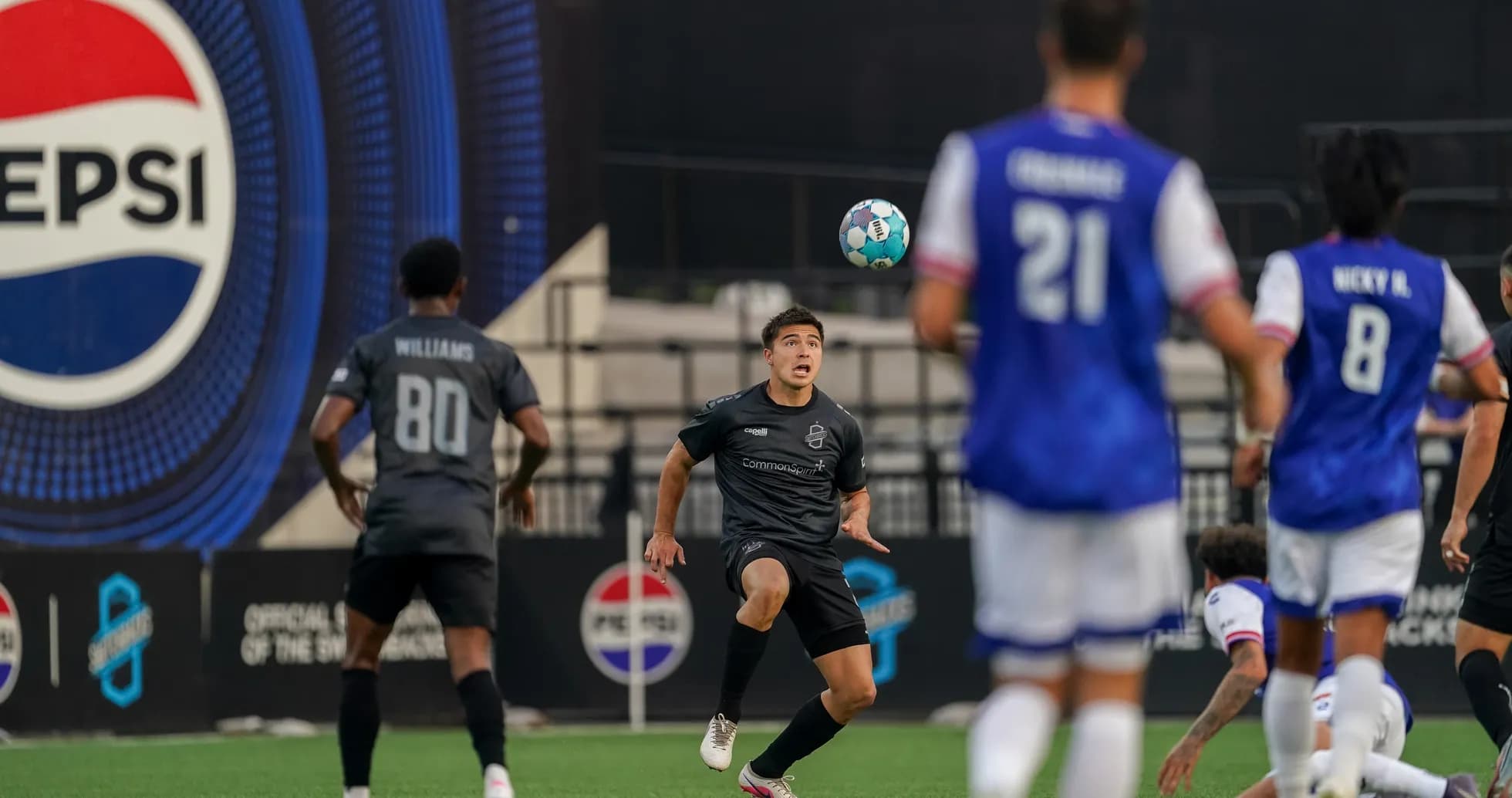
Under the Jacksonville lights at Hodges Stadium, a raw, unfinished Sporting JAX project ran straight into a ruthless, playoff-calibre Charleston Battery side. The 5–2 full-time scoreline to the visitors did more than settle a group-stage fixture in the USL Championship; it underlined the gulf in readiness between a team still searching for its first league win and one already hardened by promotion-chasing habits.
Heading into this game, the numbers had already painted a stark contrast. Sporting JAX were 13th in USL 1 with just 3 points from 14 matches, winless overall and carrying a goal difference of -22, built from 17 goals scored and 39 conceded. At home they had at least shown flashes of attacking life, with 12 home goals and a home average of 1.7 goals for per match, but that came at the cost of 25 conceded at Hodges Stadium, an alarming home average of 3.6 goals against. Charleston arrived in a very different mood: 2nd in the same group on 23 points from 13 matches, with an overall goal difference of 8, their 26 goals for and 18 against reflecting a side that knows how to tilt the balance of games in its favour.
First Half
The opening half followed the script of those season-long trends. Charleston, under Ben Pirmann, leaned on a core of continuity and clarity. L. Zamudio anchored them from the back, with a defensive line built around S. Suber, G. Smith, J. Akpunonu and N. Messer. In front of them, the double presence of E. Ycaza and K. Pakhomov gave structure, while the attacking line of M. Foster, M. Berry, J. Kelly and C. Swan offered pace and verticality. Even without a listed formation, the personnel screamed of a side comfortable interchanging between a front three and a box midfield, compressing space when out of possession and springing quickly when they won it.
Sporting JAX, by contrast, looked like a side still trying to translate individual profiles into a coherent system. C. Olivares in goal had the unenviable task of marshalling a back line of H. Neville, R. Edwards, A. Gomez and T. Rose that has been consistently exposed all season. In midfield, J. Rossiter and R. Somersall offered industry, W. Kuzain tried to stitch passes together, and ahead of them R. Pedder and K. Sadlier were tasked with connecting to the lone presence of E. Jaaskelainen. The pieces are there for a compact 4-2-3-1 or 4-3-3, but the season’s defensive metrics suggest the distances between units remain too large, especially in transition.
Tactical Analysis
That structural fragility is the true “tactical void” of this Sporting JAX side. Overall they concede 2.8 goals per match, and at home that swells to 3.6. There are no clean sheets in total this campaign, and they have already failed to score in 5 matches overall, which means that when the attack misfires, there is no defensive platform to fall back on. Their disciplinary profile deepens the problem: yellow cards spike late, with 26.32% of all bookings coming between 76–90 minutes, and red cards are heavily back-loaded too, with 66.67% in that same 76–90 window. Fatigue, stretched distances and desperation often leave them finishing games undermanned or on the brink.
Charleston, by contrast, manage games with a colder edge. Overall they concede just 1.4 goals per match, and at home that drops to 0.8, but even away their 1.9 goals against average is offset by a consistent attacking return of 1.3 goals for on their travels. Their yellow cards are spread more evenly, with late bookings (76–90) at 22.22%, signalling a team that can still press and compete without completely losing control. They have 3 clean sheets overall and have failed to score 4 times, but those blanks are largely a home-and-away tactical trade-off rather than a structural failing.
Game Dynamics
Within that context, the “Hunter vs Shield” matchup was always likely to favour Charleston’s attack. Sporting JAX’s biggest defeats — 2–6 at home and 4–0 away — show how quickly games can spiral once the first line is broken. Charleston’s biggest away win of 2–5 hints at exactly the kind of ruthless exploitation they produced here: once they find rhythm, the goals tend to come in waves. Even without minute-by-minute scoring data from this fixture, the 3–1 away lead at half-time and 5–2 full-time pattern mirrors their season-long capacity to build a cushion and then manage the risk.
In the “Engine Room”, the contrast was just as stark. Sporting JAX rely heavily on players like Rossiter, Somersall and Kuzain to both shield the back four and progress the ball. But with such a high overall goals-against average and a complete absence of clean sheets, their midfield often seems to be firefighting rather than dictating. Charleston’s central figures, Ycaza and Pakhomov, operate from a position of greater stability; their task is to compress space, win second balls and quickly feed the likes of Foster, Berry, Kelly and Swan. That platform allowed Charleston to repeatedly turn Sporting JAX’s loose structure into direct attacks, especially once the game opened up.
From an Expected Goals perspective, everything about the pre-match data pointed towards a high-xG environment tilted in Charleston’s favour. Sporting JAX home matches are chaotic by nature: 1.7 goals for and 3.6 against at Hodges Stadium implies a combined goal environment of 5.3 per home game. Charleston’s away profile — 1.3 goals for and 1.9 against — suggests they are comfortable in open contests but usually keep them just about under control. Overlay those patterns, and a goal-heavy contest with Charleston carving out the better chances felt inevitable. A 5–2 away win fits that statistical prognosis almost too neatly: Sporting JAX’s attack flickered, but their defensive structure once again collapsed under sustained pressure.
Following this result, nothing fundamental changes about the narrative arcs of these two squads. Sporting JAX remain a side defined by defensive chaos, late disciplinary issues and a search for their first league victory, even as individual talents like Sadlier, Jaaskelainen and Kuzain hint at a more balanced future. Charleston Battery, meanwhile, continue to look every inch a promotion contender: deep, organised, and capable of turning an opponent’s weaknesses into emphatic scorelines, whether at home or on their travels.